

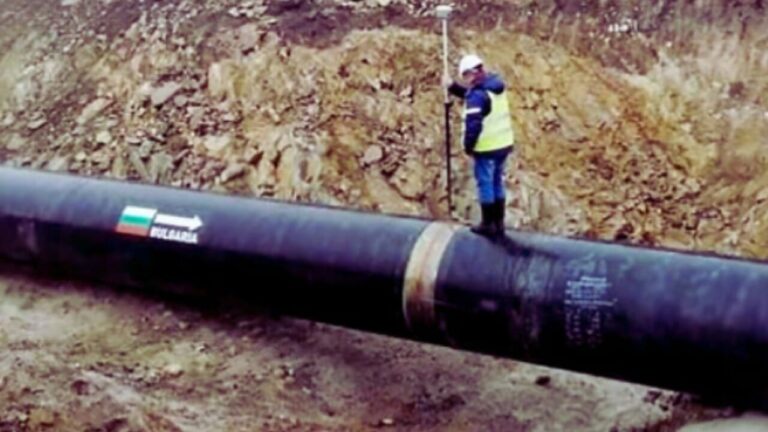
A drone exploded in Bulgarian territory not far from the border with Romania and one of the most important energy infrastructures in south-eastern Europe. The episode occurred on 8 August 2026 in the Kardam area, in north-eastern Bulgaria, near the Black Sea. There were no victims or damage to infrastructure, but the proximity to the Trans-Balkan gas pipeline makes the incident particularly delicate.
Bulgarian Prime Minister Rumen Radev reported that the drone fell and exploded about one hundred meters inside the national territory, in a sunflower field, about a kilometer from the compressor station connected to the Trans-Balkan system.
Bulgarian authorities are examining the remains of the aircraft. At the moment its origin has not been disclosed and there is insufficient public evidence to attribute it to Russia, Ukraine or other entities.
Did the drone come from Romania?
According to the reconstruction provided by the Bulgarian authorities, the drone came from the direction of Romania. The unidentified aircraft would not have appeared on the Romanian and Bulgarian radar systems nor would it have been detected by the NATO systems that monitor the area a stone’s throw from Negru Vodă, one of the points through which the gas networks of Romania and Bulgaria are connected.
What is the Transbalkan pipeline
As mentioned, the point is particularly delicate due to the Trans-Balkan gas pipeline, an infrastructure built to transport Soviet gas to the Balkans via Ukraine, Moldova, Romania, Bulgaria and finally Turkey with connections also to Greece and North Macedonia.
In Romania one of the main routes crosses the country from Isaccea, near the Ukrainian border, to Negru Vodă. From here the pipelines cross the border into Bulgaria right in the Kardam area, where the drone explosion occurred. For decades this corridor was one of the main gateways through which Russian gas reached Türkiye and the Balkans.
However, now that European energy balances have changed profoundly, also thanks to the construction of TurkStream, which brings Russian gas directly from Russia to Turkey crossing the Black Sea, an important part of the old Transbalkan has lost its original function.
The networks were therefore progressively adapted to allow the gas to also travel in the reverse direction, restoring strategic importance to the infrastructure after the Russian invasion of Ukraine and the progressive reduction of European dependence on Russian gas.
In fact, supplies from various sources can travel northwards through the Balkan network: Azerbaijani gas, liquefied natural gas arriving at terminals in Greece, supplies sent through Turkey and, in the future, a growing quantity of gas extracted in the Black Sea.
Why the Trans-Balkan is important for Ukraine
Ukraine’s position in the European gas market has changed dramatically in recent years. For decades Kiev was above all the large transit country used by Russia to bring its gas to the European Union. With the reduction and then interruption of most of these flows, Ukraine has instead needed to strengthen the routes through which it can import gas from Europe. The Transbalkan offers one such alternative.
In 2025, Ukraine also used the corridor to import gas from Azerbaijan for the first time, via a route that passes through Bulgaria and Romania before reaching Ukrainian territory.
The explosion one kilometer from the gas station
This is what makes the position in which the drone fell significant. Kardam is not just a small border town between Bulgaria and Romania. It is one of the focal points of the energy system that connects the networks of the two countries and, through them, the Black Sea and the Balkans with Moldova and Ukraine.
According to information communicated by the Bulgarian government, the drone exploded about one kilometer from the Transbalkan compressor station. There is no damage to the structure and there are, at present, no elements that allow us to claim that the gas pipeline was the target of the aircraft.
The geographical coincidence, however, remains relevant: the accident occurred next to an infrastructure which, created to bring Russian gas to Turkey, has become one of the possible alternative energy routes through which Ukraine can receive supplies from south-eastern Europe.