
The Italy of villages and small towns is conquering more and more foreign buyers. Starting from the twenty most requested municipalities in the first half of 2026 on Gate-away.com, a real estate portal specialized in the sale of houses in Italy to foreign buyers, we compared house prices in 2018 and 2026 and the potential of short-term rentals. What emerges is a market divided between locations that are still accessible and territories where the value of an 80 square meter home has grown by almost 100 thousand euros.
Foreigners are looking for a home even far from the most famous destinations
The most requested destination on Gate-away in the first half of 2026 is Ostuni, in the province of Brindisi. Followed by Tortora, on the Calabrian coast, and Caltagirone, in Sicily. Noto, Castiglione del Lago and San Siro, a small town in the province of Como overlooking the Lario, also appear in the top positions. Rome only comes in eighth place.
Urbe, Fivizzano, Carovigno, Parghelia, Tropea, Scalea, Lucca, Sanremo, Bagni di Lucca, Ceglie Messapica, Nizza Monferrato, Terricciola and Siracusa complete the ranking.
The ranking includes profoundly different markets. There are destinations now known internationally, such as Ostuni, Noto and Tropea, cities of art such as Rome, Lucca and Syracuse, but also small towns far from the busiest circuits. This is the case of Urbe, in the Savona hinterland, Fivizzano in Lunigiana, Nizza Monferrato in the Asti area and Terricciola on the Pisan hills.
Buying a house by the sea with the “30 minute” trick: this way you can save up to 90% – by Daniele Tempera
The ranking concerns exclusively the requests sent by Gate-away users and cannot therefore be considered a general ranking of all purchases made by foreigners in Italy. Furthermore, online searches do not necessarily turn into a sale. However, the data indicates an interest that extends beyond the most well-known tourist destinations. However, the ranking offers us an interesting overview to understand how the real estate market is evolving even outside the large centers and gives us an idea of the possible investment opportunities.
From Tropea to Carovigno: the villages with record returns
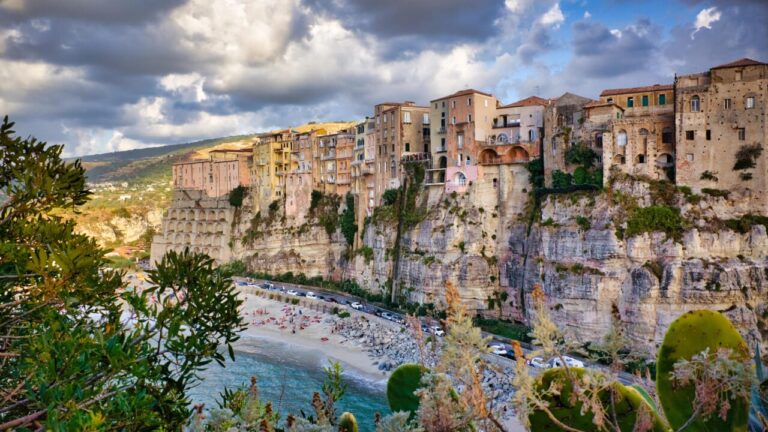
Among the twenty municipalities examined, the most significant increase in prices was recorded in Tropea. The average asking price went from 1,815 euros per square meter in 2018 to 3,053 euros in 2026, with a growth of 68.2%.
An 80 square meter house that eight years ago was theoretically worth 145,200 euros is today worth around 244,240. The difference is 99,040 euros: almost 100 thousand euros.
Airbnb’s blunder: this is how multinationals are taking your homes – by Daniele Tempera
In second place for percentage growth is Carovigno, in the province of Brindisi. Here the average price increased by 50.1%, going from 1,500 to 2,252 euros per square meter. The theoretical value of an 80 square meter house has thus risen from 120 thousand to 180,160 euros, over 60 thousand more.
A similar trend is recorded in Ostuni, the first destination in the Gate-away ranking. Since 2018 the price per square meter has gone from 1,746 to 2,618 euros, with an increase of 49.9%. For the house used in the simulation, the increase reaches 69,760 euros: from just under 140 thousand to over 209 thousand euros.
In Noto, the historic Sicilian Baroque centre, growth is 39%. An 80 square meter house is worth today, based on asking prices, around 142,240 euros, almost 40 thousand more than in 2018. In Parghelia, on the Costa degli Dei, in Calabria, the increase reaches 28.2%, raising the theoretical value from 145,280 to 186,240 euros.
Followed by Ceglie Messapica, with an increase of 25.2%, Scalea with 19.1%, Lucca with 17.2% and Rome with 15.2%. In the capital, due to higher prices, even a relatively limited percentage growth produces a significant difference: for 80 square meters today approximately 307,920 euros would be needed, over 40 thousand more than eight years ago.
Where a house costs less than 90 thousand euros
Not all of the Italian province, however, has become inaccessible. Among the twenty most requested municipalities there are still several centers with prices significantly lower than those of the large cities.
The most obvious case is Urbe, a municipality in the Ligurian hinterland in the province of Savona. The average asking price is 497 euros per square meter: to purchase a house of 80 square meters, 39,760 euros would theoretically be enough, without considering taxes, commissions and possible works.
Followed by Caltagirone, in the Catania area, where the average price stops at 687 euros per square meter. The house taken as a reference would cost 54,960 euros. In Fivizzano, in the province of Massa-Carrara, around 70,800 euros would be needed, while in Bagni di Lucca the bill would rise to 73,840 euros.
A house with a 2-year salary: the map of ideal cities (and where a hundred years of mortgage is not enough) – by Daniele Tempera
Below 90 thousand euros there are also Tortora, in the Cosentino area, with 85,440 euros, Nizza Monferrato, with 87,600, and Scalea, where an 80 square meter house would cost on average 89,120 euros. Naturally, prices change based on the location, the condition of the property, the presence of outdoor spaces and the distance from the center or the sea.
At the other extreme is Rome, with 3,849 euros per square meter, followed by Sanremo with 3,334 euros and Tropea with 3,053. In San Siro, on Lake Como, the price reaches 2,511 euros, while in Ostuni it is 2,618 euros. The presence in the same ranking of a small town like Urbe and a metropolis like Rome shows how wide the range of possibilities is: for the same surface area it goes from less than 40 thousand to over 307 thousand euros.
Cheap homes, but non-negligible (potential) revenues
What makes some locations interesting is not just the low price of the properties. Even in municipalities where a house can cost less than 100 thousand euros, estimates on the short-term rental market indicate significant revenue opportunities.
The most obvious case is Bagni di Lucca: based on the average asking prices, a house of 80 square meters would theoretically cost 73,840 euros, while AirDna (a yield measurement tool for the Airbnb platform) estimates annual gross revenues of 32,146 euros for short-term rentals. In Fivizzano, compared to an indicative cost of 70,800 euros, the potential revenue reaches 22,046 euros per year.
Even in Caltagirone, where approximately 54,960 euros would be needed for the surface area considered, the annual estimate of short-term rentals is 16,748 euros. In Urbe, the cheapest destination on the list, the comparison is between a theoretical price of less than 40 thousand euros and potential revenues of 14,511 euros. In Tortora, however, an 80 square meter house would cost around 85,440 euros, while AirDna’s estimate reaches 23,055 euros gross per year.
These values are not directly superimposable and do not allow a certain return to be calculated: the purchase price refers to a standard surface area, while revenues can derive from properties with different dimensions, positions and characteristics and often it is the presence of more exclusive and well-stocked accommodation facilities that raises prices, rather than individual homes. Taxes, platform fees, cleaning, utilities, maintenance and periods without reservations must also be deducted from the revenue.
With all the limitations of the comparisons, the evidence nevertheless points to an interesting dynamic. In the cheaper markets the amount needed to purchase is relatively low, while the potential for tourist rentals is not necessarily marginal. It is a combination that can attract foreigners interested not only in using the house during holidays, but also in making it an income for part of the year.
Where to buy a house far from the sea and mountains: prices in the most beautiful (and forgotten) villages – by Daniele Tempera
Similarly, even municipalities that have seen substantial stability in real estate prices, such as Castiglione del Lago, Terricciola (in the Pisan area) or real cities such as Syracuse, have experienced renewed vitality in the short-term rental market in the last year.
The highest gross revenues in the entire ranking are recorded in San Siro, on Lake Como, with 60,565 euros per year. Followed by Carovigno with 36,262 euros, Ostuni with 32,500, Bagni di Lucca with 32,146 and Noto with 30,369 euros.
The lowest estimates concern Scalea, with 12,157 euros, Urbe with 14,511 and Caltagirone with 16,748 euros. These are lower amounts than those of the most tourist destinations, but far from irrelevant when compared to the low real estate values.
The other side of the rediscovery of the villages
International interest can represent an opportunity for territories affected by depopulation: empty homes recovered, new resources for local activities and greater attention to areas excluded from traditional tourist flows.
Holidays for 500 euros a week and houses for 50 thousand: the mountain villages where savings (again) win – by Daniele Tempera
However, there is also a flip side to the coin. In the most attractive municipalities, the entry of buyers with a high spending capacity and the spread of short-term rentals can contribute to raising prices and reducing the offer intended for residents.
The ranking thus describes two provincial Italys. On the one hand there are territories in which less than 90 thousand euros are still enough to buy a medium-sized house and in which tourist rentals can generate non-marginal income. On the other, a place where those who bought in 2018 today find themselves with a property which, at least on paper, is worth up to almost 100 thousand euros more. The Italy of the villages continues to seem convenient in the eyes of foreigners, but in some of the most popular destinations the change has already arrived.
Dossier is the exclusive subscription investigative section of The Vermilion. If you want to support our journalistic work and subscribe, Click here.