

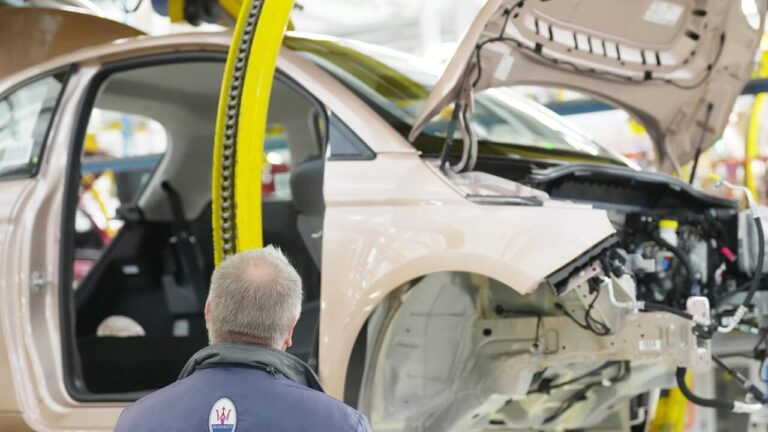
The crisis in the Italian metalworking industry shows no signs of stopping. According to the latest Fim-Cisl report, there are over 105 thousand workers involved in corporate crisis situations, distributed across 1,078 companies. There are many important disputes still open, from Electrolux to the former Ilva to Stellantis, but above all it is many small companies that are paying for a crisis that comes from afar and involves entire production chains.
What is especially worrying is the growing weight of the extraordinary redundancy fund, used to deal with difficulties that risk becoming structural. The automotive, steel and household appliances sectors are suffering the most, struggling with the decline in orders, the high costs of energy and raw materials and the uncertainties of the industrial transition. A situation that especially affects the regions with a greater manufacturing vocation, from Lombardy to Piedmont, passing through Veneto and Emilia-Romagna, without sparing the Centre-South.
The Italian automotive crisis also comes from Germany
Among the most exposed sectors is the automotive sector. And the problem does not only concern Stellantis’ difficulties and the slowdown in production in the Italian factories. An important part of the crisis also comes from Germany, where Volkswagen, Audi and other large manufacturers are facing a profound restructuring.
The connection is closer than you might imagine. According to the latest Observatory on Italian automotive components, created by Anfia and the Turin Chamber of Commerce and published on 21 October 2026, approximately two out of three Italian component companies indicate German manufacturers among their reference customers.
It means that when a German car manufacturer reduces production, postpones an investment or changes its suppliers, the consequences can also reach Italian factories that make engines, braking systems, electronic components and other parts for cars.
The crisis of Audi and Volkswagen in Germany
In Germany the automotive crisis is taking on unprecedented dimensions. Volkswagen aims to reduce a total of up to 100 thousand jobs worldwide by 2030, considering the cuts already planned and the additional ones foreseen by the new restructuring plan. The group has to deal with Chinese competition, American tariffs and the high costs of the electricity transition. Furthermore, the future of four German factories remains uncertain, including the Audi plant in Neckarsulm, which employs around 15 thousand people. Meanwhile, the clash with the unions is escalating: Volkswagen has canceled ten collective agreements involving around 130 thousand workers and IG Metall is threatening strikes from the beginning of 2027.
The Audi case is equally emblematic of the transformations underway. The automaker has already forecast 7,500 job cuts in Germany by 2029 and is looking for a solution to secure the future of the Neckarsulm plant. Just in the last few days, however, it announced a 4 billion dollar investment to build its first factory in the United States, in Georgia, with 4,500 new jobs. A choice also linked to the need to circumvent duties on American imports, which has provoked harsh criticism from German trade unions: while employment and production capacity are reduced in Germany, part of the new investments is directed overseas.
Because the German crisis has also arrived in Italy
In recent years many Italian component companies have sought new customers abroad to reduce their dependence on Stellantis. The progressive reduction in Italian automotive production has pushed many component companies to look for new commercial outlets abroad, to compensate for the decline in orders from Stellantis.
The numbers explain the scale of the problem: in the group’s Italian plants, production went from over 750 thousand vehicles in 2023 to less than 380 thousand in 2025, practically halving in just two years. In 2026 there is a recovery, but the volumes remain far from those of the past. For many related companies, therefore, finding new customers has become a necessity. And among the main interlocutors are the German manufacturers, currently grappling with an industrial crisis that risks having repercussions also on their Italian suppliers.
In 2025, according to Anfia, 30.8% of suppliers achieved more than half of their turnover through orders destined for Stellantis and Iveco, compared to 39.6% in 2021.
Overall, 67% of the components turnover derives from commercial relationships with manufacturers and suppliers linked to assemblers other than the two groups. And the main interlocutors are the German car manufacturers. The diversification of customers has therefore paradoxically made us more dependent on what happens in Germany.
Italian factories are losing turnover and employment
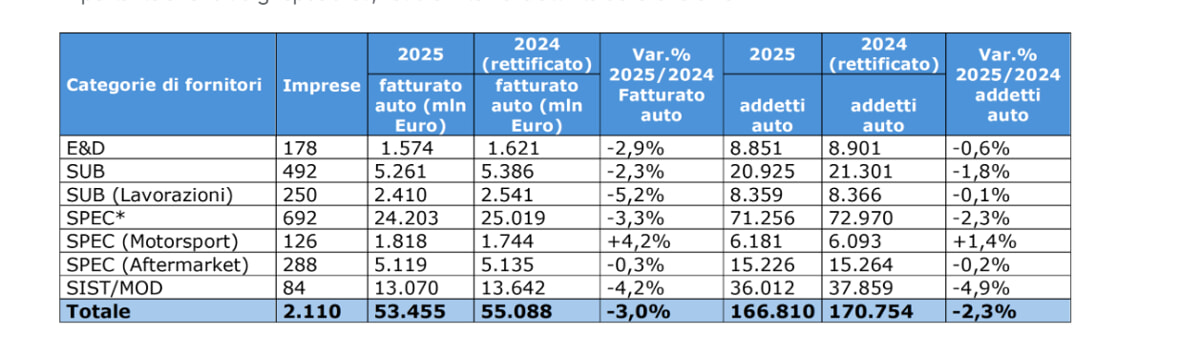
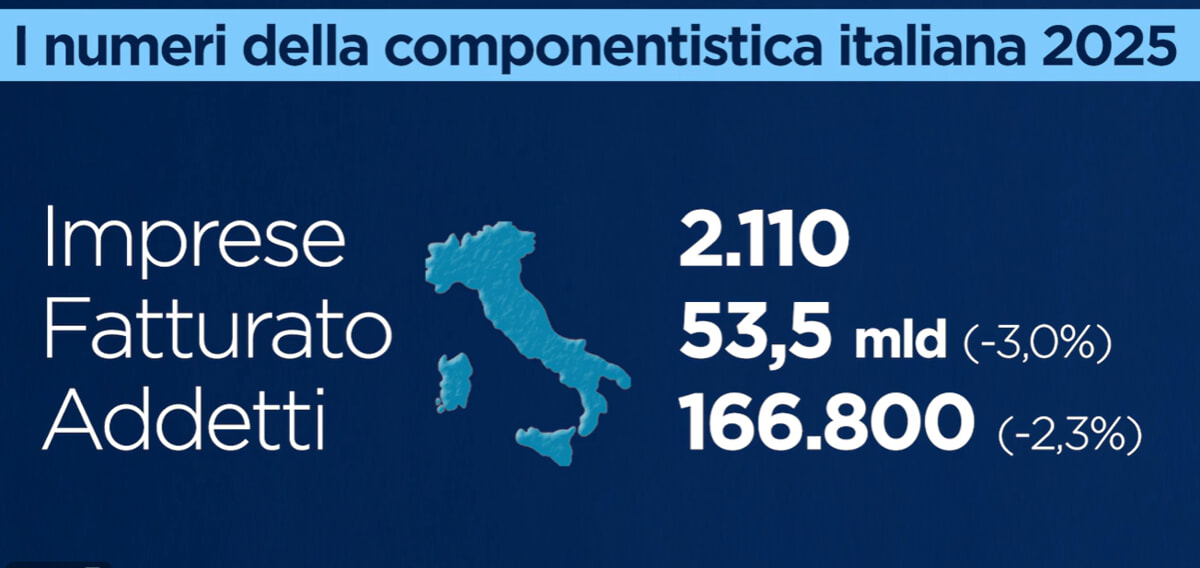
The numbers from the latest report show how delicate the situation is. There are 2,110 automotive component companies operating in Italy, which in 2025 generated 53.5 billion euros in turnover and employed around 166,800 workers.
Compared to 2024, revenues fell by 3% and employment by 2.3%. Those who suffer are above all the producers of modules and systems and the subcontractors, i.e. the companies that produce parts and processes intended for other producers in the supply chain.
Piedmont, the historic heart of the Italian automotive industry, presents an even more difficult picture. 734 companies in the sector are concentrated in the region, with approximately 60,500 employees. In 2025, turnover decreased by 4.6% and employment by 3.5%.
And to complicate the picture there are Chinese competition, high energy costs and the uncertainties linked to the transition to electric cars. For many Italian companies, especially the smaller ones, investing in new technologies while orders decrease is becoming increasingly difficult. While global competition is becoming increasingly ruthless and risks putting into crisis a sector which today represents a significant component of the national gross domestic product.