

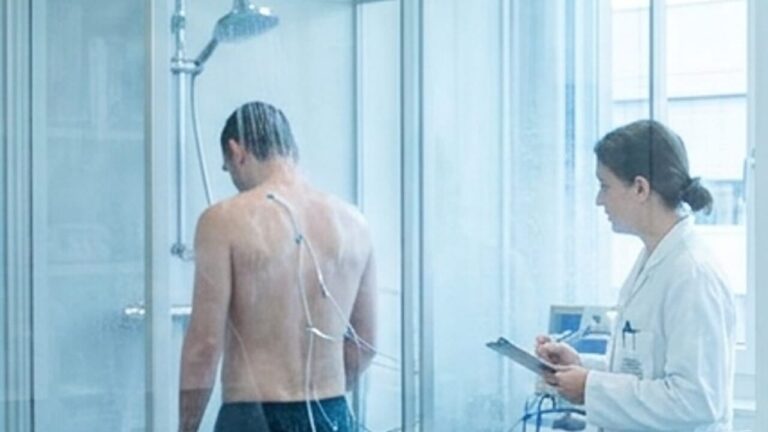
The topic is divisive: for enthusiasts, starting the day with a freezing shower is a panacea for health; for everyone else, a useless and unpleasant health habit. Today, research conducted by a young Swiss psychologist, researcher Lena Glaser, as part of her doctoral thesis at the University of Basel, has analyzed the effects of this morning habit on a sample of hundreds of people, highlighting a significant decrease in days of absence due to illness and greater physical resistance to infections.
The experiments
The research, currently being published on Journal of Health Psychologyis part of a broader trend dedicated to the study of the psychological factors that push people to adopt new behaviors in their daily lives. The question he wanted to answer, therefore, was: are there any real benefits that encourage you to include an ice-cold shower in your routine? To find out, the researcher and her colleagues at the University of Basel organized three randomized studies involving a total of 719 participants.
Over the weeks of monitoring, the researchers recorded a significant percentage of dropouts, concentrated above all in the first fourteen days after the start of the trial. However, among those who managed to overcome the initial adaptation phase and maintain the habit for at least seven days out of ten, the adherence rate stabilized between 77 and 90 percent.
The results
The combined analysis of the three studies found that participants who adopted the habit of finishing their showers with cold water reported a 31 percent reduction in days away from work and a 26 percent reduction in sick days, compared to the control group who maintained the habit of washing exclusively with hot water. The result – underlines the researcher – confirms the data that emerged in previous epidemiological investigations conducted in the Netherlands, which had estimated a similar decrease in work absenteeism associated with the habit of taking freezing showers.
Despite the statistical significance of the data obtained, the research presents some methodological limitations which the authors themselves invite us to take into account. The trial is based entirely on data self-reported by participants through diaries and periodic questionnaires, a method that leaves room for margins of subjectivity in the evaluation of flu symptoms or days of actual illness. Furthermore, the biological mechanisms by which a cold shower could enhance the action of the immune system remain to be clarified. Previous research suggests that repeated exposure to cold activates white blood cell-mediated responses and stimulates the sympathetic nervous system. However, further clinical studies will be necessary to confirm whether the cold shower can represent in all respects a low-cost preventive health intervention, capable of having a concrete impact on public health and productivity in the workplace.