

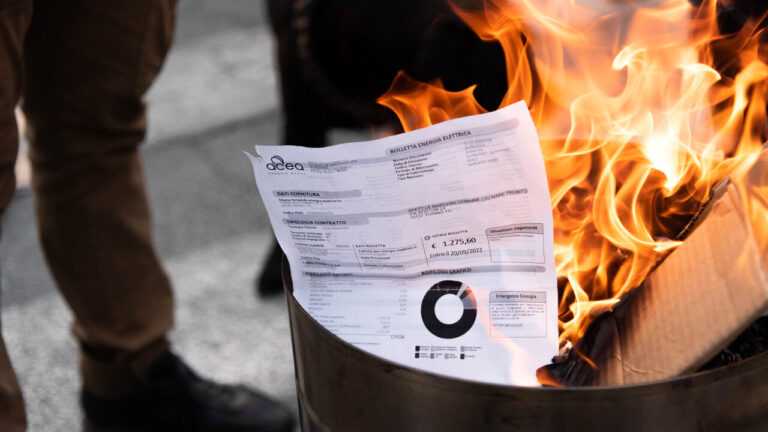
The truce between the USA and Iran always seems to hang by a thread, with the uncertainty inevitably reflected in the prices of raw materials. If the conflict and the blockade of the Strait of Hormuz were to continue for a long time, further increases could occur which will mainly concern electricity and gas bills, insurance, mortgages and fuel. The risk is that of yet another blow for consumers, which in the coming months could reach close to a thousand euros per family.
The new sting
In fact, according to a study by Facile.it based on current energy projections, Italian families with indexed tariffs will incur a total expense of 2,711 euros for electricity and gas in the next twelve months. This is an increase of 12% (+284 euros) compared to the estimates calculated before the start of the conflict. The heaviest price increase will concern gas, whose annual bill will reach 1,834 euros (against the previous 1,617), while electricity will rise to 877 euros (from the old 810). Particular attention goes to air conditioners: due to the anomalous temperatures, cooling the home this summer will cost on average 144 euros, 19% more than the 121 euros spent in 2025.
Petrol and diesel
The cost of fuel remains critical despite government interventions on excise duties. Based on prices recorded on 12 April 2026, a driver who travels 10,000 km a year today spends around 1,177 euros on petrol (+7% compared to February 2026). For diesel the scenario is worse: annual spending rises to 1,190 euros, with a jump of 26% (+249 euros). The impact is even more drastic for road transport: for a 3,000 km route, a truck today spends 1,622 euros on diesel, or 339 euros more than pre-conflict costs.
Mortgage increases
Even without new interventions by the ECB on rates, variable rate mortgages have started to rise again due to the surge in Euribor, which grew by 10 basis points in March. For a standard loan (126,000 euros over 25 years), this translates into an immediate increase of approximately 6 euros on the April instalment. The forecasts on the Futures contracts of April 10 indicate further increases: the installment could go from the current 620 euros to 642 euros in the middle of the year, up to reaching 662 euros in December. If confirmed, the overall burden during 2026 would be close to 50 euros per month.
Insurance and car liability
Although the effects of the conflict in the Middle East on car policies are not yet fully visible, inflation driven by energy costs threatens to increase premiums, as already happened after the start of the war in Ukraine (+18% in one year). If in 2022 prices were mitigated by post-pandemic declines, today the scenario is different. With an average premium that stood at 643.97 euros in March 2026, a possible 15% adjustment would lead to an average increase of approximately 96 euros per policy.