

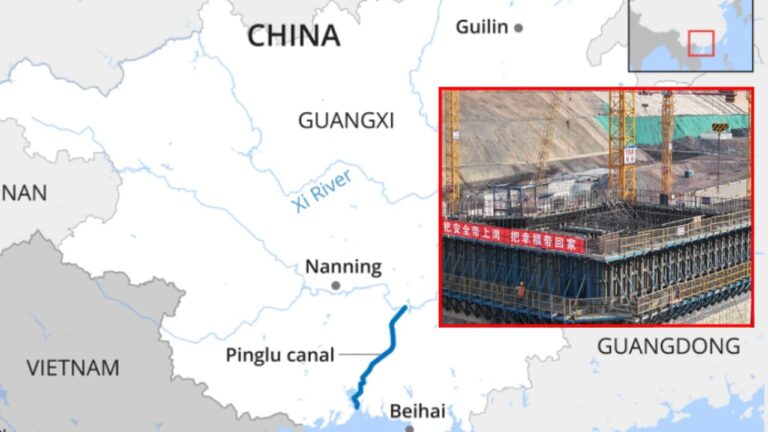
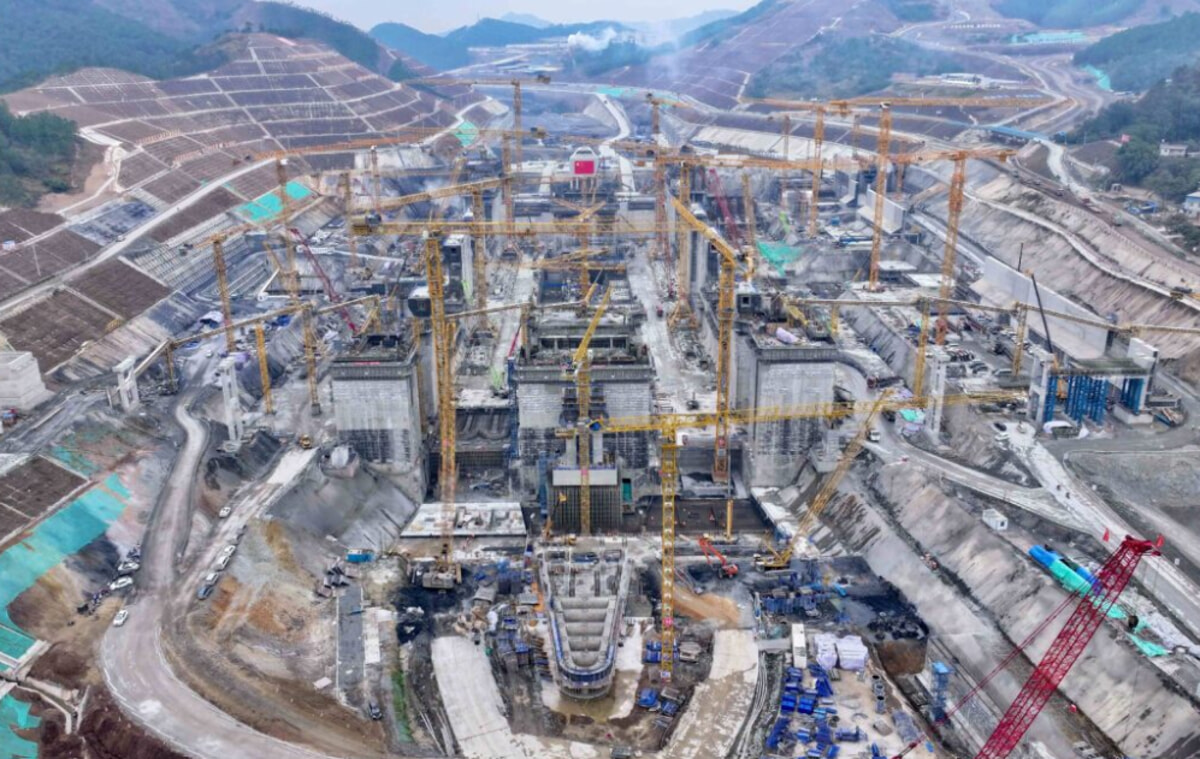
In southwest China, the incessant noise of excavators accompanies the countdown for what Beijing has dubbed the “project of the century”. It is the Pinglu canal, a new navigable waterway 134 kilometers long whose work is expected to be completed by September 2026.
With a massive investment exceeding 70 billion yuan (about 10.3 billion US dollars), it is the first large artificial canal built in China since the founding of the People’s Republic in 1949, designed to directly connect the inland river lungs with the sea.
The Pinglu Canal will directly connect the industrial hinterland of southwestern China with the Ocean, starting from the river city of Hengzhou in Guangxi and flowing into the Gulf of Tonkin.
This is an economically strategic connection for Beijing because it breaks down a historical bottleneck: it allows goods coming from the immense internal provinces (such as the Chongqing hub) to reach the sea, shortening the journey by as much as 560 kilometers compared to the old and saturated obligatory route that passed through Guangdong.
The global threat of maritime bottlenecks
The work represents a precise geopolitical response by Beijing to the growing vulnerabilities of global supply chains and the need to shield itself from maritime chokepoint crises. The artificial waterway will in fact guarantee Beijing a direct, protected and low-cost access route to the markets of South-East Asia (ASEAN), reducing the country’s exposure to naval blockades and routes controlled by Western powers.the.
The architecture of international maritime trade is in fact based on extremely fragile vital arteries. Straits and man-made canals represent strategic bottlenecks where geopolitical tensions, armed conflicts and extreme weather can send instant shockwaves through global markets. Chokepoint disruptions threaten around $190 billion in trade every year, according to a study by the University of Oxford.
The vulnerability of this system has manifested itself forcefully in the Strait of Hormuz – the gateway to the Persian Gulf which manages a fifth of the world’s oil needs – where recent hostilities and the resulting blockades have caused crude oil prices to soar steadily above $94 a barrel, threatening global manufacturing and raising the specter of stagflation.
Likewise, mass diversions around the Cape of Good Hope to avoid threats in the Bab el-Mandeb Strait and the Suez Canal have lengthened routes by thousands of miles, inflating transportation costs. When these strategic routes are blocked, the entire logistics machine jams: even in the event of a diplomatic resolution, the reopening of the passages generates a “funnel effect”, with hundreds of ships and millions of barrels of crude oil trapped in the sea waiting to be able to dispose of the stored deposits, to which the technical times are added to progressively restart the production of the damaged wells and plants.
Because reopening the Strait of Hormuz could become a logistical nightmare
Beijing’s strategy and overcoming the logistical constraint
For China, exposure to these vulnerabilities is a major risk factor for energy and industrial security. The dredging of the Pinglu canal intervenes precisely to redesign domestic flows and circumvent the historical logistical distortions of the region. Until now, sea access for goods produced in Guangxi and the immense industrial provinces of the southwestern hinterland (such as the hub of Chongqing) was forced to divert along the Xi River system to the east, transiting entirely through Guangdong province before being able to take the sea route. The Pinglu Canal breaks down this barrier, shortening the route to the ocean by as much as 560 kilometres. From an engineering point of view, the work faces imposing challenges.
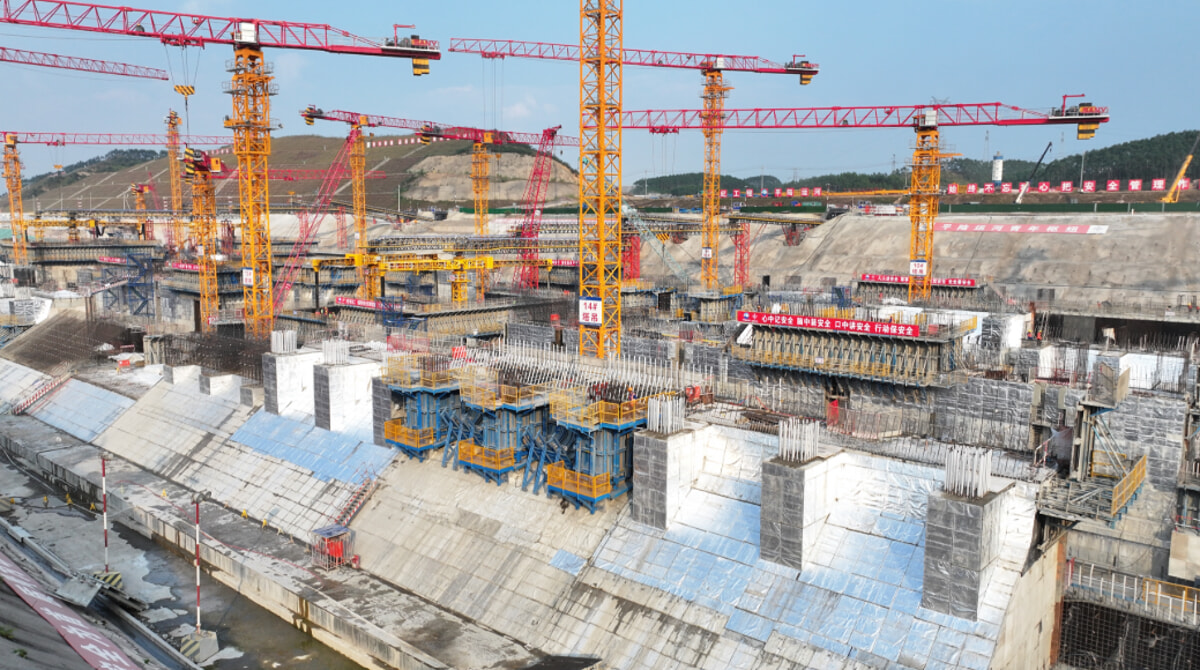
As reported by Xinhua News Agency and analysis by Think Chinathe structure is designed to allow 5 thousand ton cargo ships to overcome a difference in water level equal to the height of a nine-storey building, entering them directly into the Gulf of Tonkin.
Integration in the New Land-Sea Corridor
The strategic value of the canal is part of the backbone of the New International Land-Sea Commercial Corridor, the intermodal network that hinges on Chongqing to transfer goods by rail to southern ports and embark them on transoceanic routes. Bypassing the very long Yangtze river route to the east – which requires forced transit from the port of Shanghai – has already proven its effectiveness: the shipment of goods from Chongqing to Vietnam has dropped from over 20 days to just four days.
The Pinglu Canal optimizes the structural costs of this corridor: the unit cost of river transport is in fact just 50-60% of that of rail and 12-15% of road transport. According to estimates, for large international shipping companies, the opening of the Canal will result in a reduction in logistics costs for shippers of between 18% and 30%.
Competition with the West
On an international level, infrastructure is an integral part of the Dragon doctrine aimed at optimizing its logistics chains for strategic competition with the United States and the West. In a global context where trade and security are interconnected, the control and protection of maritime routes define the balance of power of the international political economy.
China is watching US pressure on traditional chokepoints with concern. Geopolitical frictions in the Indian Ocean and Trump administration statements regarding a more aggressive posture on the Panama Canal – a pillar of Washington’s hemispheric defense that has recently seen the cancellation of port contracts to Hong Kong-linked operators – have pushed Beijing to accelerate its search for alternative and resilient routes and supply lines, including naval safety inspections and the evaluation of rival canals in Central America (such as the Nicaragua hypothesis).
Key corridors in the Asia-Pacific, such as the Strait of Malacca (crossed by 29% of Chinese trade) and the Taiwan Strait (vital for 41% of the People’s Republic’s maritime flows, especially petroleum products), are now the main theater of confrontation between the US Navy and Beijing. Intensified Western patrols to intercept “shadow fleet” traffic and supply flows have already forced several supertankers to take non-standard and longer routes, such as passing through Indonesia’s Lombok Strait to avoid detection in Malacca in an attempt to reach China.
Towards resilience-based trade
As highlighted by international analysts, the world is entering a period in which global trade is no longer optimized solely for cost efficiency, but for resilience and security of supply in the event of systemic shocks. In this geopolitical game, the opening of the new artificial waterway in Guangxi guarantees China a direct, protected and high-capacity communication line to the Indian Ocean and Asian markets, reducing its exposure to naval blockades and bottlenecks manned by the United States.