

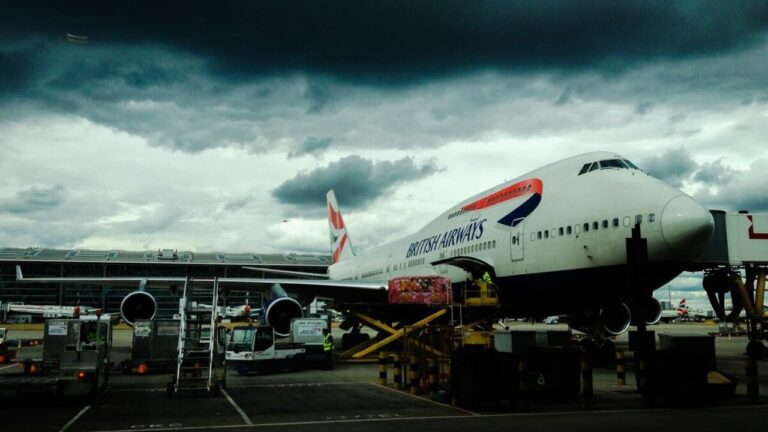
Sudden storms, heat waves, intense rain. Climate change intensifies the frequency and strength of extreme weather events. And air traffic is also paying the price: in-flight turbulence, postponed flights, interruption of ground services, maintenance, complicate the lives of travelers and increase costs for operators. A current problem, destined to worsen further in the future due to global warming, as revealed by a study carried out by an international research group led by the dynamic meteorology laboratory of the French Institute Pierre Simon Laplace (Lmd-Ipsl), in which the National Institute of Geophysics and Volcanology of Rome also participated.
The research, published in the journal Weather and Climate Dynamicsanalyzed four major storms that hit Europe, North America and Asia in recent years, causing serious disruption to the aviation sector. And he compared these weather phenomena with similar events in the past, to try to calculate how much of the most recent storms may have been caused, or exacerbated, by climate change and human activities. The results of their analyzes confirm that extreme weather events have become more intense in recent years, consequently causing greater problems for air flights, particularly during landing and take-off procedures.
“Our analyzes show that the storms affecting the world’s main airports today are more intense and characterized by greater wind speed and turbulence than in the past” explains Tommaso Alberti, INGV researcher and co-author of the study. “The increase in intensity of these storms is closely linked to global warming: warmer atmospheres and oceans provide greater energy and humidity, fueling the growth and intensification of these storm systems, but also modifying their typical paths,” continued the researcher.
The research, as we said, was carried out by studying some iconic storms of recent years, such as Storm Eunice, which in February 2022 caused over 470 flight cancellations in the United Kingdom and Ireland, with damages estimated at around 2.5 billion euros. The in-depth analysis carried out in the study shows that similar events are more frequent today and tend to occur earlier in the winter season, as early as December. And that these storms generate larger wind fields and more widespread turbulence than in the past, particularly near strategic hubs such as Heathrow and Dublin, increasing risks during take-off and landing phases and causing frequent operational interruptions.
Killer turbulence, I bring you the terror of the skies
“An increase in turbulence not only leads to less comfort for passengers, but also higher operating costs: flying in or avoiding turbulent areas requires more fuel and involves higher maintenance costs,” continues Alberti. “The temporary closure of an airport due to a storm, even for just a few hours, can ultimately have considerable social and economic repercussions.”
The analyzes therefore confirmed that climate change is having a negative impact on air flights, and that the effects are likely to become more evident – and costly – in the coming decades. The solution – the researchers write – is to be found in the first instance in the strengthening of forecast models, in encouraging the use of climate simulations to accurately evaluate the impacts of weather phenomena, and in greater collaboration between all companies, climatologists and institutions. “Only through close collaboration between the scientific community, regulatory authorities and the transport sector – confirms Alberti – will it be possible to strengthen the resilience of the system in the face of increasingly extreme meteorological events”.