

“Trump is clearly deranged: the 25th Amendment seems designed for people like him.” This was said by the former director of the CIA under Barack Obama, John Brennan. And he’s not the only one.
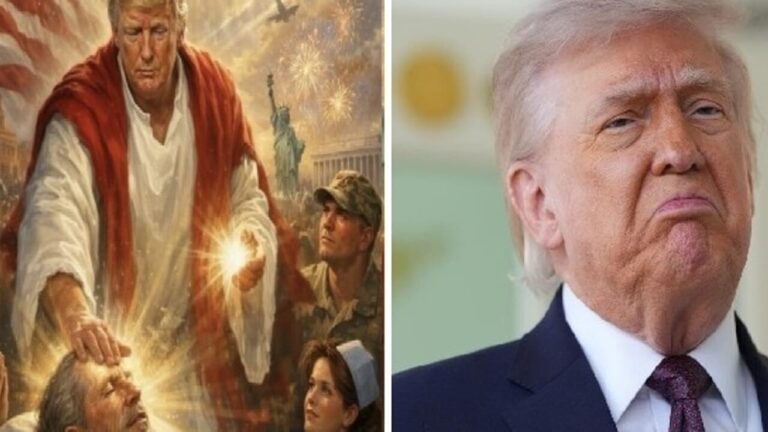
For months, in the United States, various political leaders – especially Democrats – have been calling for the president to take a step back. The controversy was also reignited by a cartoon spread on social media, in which Trump is depicted as Christ healing a sick person: an image published in the same hours in which the president defined Pope Leo XIV as “a weakling”. Words and contents that provoked the reaction of part of the Catholic world and of a slice of the American right itself, including sectors of the Maga movement, who spoke of “blasphemy”, a modality that seems in keeping with “The Doland”.
Moreover, in this first year and a half of his presidency, the tycoon has often caused discussion for controversial exits, fueling doubts about his conditions and reopening the debate on a possible removal.
From the “destruction of Iranian civilization” to Obama the monkey to “Pope Trump”
“Open the damn Strait, you crazy bastards, or you will live in hell – YOU WILL SEE! Praise be to Allah” seem like ungrammatical sentences, straight out of a bad Hollywood B-movie. These are the words with which Trump asked, over Easter, for the reopening of the Strait of Hormuz, blocked by the Iranian authorities.
Just two days later, it is another statement from the American president that keeps the world in suspense: “An entire civilization will die tonight, I don’t want it but it’s probable”, he says, referring to the expiry of the ultimatum against Iran. Everyone thinks the worst, even hypothesizing the use of atomic weapons. However, the tension dissolves within a few hours, with the announcement of a ceasefire and the start of negotiations.
However, the president’s vocabulary always remains the same, as do the provocations. If the term “hell” is recurring, it is above all the sudden releases on social media, often through official channels, and some rash choices that arouse more than one doubt.
Over the course of this year and a half, for example, a video was released that imagined Gaza as a luxury riviera, with Trump and Benjamin Netanyahu intent on drinking cocktails by the sea and a statue of the president transformed almost into a pagan deity. All this while there were deaths and rubble on the ground.
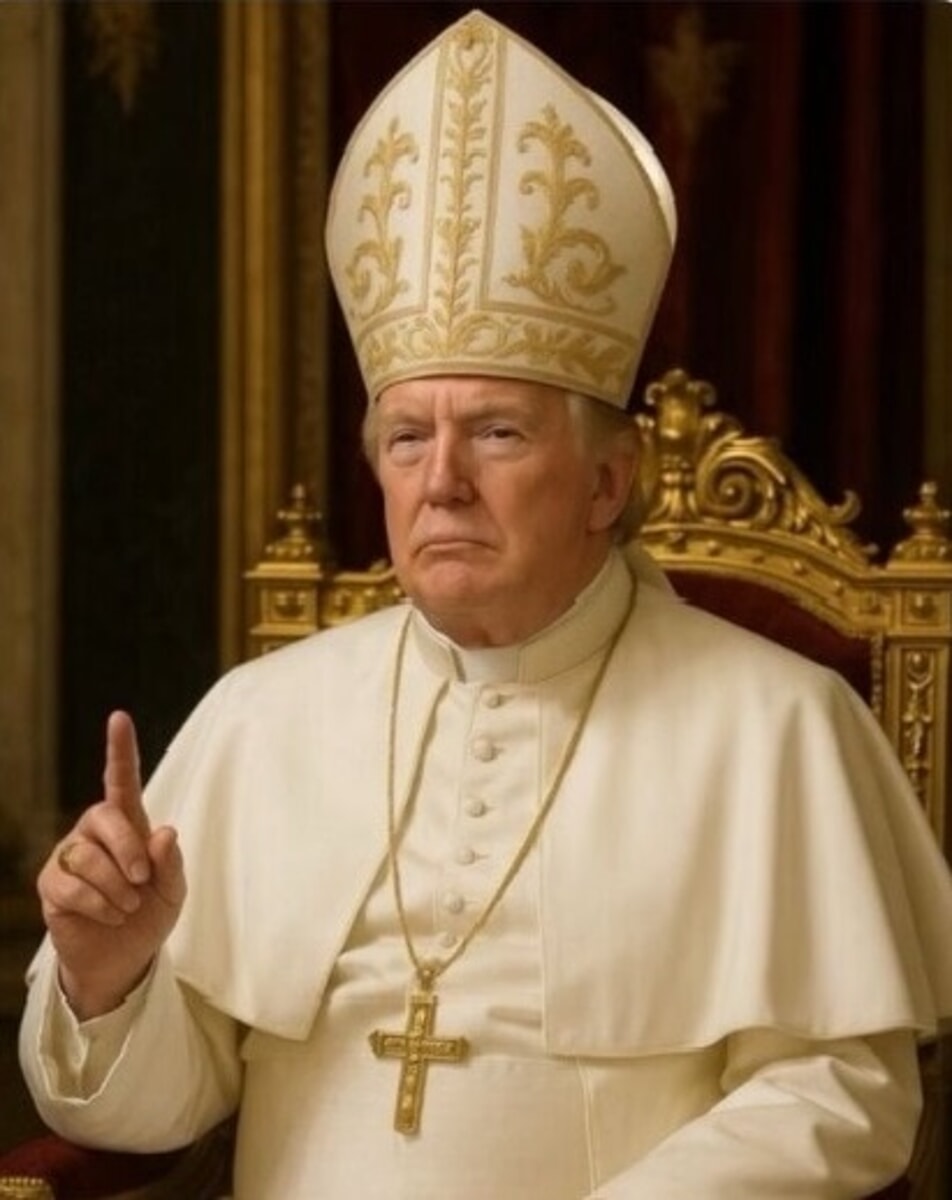
A racist video also appeared on social channels in which Barack Obama and his wife were represented as monkeys – content later removed after the controversy – while during the conclave Trump was even depicted as “pope”, at least in his profiles.
But in person, the American president is no exception: last March 19, Japanese Prime Minister Sanae Takaichi visited the White House, and Trump cited the Pearl Harbor attack, saying: “You Japanese know how to surprise.”
The tones are often over the top even in relations with European allies: “Macron’s wife treats him very badly, he is still recovering from a punch in the face”, he stated last April 2nd. A few days earlier, however, other “affectionate” words had been reserved for Saudi Prince Mohammed bin Salman: “He didn’t think he should kiss my ass, he really didn’t think so.”
Not just declarations: actions too – from the tariffs announced by surprise to the public mockery of Zelensky, up to the attacks in Iran and Venezuela – have contributed to fueling doubts about his lucidity and the increasingly frequent requests for his possible removal. But what are the roads that can be taken? Let’s go in order.
How plausible is a new impeachment for Trump
The best-known procedure remains that of impeachment, provided for by the United States Constitution and designed to sanction abuses of power or illegal behavior by the president.
It is divided into two phases: the first in the House of Representatives, which votes on the articles of impeachment by a simple majority (a sort of political indictment) and the second in the Senate, where the actual trial takes place. To achieve removal, however, a qualified majority of two thirds is required, a very difficult threshold to reach in a highly polarized system.
This is precisely the issue that has saved Donald Trump several times: during his first term he was impeached twice, in 2019 – for the pressure on Ukrainian President Volodymyr Zelensky to investigate Joe Biden – and in 2021, for the assault on Capitol Hill. In both cases, however, the Senate acquitted him.
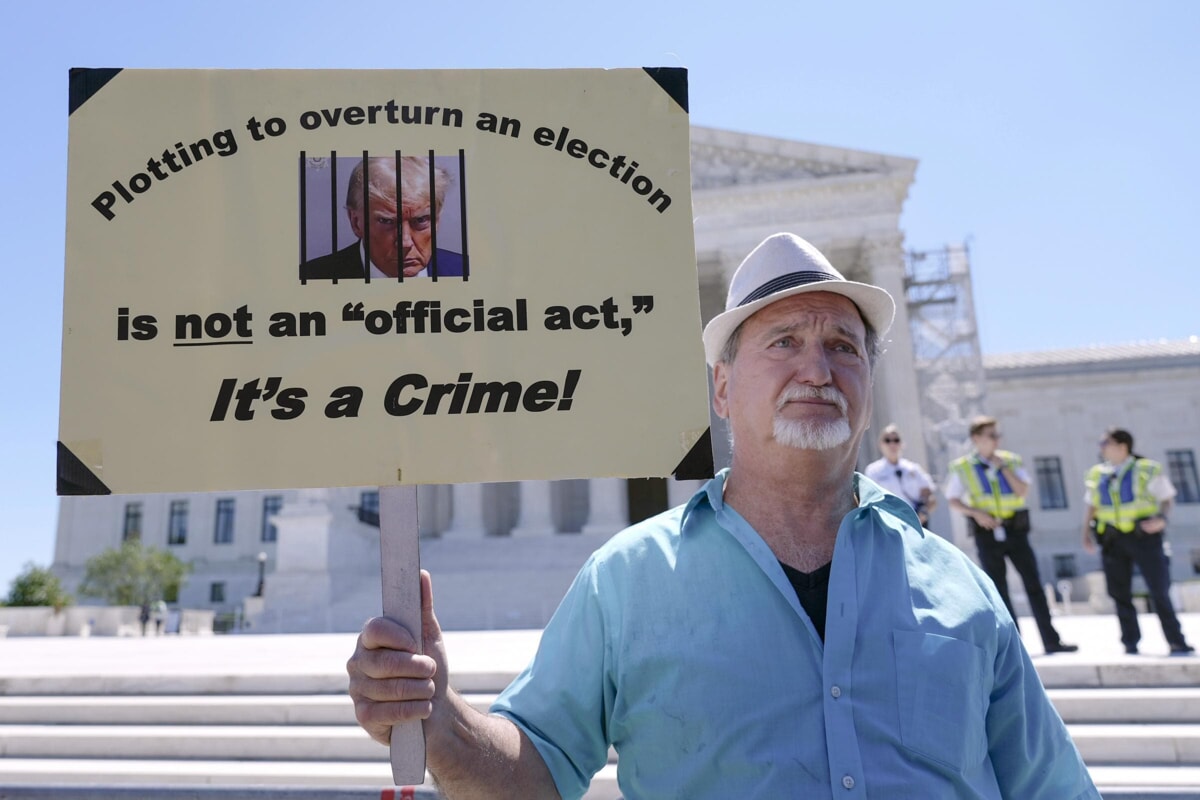
With Republicans in control of Congress, Democratic leaders’ chances of success today would be minimal. In fact, despite having been formally impeached, Trump has never been removed from office, like no president in American history.
The possibility of the 25th amendment
Then there is another path, much less known but foreseen by the United States Constitution: the 25th amendment. Today, around 70 Democratic parliamentarians in the House and Senate are asking for its activation for the removal of Donald Trump.
It was introduced in 1967, after the assassination of John Fitzgerald Kennedy, to ensure the continuity of executive power. In detail, it establishes that the vice president assumes the powers of Commander in Chief as interim president in the event that the head of the White House dies, resigns or is removed, but also when he is declared incapable of exercising his duties due to illness or other causes.
Unlike impeachment, therefore, it does not concern crimes but the suitability to govern. The most delicate mechanism is that provided for in section 4: the vice president, together with the majority of the members of the government, can declare the president “incompetent” and assume his powers. If the president contests, the decision goes to Congress, which must confirm with a two-thirds majority.
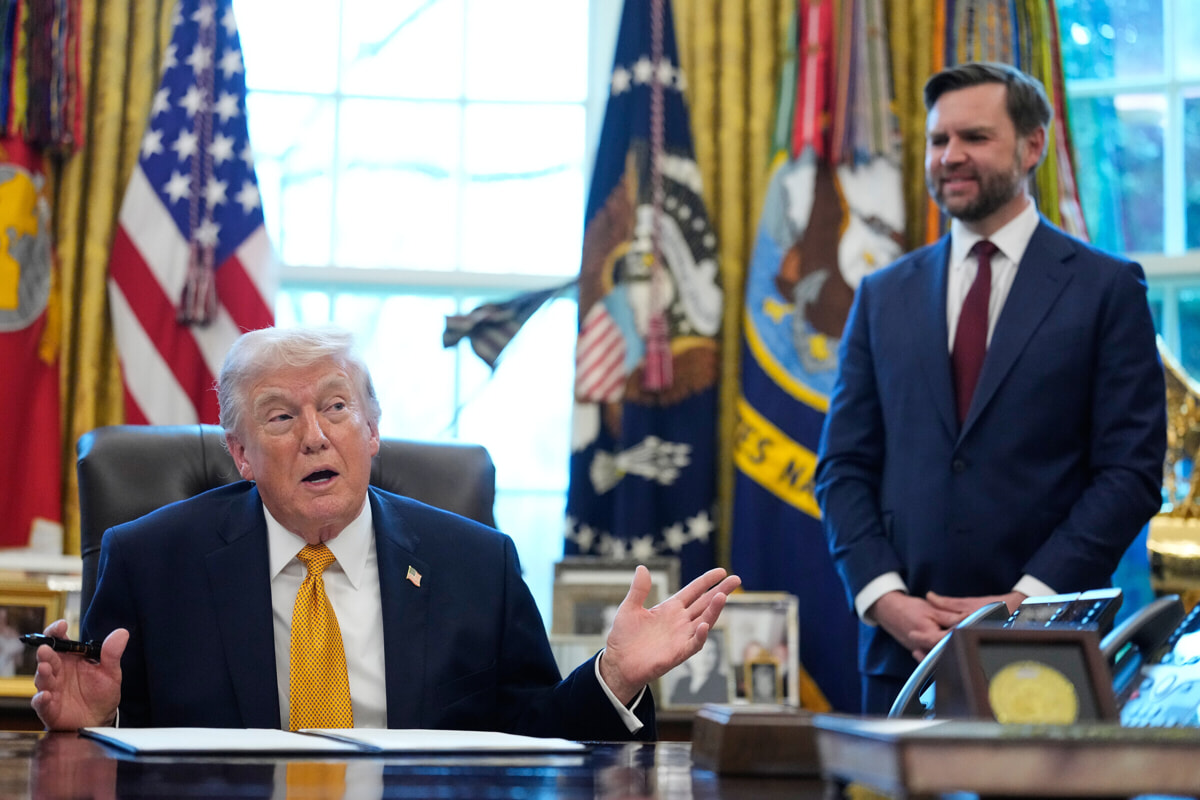
In practice, the 25th Amendment has been used only temporarily and consensually, for transfers of power related to medical interventions: in 1985 with Ronald Reagan and in 2002 and 2007 with George W. Bush. The forced removal procedure, however, has never been applied and, even today, appears difficult to implement, given the compactness of the executive around Donald Trump, despite his public outings.
Then there is the path of voluntary resignation, which generally occurs when political support for the president disappears, often before the start of impeachment proceedings. It is the path followed by Richard Nixon, who resigned in 1974 following the Watergate scandal. More than fifty years ago, in a world still marked by the rigid balance of the Cold War. Thinking about a similar scenario today seems rather unlikely.
However, things could change after the midterm elections, in the event of an electoral collapse and significant defections within the Republican base and the Maga movement. After all, few would have predicted many of the events that are leading towards a new global economic crisis: the fourth in less than twenty years.