

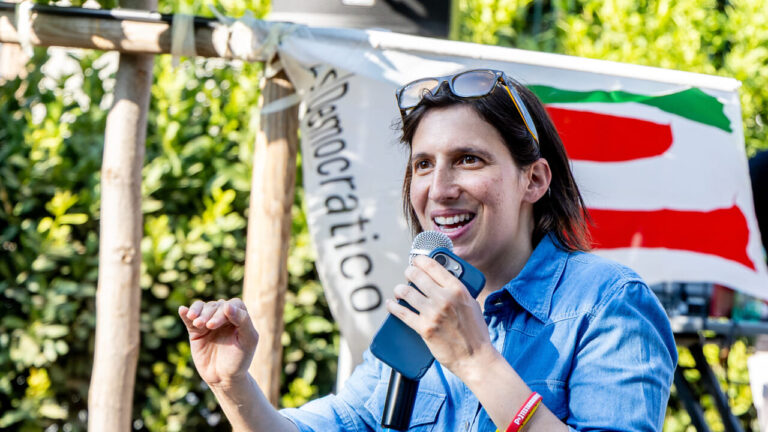
Elly Schlein presents her recipe against high bills and energy poverty. A package of five measures with a total cost of 14 billion euros which can be recovered thanks to the 0.6% of GDP exemption from budget constraints granted by the EU for investments in the energy sector. In essence, for a three-year period, Brussels allows the agreements on the public deficit to be exceeded, but the resources must be made available by the individual states. There’s no point in beating around the bush: the coverage would come from the issuance of new public debt.
The ‘Thermal Account’ for heat pumps
Having clarified this point, let’s look at the essence of the proposals reported by the ‘Corriere della Sera’. “The first intervention” says Schlein, “is the allocation of 2 billion to double the resource allocation of the ‘Thermal Account’, the non-repayable contribution in favor of private individuals, public administrations and the third sector for the replacement of fossil fuel air conditioning systems with electric heat pumps. It would help reduce energy poverty which affects 9% of Italian families”.
The incentive Schlein talks about is already operational. Managed by the GSE (Energy Services Manager), the ‘Thermal Account’ reimburses up to 65% of the expense for those who replace old polluting heating systems (such as gas or oil boilers) with efficient and renewable systems, such as heat pumps. The ‘Thermal Account’ can be requested both by private individuals (to replace existing systems) and by public bodies. The fundamental difference with the classic construction bonuses is that in this case the reimbursement does not take place through tax deductions, but a direct transfer.
Social housing funds and business incentives
Schlein’s second proposal is to allocate 3 billion to the Housing Plan for Public Residential Building (ERP) with the aim of making 100,000 public houses more efficient “where the families most exposed to high bills live, often forced to choose between heating the house and paying other expenses”.
Schlein’s plan therefore envisages “allocating 4 billion to incentivize companies in the electrification of low and medium temperature industrial processes, helping them to reduce natural gas consumption (and supporting the industrial heat pump supply chain, of which Italy is the leading producer in Europe)”. In short, it is about encouraging companies to scrap old industrial gas boilers and install industrial heat pumps that pollute less and save money.
Public transport, the electricity grid and charging stations
As a fourth point, the secretary of the Democratic Party indicates the strengthening of public transport with the refinancing of the single fund for the metropolitan network and the renewal of the bus fleet with 100% electric vehicles. Expected expenditure: 3 billion. Finally, and we are at the fifth and final proposal, Schlein wants to allocate 2 billion “for the efficiency of electricity networks, the development of battery and storage systems and charging stations”. In short, it involves improving the efficiency of the electricity grid (also with the installation of maxi-batteries) and increasing the charging points for electric cars. A vast programme, but apparently all in debt.