

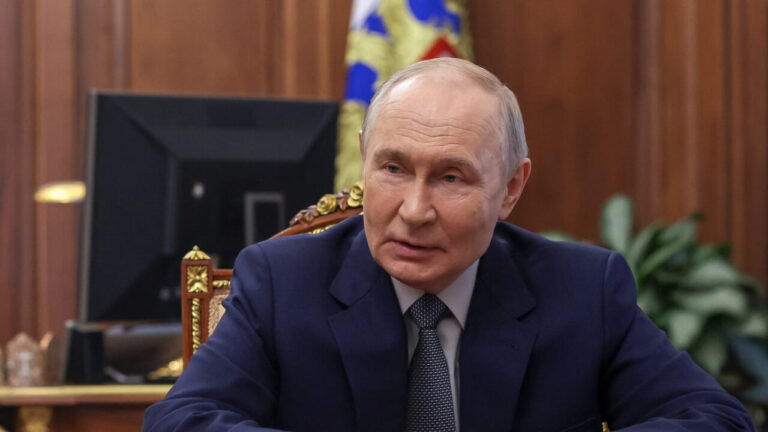
The Kremlin fears attempts on Vladimir Putin’s life and has drastically strengthened the security apparatus around the president. The surveillance measures introduced are unprecedented and concern anyone who comes close to Putin, as well as the management of his own daily life.
The European intelligence dossier
According to a European intelligence agency dossier obtained by CNNcameras were installed in the homes of collaborators and bans on the use of public transport were imposed for chefs, bodyguards and presidential photographers. Anyone meeting with the Russian leader is now double-screened, and limited staff can only use phones without an internet connection.
Likewise, it is the president’s daily routine that has been turned upside down: Putin has reduced appearances in public places to a minimum, even avoiding attending residences in Moscow or Valdaj. Since the beginning of the year, the president has not visited any military facilities, spending weeks at a time inside modernized bunkers in the coastal Krasnodar region, while the presidential press office relies on the release of pre-recorded images to give a semblance of regularity.
Where do the fears for Putin’s life come from?
A series of targeted assassinations of senior Russian officials reportedly raised the presidential office’s alert threshold. The killings ended on December 22, 2025 with the assassination of Lieutenant General Fanil Sarvarov, who died after the explosion of a bomb planted under his car in southern Moscow. This attack, the third against a general in twelve months, would have generated a clash between the security leaders: during a tense meeting on 25 December 2025, the Chief of Staff, Valery Gerasimov, harshly accused the director of the FSB security services Alexander Bortnikov of not knowing how to protect his leaders. In response, Putin ordered an immediate plan to expand the Federal Protective Service escort to ten additional high-ranking commanders.
The leaked documents highlight growing instability at the top. Among these, the former Defense Minister and current Secretary of the Security Council, Sergei Shoigu, indicated by European intelligence as a potential risk for a coup d’état due to his strong grip on the military high command. His position has been compromised since March 5, 2026, after the arrest of his former deputy and close ally Ruslan Tsalikov, investigated for corruption, embezzlement and money laundering.
Analysts view the arrest as an explicit violation of the tacit immunity pact among Moscow’s military elite, raising the likelihood that Shoigu himself will become a target of potential investigations.
The shadow of Kiev on the parade for the “Victory Day” on May 9
Meanwhile, for the upcoming Victory Day parade on May 9, Red Square will host a drastically scaled-down event, stripped of the display of tanks and ballistic missiles. Kremlin spokesman Dmitry Peskov confirmed the extraordinary measures, explicitly justifying them with the need to minimize the dangers linked to terrorist threats and long-range attacks from Kiev.
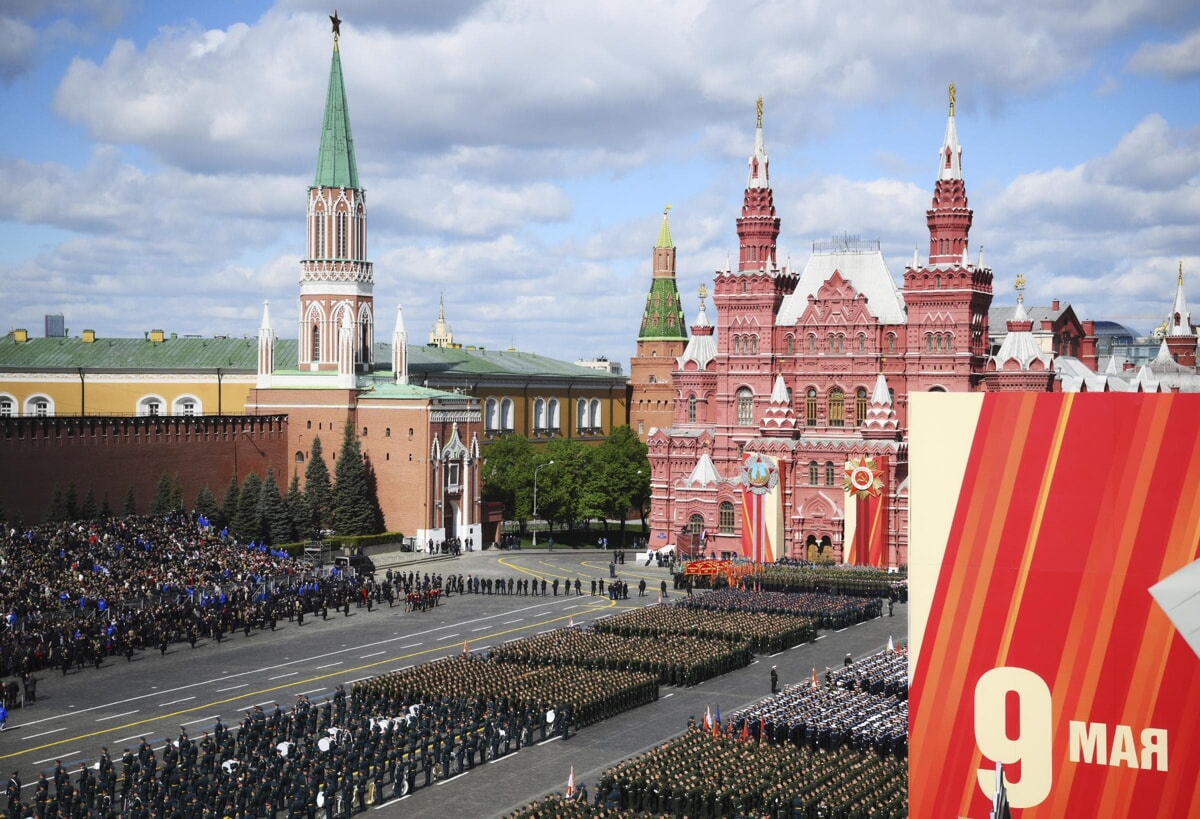
No military vehicles will parade this year and, as announced by the Ministry of Defense, “due to the current operational situation, students of the Suvorov military schools and Nakhimov naval schools, as well as the cadet corps and a column of military vehicles, will not participate in this year’s military parade”, reads the released statement.
Putin also raised the possibility of a ceasefire with Ukraine during a phone call with US President Donald Trump on the day of the May 9 parade. The parade was canceled in regional capitals, such as Krasnodar and Kaliningrad.