

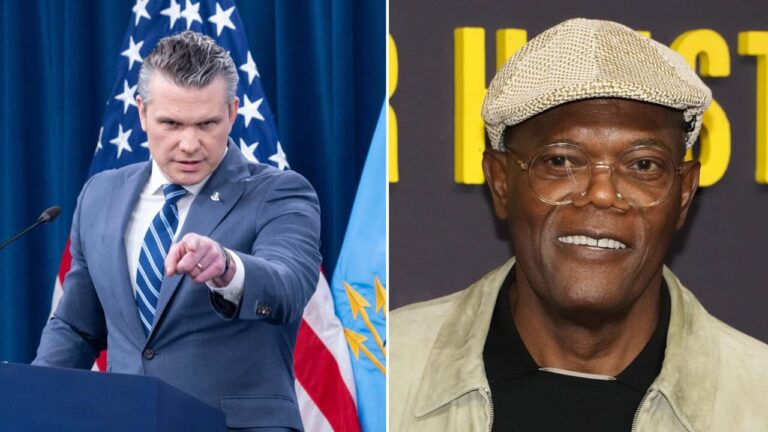
During a briefing at the Pentagon, US Defense Secretary Pete Hegseth made a sensational gaffe. The Trump administration minister held a moment of reflection and quoted a prayer recited by the crew of a plane involved in recovering the American pilot who fell behind enemy lines in Iran.
Hegseth probably didn’t know that the monologue was a adaptation of Ezekiel 25:17 from the film Pulp fiction. Or at least he didn’t tell the public. The secretary perhaps thought it was a series of biblical verses or inspired by Christian sacred texts.
Prayer
Hegseth, before donning his preacher’s hat, explained that he had spoken with Admiral Brad Cooper and how religious teachings are influencing the Pentagon’s decisions on Iran. The Secretary of Defense then went on to recite the “prayer” of Sandy 1, one of the aircraft used by the US army to save one of the two airmen who had ended up in Iranian territory after their plane was shot down.
🇺🇸🚨‼️ SUPER CUT: Secretary of War Hegseth reads a US Air Force version of the fictional Bible verse from Pulp Fiction.
Whether this is awesome or stupid is up to you. pic.twitter.com/5HuFz8dcrD
— Lord Bebo (@MyLordBebo) April 16, 2026
“They call it Csar 25:17, which I think is meant to harken back to Ezekiel 25:17,” Hegseth began without mentioning Tarantino’s film. “Pray with me, please: ‘The path of the downed airman is hindered on every side by the injustices of the selfish and the tyranny of wicked men. Blessed is he who, in the name of camaraderie and duty, leads the lost through the valley of darkness, for he is indeed his brother’s keeper and the finder of lost children. And I will bring upon you great vengeance and furious wrath upon those who seek to capture and destroy my brother, and you will know that my callsign is Sandy 1 when I wreak my vengeance on you Amen,” the Defense Secretary recited.
The prayer is nothing more than an adaptation of Tarantino’s Ezekiel 25:17 to the military context and the episode of the rescue in Iran. In the film, the director has Samuel L. Jackson, in the role of the killer Jules, recite the following passage: “The path of the righteous man is threatened on all sides by the injustices of the selfish and the tyranny of evil men. Blessed is he who, in the name of charity and good will, guides the weak through the valley of darkness, for he is indeed his brother’s keeper and the finder of lost children. And I will bring upon you great vengeance and furious wrath against those who attempt to poison and destroy my brothers. And you will know that my name is the Lord when I unleash my vengeance on you.” From a comparison of the two texts, it clearly emerges how the soldiers adapted the prayer.
The biblical verse attributed to the prophet Ezekiel does not exist in this form. “And I will take great vengeance on them with furious punishments; and they will know that I am the Lord when I take my vengeance on them”, reads the corresponding passage in the Old Testament. Tarantino and the other authors of the film combined the prophet’s verse with others present in the sacred texts.