

17Set 25
In Tarquinia it emerges tombs in the Etruscan Chamber of the end of the VIII century
Red red -colored and yellowish shreds re -emerge from the walls of the funeral bed, the last finds of a rough pictorial decoration in Fascioni, the oldest so far attested in Tarquinia. To compose the set of the kit, now in the course of restoration, there are vessels of unpublished dough and purified clay, ornaments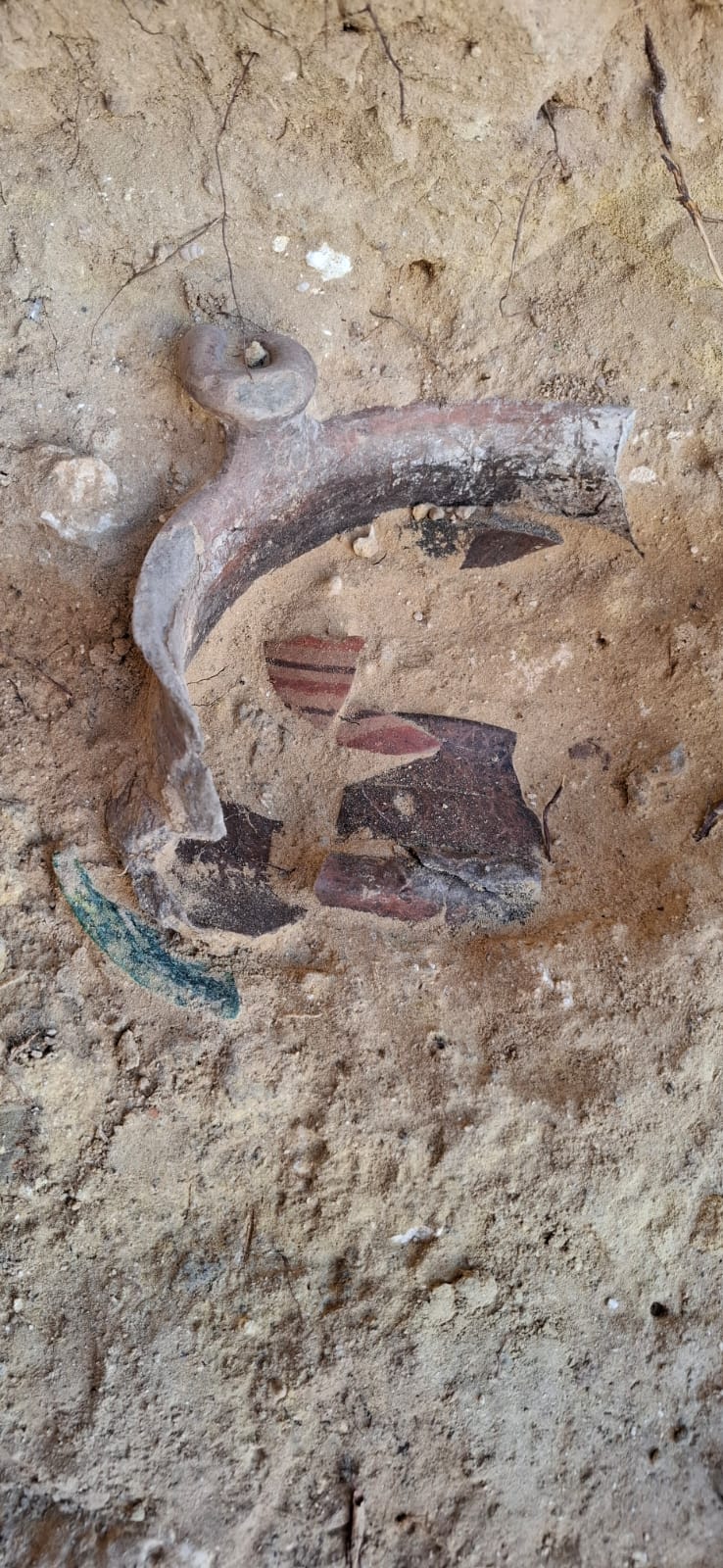 Personal and vasellame in bronze foil, as well as several bronze rings scattered throughout the environment.
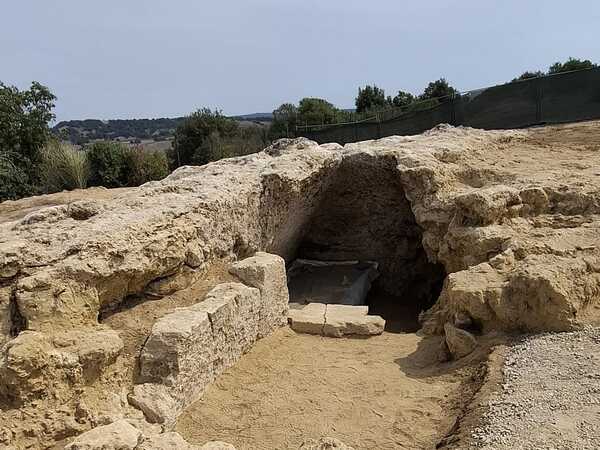
These are some some of the Pre -randy that emerged in the Tarquinian Necropolis of the Monterozzi, Unesco site together with that of the Banditaccia di Cerveteri, where the first Scavi del Pacti campaign of the Pact – Archaeological Park of Cerveteri and Tarquinia ended a few days ago. Archaeologists found themselves in front of an Etruscan chamber tomb, inviolate, in all probability at the end of the eighth century BC, characterized by a single quay molded for the deposition. The space it develops in front of the entrance of the hypogenic, perimeter on one side with large limestone blocks, has been reused for a second burial, probably more recently, also accompanied by a kit found in fragments.
The small hypogeum, of the “upper slit” type, obtained in the limestone full of marine fossils, is located on the edge of the Monterozzi plateau, In a peripheral area of the monumental site, which gives a spectacular view to the ancient city and in 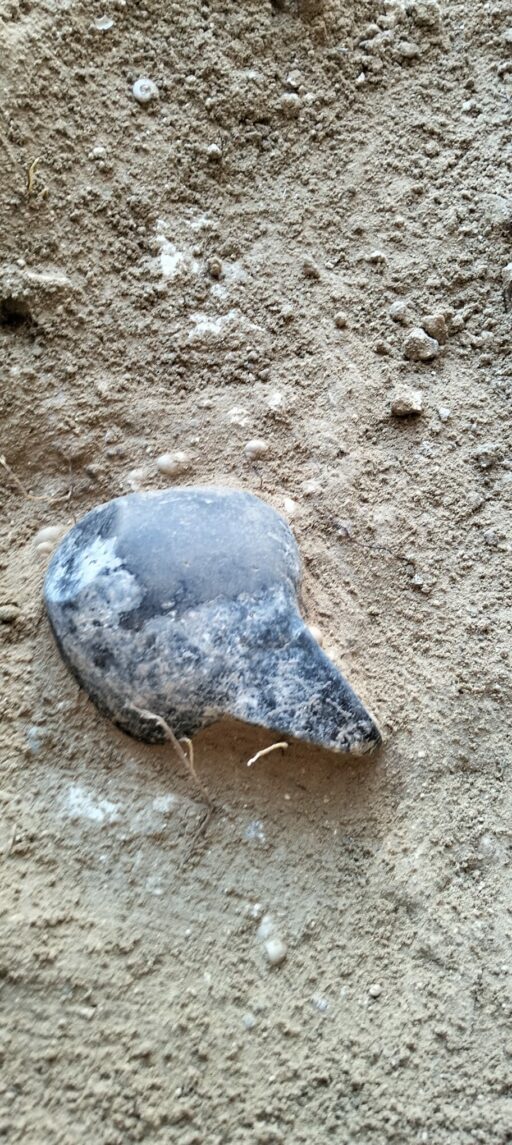 What the explorations of the Lerici Foundation in the 1950s-70s of the last century had not reported significant archaeological evidence.
The discovery, which took place as part of the excavation financed by the Directorate General Museums of the Ministry of Culture, coordinated and directed on the field by the director of the PACT Vincenzo Bellelli and by the archaeologist official Daniele Rossetti, will allow to know more about the oldest phases of occupation of the Monterozzi necropolis and on the history of Tarquinia. In the weeks to follow the tomb just discovered, you can visit thanks to routes for the public by the PACT.
Carlo Franza