

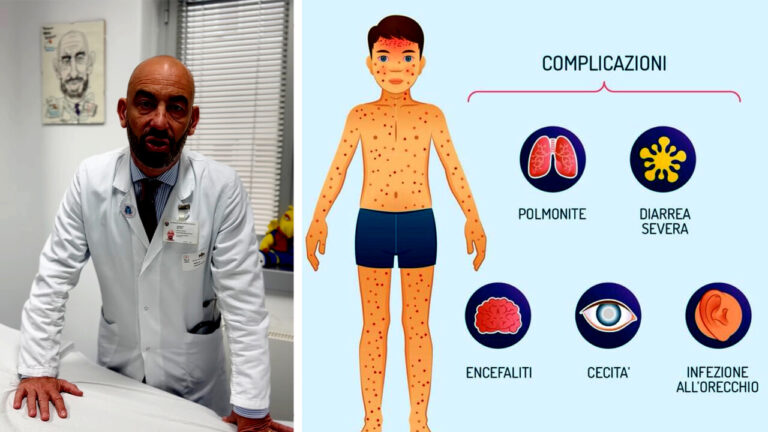
Italy is once again facing a potentially unprecedented measles epidemic. The alarm comes from Matteo Bassetti, director of the infectious diseases clinic at the San Martino hospital in Genoa, in the hours in which a circular from the Ministry of Health certifies the increase in cases in 2026, already higher than the record-breaking ones in 2024. “We are faced with a real measles emergency”, explained the expert in a video released on social media, underlining how in Liguria alone there have been 12 cases recorded in the last 20 days, and 4 hospitalizations at the San Martino with “pulmonary, neurological and hepatic complications”. The beginning of what, according to Bassetti, risks turning out to be a very serious epidemic throughout the country, linked to the decline in vaccinations for a disease that is still too often considered harmless after all, and which instead often produces serious and potentially lethal manifestations, especially in unvaccinated adults (who are the majority of new cases even in this year’s data).
An extremely contagious infectious agent
Measles is an acute disease caused by an RNA virus, the Paramyxovirusbelonging to the genus Morbillivirus. It is one of the most transmissible human pathogens of all: its basic contagiousness index, called R0 (which indicates the average number of secondary infections caused by each patient), fluctuates approximately between 12 and 18. A single infected person, therefore, is destined to infect another dozen, in the absence of vaccines or previous immunity.
Transmission occurs mainly through the air, through droplets of saliva released by coughing or sneezing, or by direct contact with the nasopharyngeal secretions of an infected person. The virus is particularly good at spreading: it remains active and suspended in the air or on contaminated surfaces for several hours, significantly increasing the chances of contagion in closed or poorly ventilated environments.
Symptoms and subjects at risk
The clinical manifestation of the disease begins after an incubation period usually ranging between 10 and 14 days. The initial phase presents with flu-like symptoms: high fever, dry cough, rhinitis and conjunctivitis. In this phase, the so-called Koplik spots may appear on the oral mucosa, small whitish dots that anticipate the more well-known bright red skin rash that characterizes measles in the acute phase.
The people most exposed to the infection and its complications are individuals who are not vaccinated or who have not contracted the disease in the past. These include both infants who have not yet reached the minimum age to access the vaccination cycle, and adults who were not immunized during childhood. Although it is often considered a simple disease of childhood, measles has a significant rate of complications, including ear infections, pneumonia and bacterial superinfections, up to serious neurological alterations such as acute encephalitis, which are more common in unvaccinated adults, and can often require hospitalization. Even in developed health systems like ours, the disease can kill even one patient in a thousand, mainly due to respiratory and neurological complications.
Vaccinations and herd effect
There is no specific antiviral treatment directed against the measles virus: the therapy is essentially symptomatic and aimed at supporting the organism or managing any bacterial complications that may arise. The only truly effective tool for combating the infection remains primary prevention through administration of the vaccine, generally supplied in a tetravalent or trivalent combination (Mpr or Mprv).
Vaccines, Italy is going backwards: the map of the collapse and the numbers that are most worrying
To interrupt the chain of transmission and eliminate the endemic circulation of the virus, international health authorities and the Higher Institute of Health indicate the need to achieve and maintain vaccination coverage of at least 95% of the target population, with two doses of vaccine (an important detail, because all those born before 1999 received a single administration of the vaccine and should have a booster in adulthood to be sufficiently immune). In this way, the virus does not find a sufficiently large susceptible population, and tends to disappear to the benefit of newborns and other categories of people who cannot be vaccinated due to age or health reasons.
What are the mandatory vaccines? And in what calendar?
The drop in vaccinated numbers below the critical threshold instead creates pockets of susceptibility that allow the virus to start circulating again, generating epidemic outbreaks that expand quickly due to the contagiousness of the pathogen. This is what has been happening in recent weeks, and unfortunately once a measles epidemic begins it is very difficult to contain with public health tools. For this reason, experts remind us that verifying one’s vaccination status and completing the cycle remain fundamental steps to protect the most fragile members of the community.