

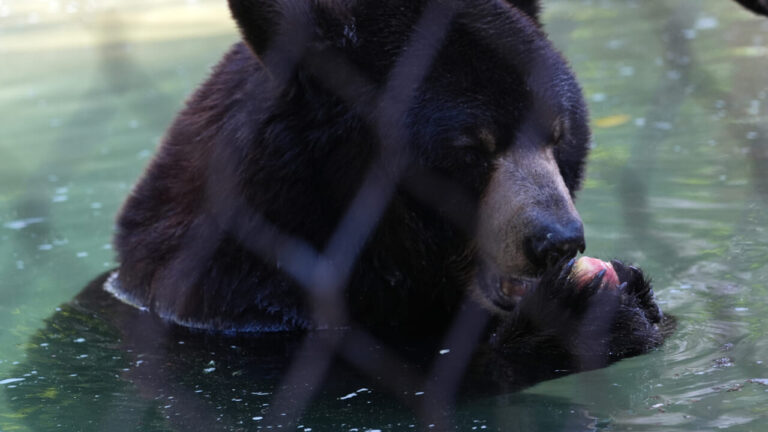
Authorities in Iwate Prefecture, in north-eastern Japan, are on the trail of an Asian black bear suspected of “plundering” homes in the town of Shizukuishi in search of food. We are talking about 14 intrusions reported in the last two weeks. The unusual frequency and manner of the blows lead experts to hypothesize that it is a single specimen that has now lost all fear of human beings.
Face to face in the kitchen
The latest episode took place on Monday evening when Mitsuo Matsubara, an 87-year-old pensioner, after hearing suspicious noises, suddenly found himself face to face with the animal in his kitchen. The bear had already opened the refrigerator and was rummaging through the food scattered on the floor.
A few days earlier, another resident, returning from shopping, surprised the animal in the house, not far from the room where the father slept. After an initial escape outside, the bear – described as a 1.65 meter tall specimen – attempted to get back into the house, forcing the owner to fight with all the strength he had to keep the door barred.
What guides the animal’s incursions – assuming that the author of the “strikes” is a single specimen – seems to be a strong predilection for sweet flavors. In addition to having ransacked a traditional pastry shop by removing several donuts from the refrigerator, the bear targeted a private home five times, consuming supplies of biscuits, sugar and karinto (a typical fried sweet). On a local farm, however, the bear was filmed feeding on milk-based calf feed.
Bear hunting
The local administration has deployed surveillance patrols, placed cage traps and installed electric fences around the most exposed homes. Among the residents there are also those who take action with artisanal methods: a local farmer has started to sprinkle the entrances of his estate with a repellent mixture based on Japanese mustard. But for now the bear has gotten away with it.
Bear attacks have increased in recent years in Japan. According to experts, the progressive depopulation of rural areas and the abandonment of the countryside are reducing the natural boundaries between wildlife habitat and urban centres, pushing animals to move ever closer to homes in search of easy food.