

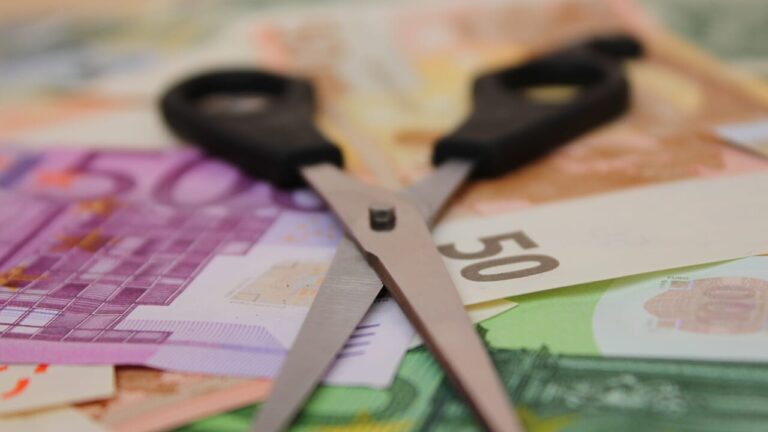
When parties present their electoral programs (a 1957 law obliges them to do so) they never or almost never list the expenditure items where they intend to recover the resources to achieve what they promise. The result is that the programs end up turning out to be something halfway between a dream book and a shopping list, but whose aim is still the same as usual: to deceive the voter, to make him believe everything and the opposite of everything. So on the eve of an electoral campaign that promises to be a crackling one, the issue of the actual “practicability” of the proposals put forward by the political forces becomes particularly topical again, especially in terms of their economic sustainability.
What is the proposal of the Luigi Einaudi Foundation
A topic now brought to the fore by a bill proposed by the Luigi Einaudi Foundation together with some exponents of the economic and cultural world, primarily Carlo Cottarelliwho are also launching a campaign to collect signatures in support of the proposal itself, entitled “How much do you cost me”, a proposal aimed at introducing the obligation for all parties to indicate alongside the measure advanced in the electoral program also an indication of how to finance it (even with debt, but in short it must be declared).
The proposals structured in this way would be examined by the Parliamentary Budget Office, an independent authority for the protection of public accounts, and “stamped” as appropriate. The collection of signatures (to join you need to go to the Einaudi Foundation website) is already achieving an unexpected result, with thousands of signatures, most of them very “prestigious”.
Promises that don’t take cost into account
The campaign starts from the observation that, as mentioned, almost in no case do the parties list the economic amount necessary to achieve their programmatic points and where to find the related funds, and at most they limit themselves to indicating the “recovery of tax evasion”, the “cuts to unproductive spending” and finally “the Pnrr funds” as the tools with which to hunt for resources.
Expressions that boil down to being just a way to get around the obstacle, because if you don’t say where you actually intend to attack – tax evasion (small VAT numbers? large assets? large industry? finance?), which “unproductive” expenditure to cut (welfare subsidies? the forest of exemptions? contributions to industry or cooperatives?) or in which direction to divert the Pnrr funds instead – it’s clear that nothing is being said. Just empty words to pull the wool over your eyes.
In 2018, the economist Roberto Perotti even wrote a book on this problem, entitled “How much politicians’ promises really cost”, from which it was clear that the Grillino citizen’s income alone would have cost (as in fact it did) tens of billions, followed not far behind by the Lega’s Flat Tax. In more recent times the calculation was done by Carlo Cottarelli and the Observatory on Public Accounts that the professor coordinates, and in this case too we are talking about around 150 billion a year in empty promises.
From the bridge over the Strait to mortgages: impossible ideas
Taking the programs of the political parties in the 2022 elections, the independent site specialized in fact-checking “Political Report” had highlighted that in 96 percent of the “promises” no coverage was listed and in the remaining (and paltry) 3.8 the indication was completely generic.
A “habit” common more or less to all parties, although as we will see with some recurring propensity to “exaggerate”. In the centre-right programme, we are talking about 2022, with the high-sounding title “For Italy”, the objectives were indicated (among other things) the bridge over the Strait of Messina, the modernization of the infrastructure network, extension of the flat tax, concessions for access to mortgages for young people, cutting the tax wedge. Obviously none of these measures included an indication of the costs and where to find the resources.
The blow to the citizens’ income accounts
The citizen’s income is an example of how a measure whose economic impact is not well known can ultimately prove costly, to the point that one of the points of the government of Giorgia Meloni in 2022 it was abolished (actually launched in 2024, replaced by other measures to support income and job training).
As always happens when it comes to public finances, the accounts are not so easy, but it is not far from the truth to say that in the four and a half years in which the RdC has been in force it has led to an outlay for the treasury of around 35 billion, two and a half times the estimated cost for the Messina bridge against which the left has lashed out (and lashes out) with such force.
It is true that other income support measures for the most needy groups already existed before and have continued to exist, but – and we return to the initial assumption – presenting such a qualifying point in the program without first having outlined its costs and above all where to go to get the money is a resounding mockery for the voters. So much so that in the 5 Star Movement program for 2022 the “confirmation” of the RdC was indeed requested, but only at the bottom of the many proposals, and with a fairly vague formula (“Measures to make the system of active policies more efficient and to combat fraud”) which in fact took note of the previous failure.
The drain of the Flat Tax: between 35 and 50 billion
Another measure that is somehow “symbolic” of exorbitant costs but not presented to voters is the Flat Tax, the flagship of the League. The party of Matteo Salvini he has always focused on tax reduction, like the centre-right and traditionally right-wing parties, but the idea of a “flat” tax has always been at the top of his thoughts. There have been countless versions in which it has been proposed over time, obviously without ever having a somewhat reliable “cost” forecast.
To the sustainability protests raised by the opposition and numerous economists, the League has always responded by citing the alleged expansionary effects of the Flat Tax itself, which would have increased consumption and therefore indirectly tax revenues. The calculation of the Northern League Flat Tax is not easy because its scope has changed and from time to time the contours have “changed” (such as exemptions and deductions), but even in this case we are not far from the truth by claiming that we are around 35 billion per year (Cottarelli’s Ocpi estimated it at around 50).
Abolish the Fornero law? Between 10 and 20 billion
The Salvini League also spent a lot of effort on the abolition of the Fornero law, which in 2011 raised the retirement age and linked it to the adjustment of life expectancy. Over time, abolishing Fornero has become a kind of Salvinian mantra, which did not take into account the fact that the 2011 reform had been completed because the system was no longer sustainable.
Also in this case, the abolition proposal was not accompanied by an adequate forecast of the costs to achieve its neutralization, which the State General Accounting Office quantified at around twenty billion per year if we talk about the 2018 proposal and more or less half if we intend to refer to the “Quota 41” proposal subsequently formulated again by the League.
“Free” nursery schools and pensions: the Pd’s blessing
The Democratic Party has also stood out for its proposal of measures that foresee high costs for the State, without any sources being put forward to find them, except in a generic way such as (we mentioned above) the recovery of tax evasion or the increase in inheritance tax for the super-rich, as if the heirs of a few hundred Scrooge McDucks could bear the impact, for example, of a new welfare structure.
In fact, it is in this direction that the PD’s proposals have been concentrated in 2022. Such as that of making nursery school “free and compulsory”, a measure which is partly useless because there are already large exemption bands for the less well-off and partly in any case expensive (there was talk of 1.5 billion per year) or the “guarantee pension for young people” to guarantee those who started working after 1996 which would have cost around 4/5 billion per year, not indicated in the program dem.
Cutting the tax wedge: everything and the opposite of everything
We leave this measure for last not because it is less important (it is the measure par excellence, the one that broadly provides for a “net” increase for the worker compared to what goes instead in taxes and contributions) but because it has been foreseen by all the parties (everyone knows that elections are won if you promise to earn more), even in this case without explicitly providing coverage.
Since the expression “tax wedge reduction” is vague in itself, it is really difficult to identify an amount, a “cost”. However, we can see how much the amount of the cut that the Meloni government finally made in 2024 actually was, amounting to around 10 billion (in 2025 transformed into a small Irpef cut). For once a promise kept.
Dossier is the exclusive subscription investigative section of The Vermilion. If you would like to support our journalistic work and subscribe, visit our showcase by clicking here.