

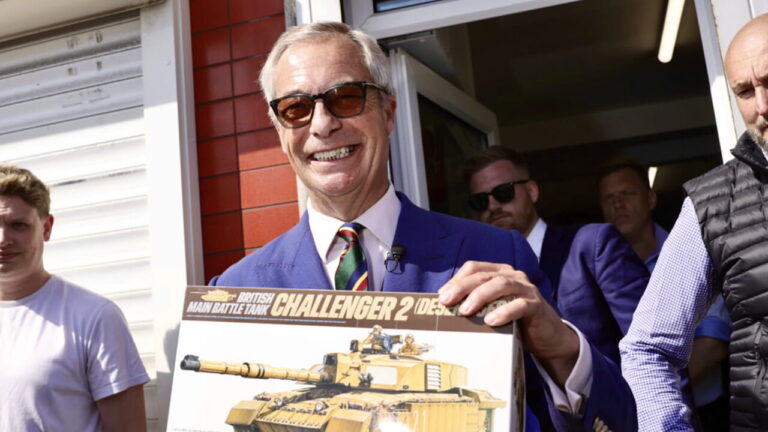
Nigel Farage’s resignation closes a political crisis in the United Kingdom which, until a few days ago, had remained in the shadows. But they also represent a high-risk gamble. By giving up his parliamentary seat and causing a by-election in the Clacton-on-Sea constituency, Farage has decided to gamble everything in a single game: if he manages to regain his seat, he may even emerge stronger; if instead he were to lose, a potentially existential crisis would arise for Reform UK.
Let’s take a step back: what happened
While all the attention was focused on Whitehall, where a modern re-edition of Macbeth was being staged – intrigues, betrayals and conspiracies culminating in the resignation of Prime Minister Keir Starmer – on the other side of the chamber the internal crisis of Reform UK was taking place. A sequence of events relating to Nigel Farage which, added one after the other, has eroded his credibility.
Nothing new in post-Brexit British politics, now fought almost exclusively through scandals, palace maneuvers and media hype.
The case of Harborne’s 5 million in cryptocurrencies
If during Starmer’s “regicide”, Farage managed to sneak behind the scenes, the £5 million, received in 2024 from the cryptocurrency tycoon Christopher Harborne, remained hanging like a sword of Damocles over his leadership.
After all, it is not the money itself that causes scandal. The tycoon has been the main financier of Reform UK for years: after supporting the Brexit Party in 2019, he continued to fill the coffers of Farage’s party, paying over 22 million pounds in 7 years. Between the end of 2025 and the first months of 2026 alone he made official donations of another 12 million, all regularly declared. The issue, therefore, does not concern the financing, but those 5 million pounds that Harborne would have paid directly to Farage in the spring of 2024, never declared, and – according to the Labor Party – used illicitly during the electoral campaign for the elections of 4 July 2024.
Farage objects that they were a personal gift and not a political donation, and should not be declared as such. According to the Commons code, however, new MPs must declare within one month the significant financial interests received in the 12 months before entering Parliament. In short, the dispute is over how that money should be classified: personal gift or benefit subject to registration.
The investigation is entrusted to the Parliamentary Commissioner for Standards, Daniel Greenberg, and the possible consequences range from disciplinary sanctions to suspension from the House of Commons, which would have opened a by-election in Clacton. Aware that that scenario was now increasingly probable, Farage chose to anticipate events.
George Cottrell and real estate
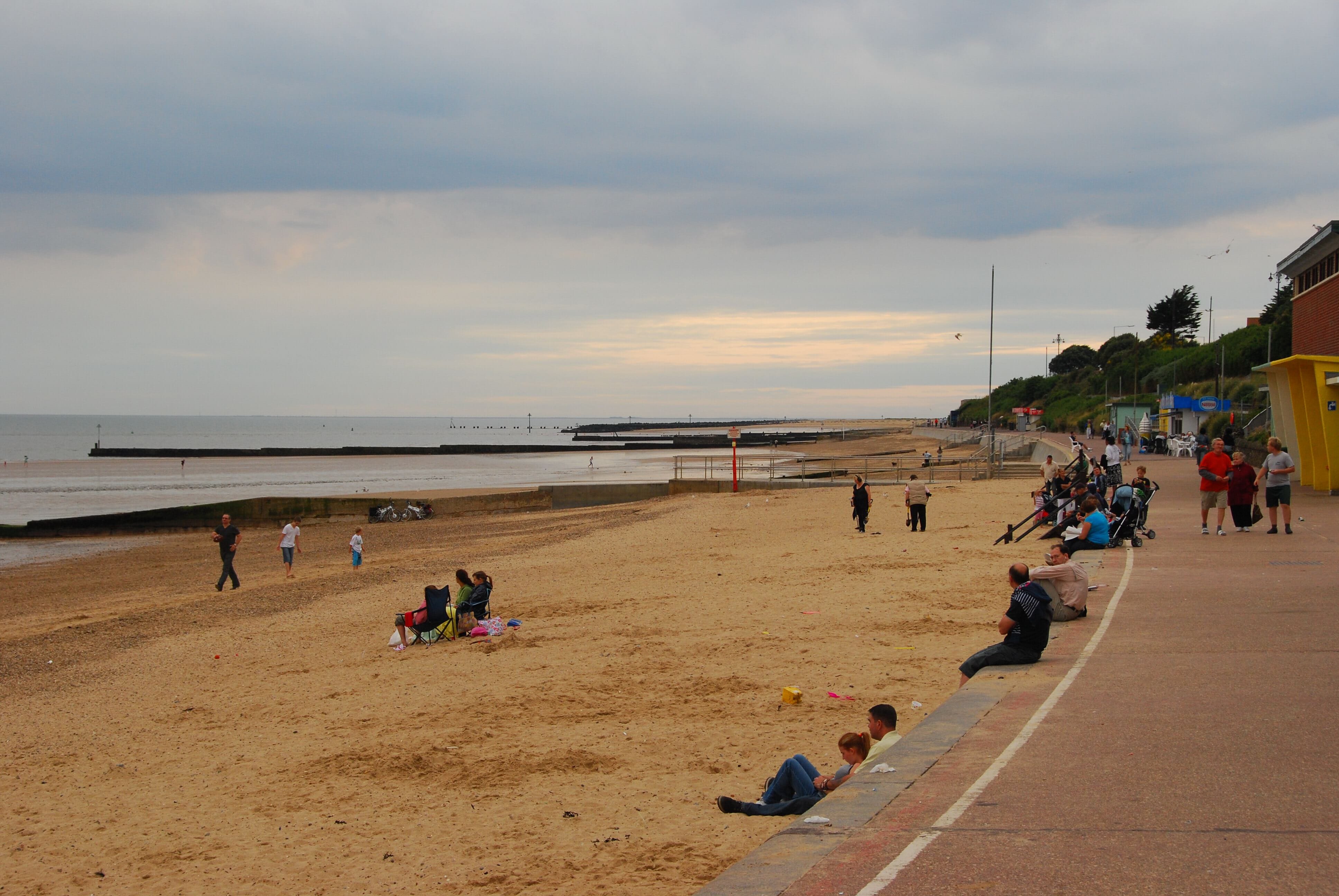
But the move, however cunning, gives Farage only a minimal margin of control, because his troubles do not stop at the Clacton seat (pictured below).
Smelling blood, the media must have thought that every Macbeth self-respecting person needs his Three Witches. So they began stirring the cauldron from which George Cottrell emerged.
A long-time friend and collaborator of Nigel Farage, Cottrell is an uncomfortable character to be associated with. In 2016 he was arrested at Chicago’s O’Hare airport while traveling with Farage. US authorities accused him of offering money laundering services to undercover agents posing as drug traffickers. Of the 21 initial charges, including money laundering, fraud, extortion and blackmail, only one remained: Cottrell pleaded guilty to wire fraud, admitting that he had attempted to defraud criminals operating on the dark web, and served eight months in prison.
An investigation brought him to center stage Sunday Timesaccording to which Cottrell himself supported Farage financially during the 2024 election campaign, financing his staff, private security and providing him with a villa near Buckingham Palace. Reform UK insists it was help from an “old friend”, with no official role in the party, and that those benefits were personal gifts, not political contributions. But the reconstruction is inevitably intertwined with that of Christopher Harborne’s 5 million pounds.
The assets: another 4 million invested in the brick
Last but not least, while the cauldron continued to boil, the third witch took out some requests on the real estate assets of Nigel Farage and his partner Laure Ferrari. According to various reconstructions, the couple would have built a small real estate empire between Sussex, Surrey and Kent, with properties for a total value of more than four million pounds, purchased largely in cash after 2020.
For a British MP, property, economic benefits and significant financial interests must be declared under the Westminster rules. If a property or an economic advantage is among those subject to registration and is omitted, the issue ceases to concern personal assets and becomes a problem of institutional transparency. This is precisely the common thread that unites the three events that weigh on Farage today: the 5 million received from Christopher Harborne, the logistical and financial support provided by George Cottrell and, now, the real estate properties that have come under the spotlight.
Farage seething: because he is (not) sure he will win
That Farage was not calm was obvious from a clash he had a few days ago with a Sky News journalist. An unusual image for someone who, until a few weeks ago, seemed to dominate the media scene in his stainless posture as master of the games. By resigning, Farage has brought the game back to the terrain that is most congenial to him: that of the popular vote, transforming a crisis into a referendum on his leadership.
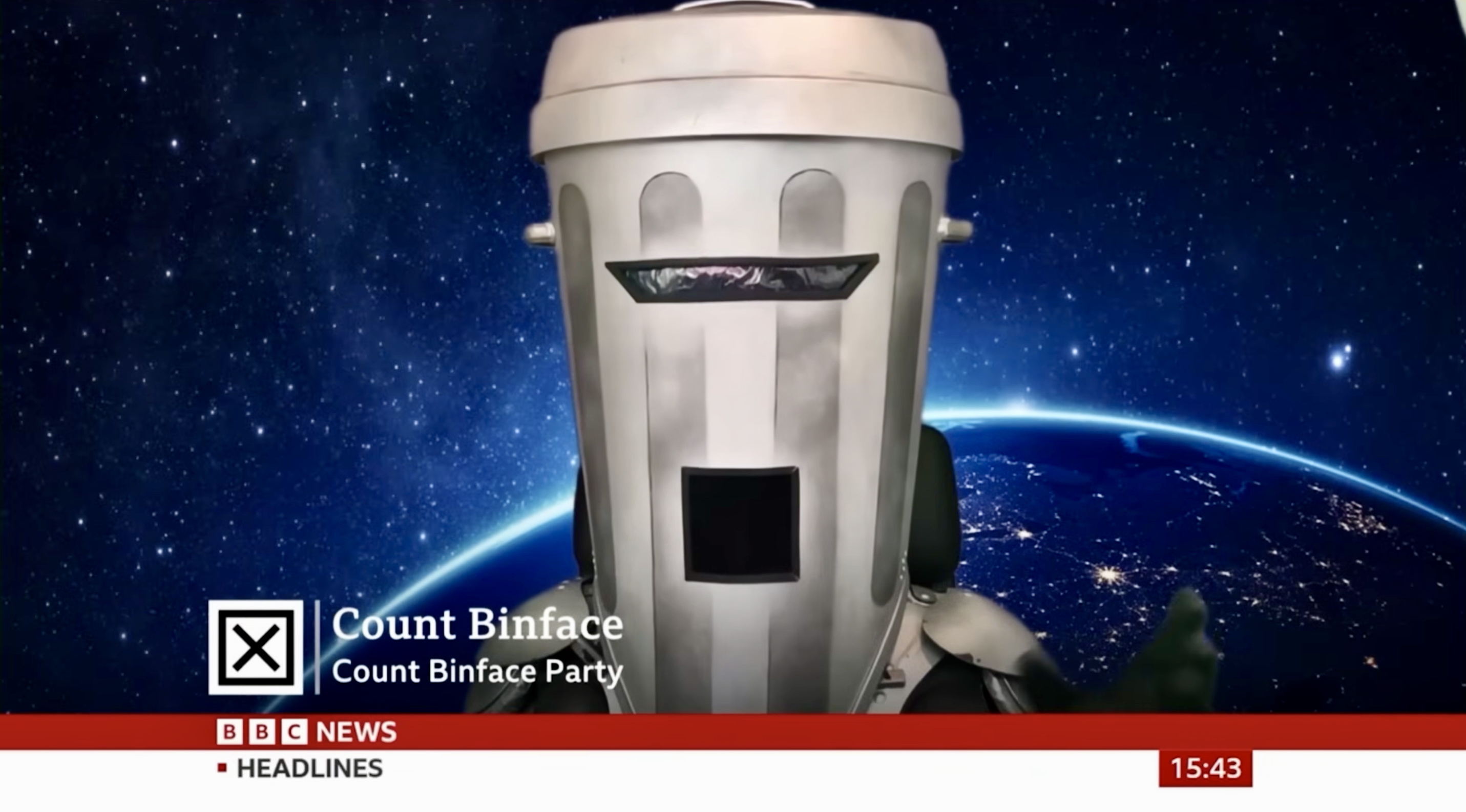
The strategy, however, immediately proved to be a boomerang. The objective was all too obvious and none of the traditional parties decided to lend themselves to the game, leaving the field to the satirical candidate Count Binface, which literally means Count Bin Face (in the photo above, during an interview with the BBC). The by-election thus risks turning into a surreal duel between the leader of Reform UK and a rubbish bin. Whatever the outcome, Farage emerges weakened: a victory would not protect him from future parliamentary consequences; a defeat, however, would turn into an unprecedented political humiliation.
In any case, for the next five weeks he will be forced to share the stage with Count Binface, already invited as a challenger on the main BBC and LBC programmes. Meanwhile, social media was overwhelmed by an avalanche of memes, photomontages and jokes that transformed what Farage imagined as a showdown with the establishment into the greatest satirical spectacle of British politics in recent years.