

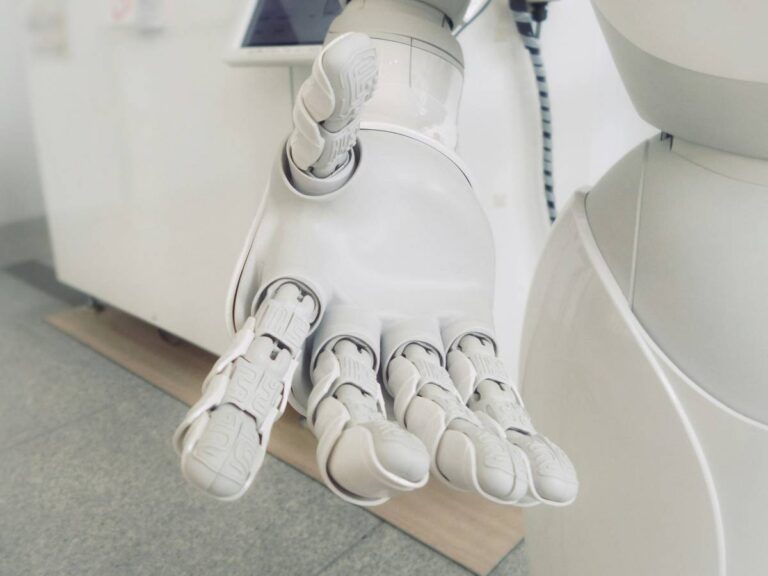
Pepper has two tender eyes, small and soft hands: she knows how to listen patiently and asks pertinent questions, she doesn’t get bored and is capable, in a small group, of including everyone in the conversation. Pepper, together with his other “special colleagues”, represents the new frontier of social robots, “capable of also understanding people’s emotions, decoding facial expressions”, as he tells the
Newspaper Lucrezia Grassi, 29 years old, robotics researcher at the RICE Laboratory of the Department of Informatics, Bioengineering, Robotics and Systems Engineering (DIBRIS) of the University of Genoa, laboratory directed by Antonio Sgorbissa and Carmine Recchiuto. Grassi won the Best Paper Award of the IEEE International Conference on Robot and Human Interactive Communication last year and will present the projects she conducted next Monday at the Collegio Nuovo in Pavia (9pm, in dialogue with Paolo Di Barba, Giovanni Ricevuti and Chiara Toffanin). Every day Grassi lives with Pepper and other humanoid robots and is “educating” them to be even more useful to society: excellent results so far in the medical and healthcare field with patients suffering from spinal cord injuries and elderly people suffering from Alzheimer’s or apathetic or suffering from delirium. Pepper and the others demonstrated listening skills and patience, stimulating people in pain with appropriate conversations. The use of social humanoid robots in the educational sector is also very interesting: in the kindergartens and middle schools where they were tested, both in Genoa and Perugia, the results were promising. We worked on the dynamics of small groups, of 4 people at a time, programming the robots to recognize the different voices and personalities of the speakers in a conversation and identifying who, if necessary, was excluded from the dialogue. «Robots like Pepper – continues Grassi – are “diversity aware”, that is, they are able to communicate by adapting to the interlocutor and their different cultural and emotional sensitivities.
They could have a positive impact in primary schools, where for example there are foreign children who, with poor command of Italian, perhaps risk being excluded. No robot, much less the ones available to us now, will ever be able to replace a person’s work, but it can become an instrument of social progress.”