

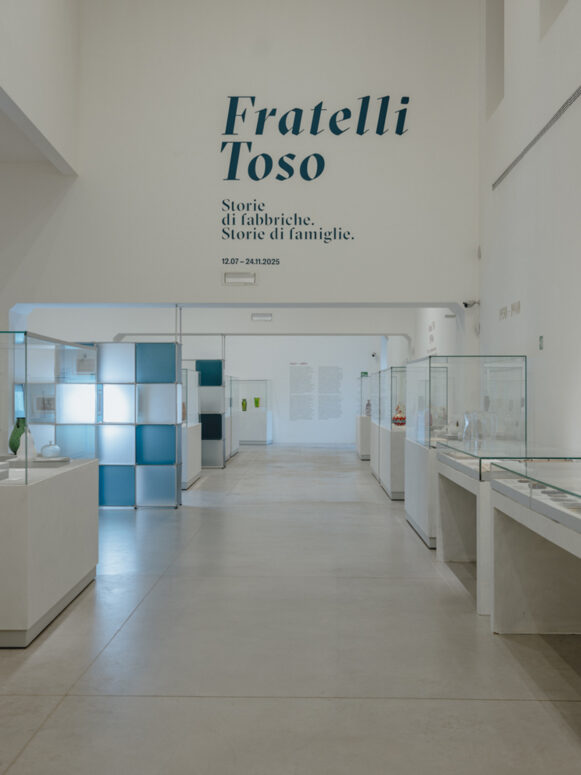
An exhibition to celebrate the 170th anniversary of the foundation of the Fratelli Toso company: a retrospective in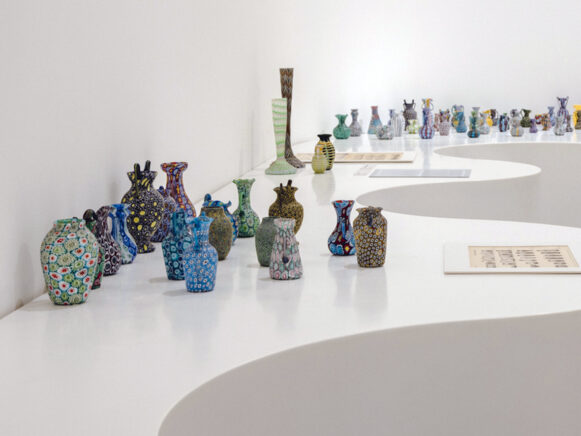 Edit over his most representative production of the twentieth century, capable of combining tradition and innovation, crafts and design. Through glass works, Murrine, original sketches, sketches, photographs and archive documents kept by the family, the exhibition itinerary tells a stylistic and technical evolution that has been able to renew itself from generation to generation.
Brothers Toso. Factories stories. Stories of families, edited by Chiara Cantcina and Caterina Toso, represents the new chapter that the Museum of the glass dedicates to the rediscovery and enhancement of the large Muranese families of the glass, who have been able to combine art, business and innovation by continuing the story started with one hundred years of Nasonmoretti. History of a Muranese glass family (2023–2024) and donation Carlo and Giovanni Moretti 1958–2013 (2024–2025).
Over 250 pieces on display to retrace the extraordinary artistic and entrepreneurial story of the historic Fratelli Toso Vetreria: founded in 1854, it was the first artistic furnace that started again after the long and serious crisis that had hit the island in the early nineteenth century – in the decades between the fall of the Serenissima and the Habsburg domination – and activates on the island of Murano until the eighties. A family business that has gone through eras and styles, leaving an indelible mark in the history of artistic glass.
This exhibition was born from a path that deeply has its roots in the history of my family, and in particular in the brothers Toso archive, kept and handed down from generation to generation. Today, taking care of this exhibition, allocated by the rigor of the research to transform it into a visual story, alongside this precious inheritance new interpretative keys, insights and still unpublished stories, in a continuous dialogue between past and present Caterina Toso, coating of the exhibition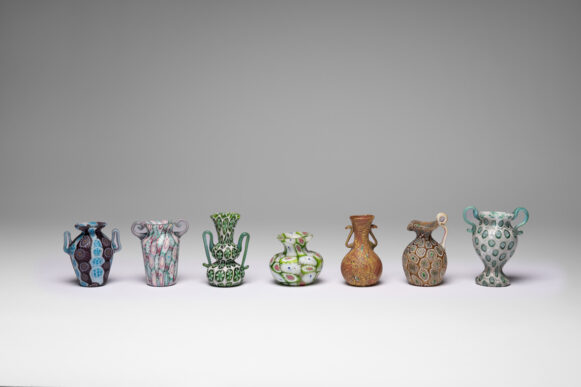
Deeply rooted in the territory and already active for generations in the sector, shortly after the mid -nineteenth century, the Toso family collects the broken inheritance of the Muranese tradition and inaugurates a new path: the initial activity of the furnace is based, mainly, on the reply and the imitation of the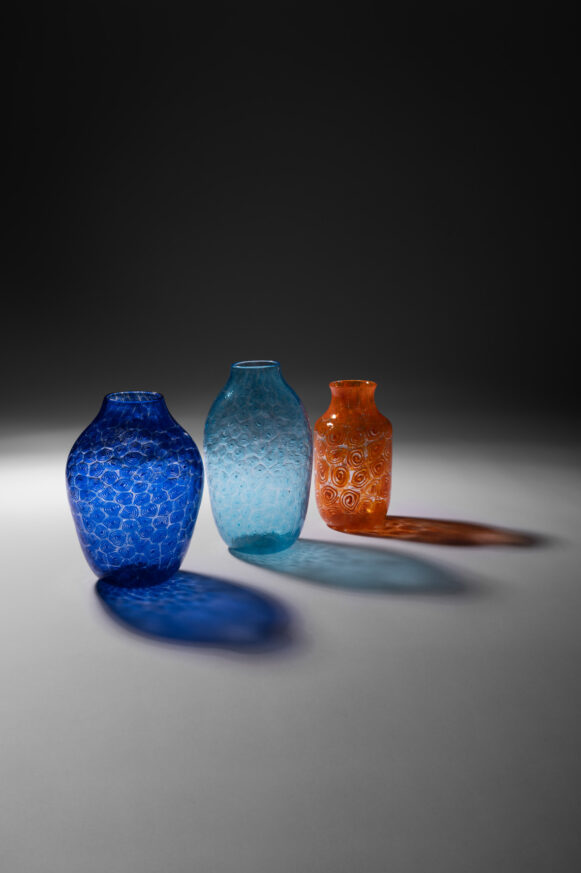 styles of the previous centuries, recalling the glories of the Renaissance and the Baroque, in the wake of the widespread revival spirit of the art of the late nineteenth century.
The first prominent public participation of the Fornace, in 1864, is on the occasion of the first Muranese glass exhibition, set up precisely at the Murano glass museum, the same one that today houses this exhibition. For that occasion, the Fornace creates a monumental chandelier – today part of the museum collections – symbol of the desire to reaffirm the Muranese excellence through works of great formal and technical impact. He wins the only gold medal assigned and receives a diploma of honor.
Until the First World War, production focuses on ancient style and modern style models, and on the famous Phoenician and floral series, without forgetting collaborations with international artists such as Hans Stoltenberg Lecche, passionate about applied arts and deeply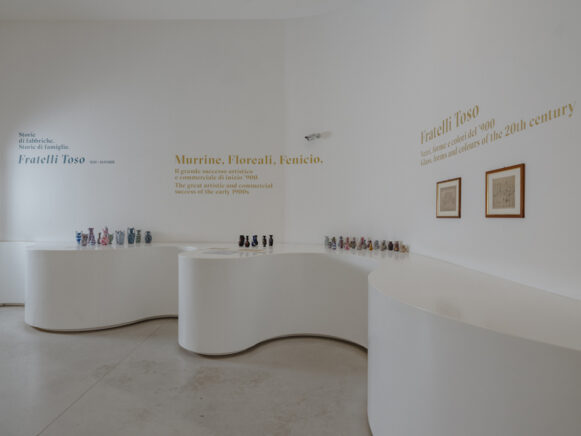 Influenced by the spirit of Nordic Nouveau. With the beginning of the 1920s, a phase marked by a more sober and sophisticated aesthetic opens: light blown glass, essential in the shapes and refined in the decorations, in harmony with the taste of the then emerging. These include some models designed by Guido Cadorin and, in the following decade, by Vittorio Zecchin who creates the very thin glasses for the brothers Toso, characterized by elongated stems and tiny stylized leaves applied to the sides, presented at the XXI International Art Exhibition of the Venice Biennale in 1938.
La Fornace is also present at the next Biennale, that of 1940, with a series of objects blown by the naturalistic forms that affect their extreme lightness and the strong poetic impact, testifying to the continuous search for balance between 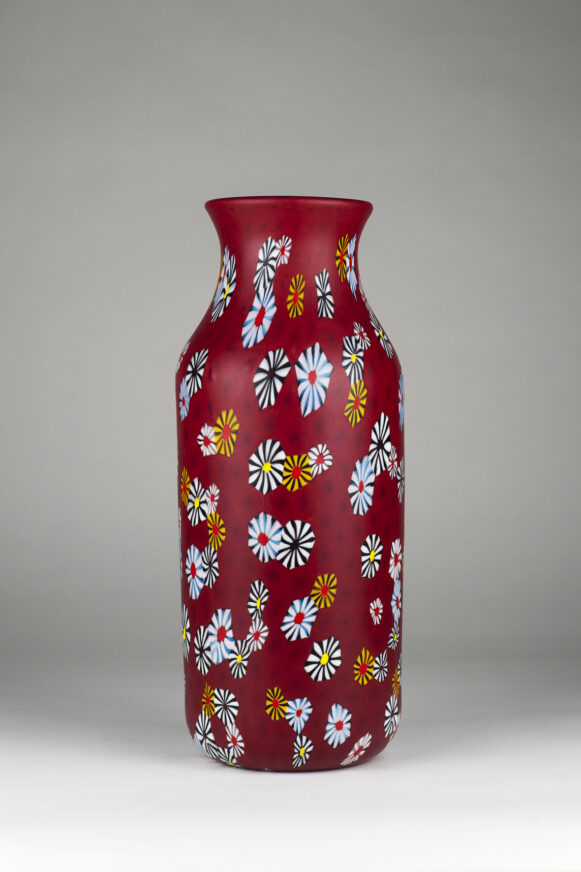 Nature, shape and transparency.
In the meantime, around 1930, even less ethereal and more material glasses, such as pulles, chainers and vitre pastes, become part of the production while, in parallel, the experimentation on the theme of Murrina returns to intensify, which evolves beyond the usual search for order and symmetry. Among the most original results, Mutras and Marmorini are distinguished, new types that deliberately break with the traditional composition to explore sculptural effects, irregular combinations and chromatic stratifications of strong visual impact.
In the post -war years, with the artistic direction of Ermanno Toso, the glassmaker renews the Murrina technique in a modern key, creating works of great expressive force. Next to him, Pollio Perelda, with his pictorial language, and Rosanna Toso, the only woman in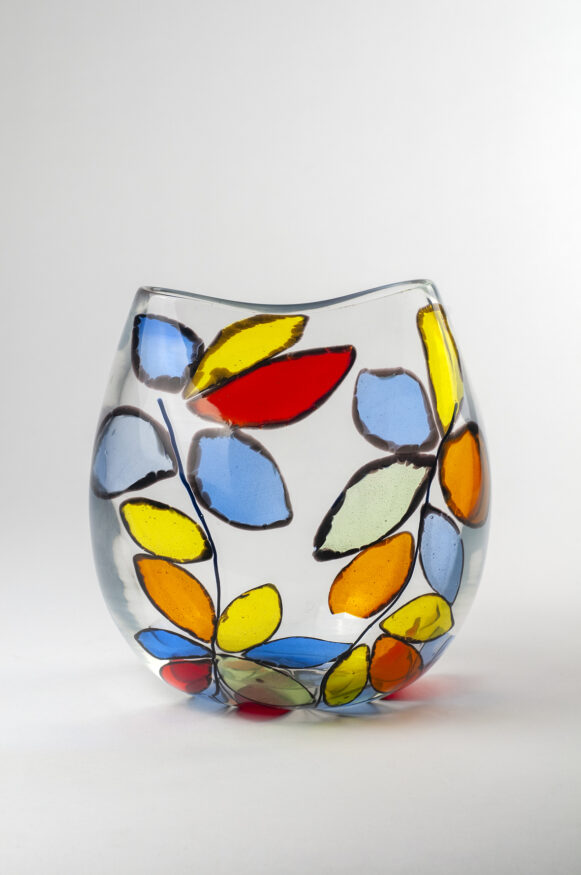 Managerial roles in the history of the company, elegant and contemporary pieces sign, capable of interpreting the minimalism of the seventies.
Starting from the sixties, with Giusto and Renato Toso, the production opens up to the design for furniture and lighting, with wide use of crystal and monochromatic glass, transforming objects into real light sculptures.
This exhibition is part of a scientific program dedicated to the study and enhancement of the main Muranese glass dynasties. Through a historical-critical reading of the material and intangible assets preserved, the museum intends to restore the cultural and productive complexity of reality that deeply marked Murano’s identity. The Toso Fratelli is an emblematic case: a manufacture that, in the course of over a century and a half, has been able to combine technical innovation, formal planning and family continuity, contributing significantly to the history of contemporary glass Chiara Curin, scientific director of the Civic Museums Foundation of Venice and responsible for the Murano glass museum.
Carlo Franza