

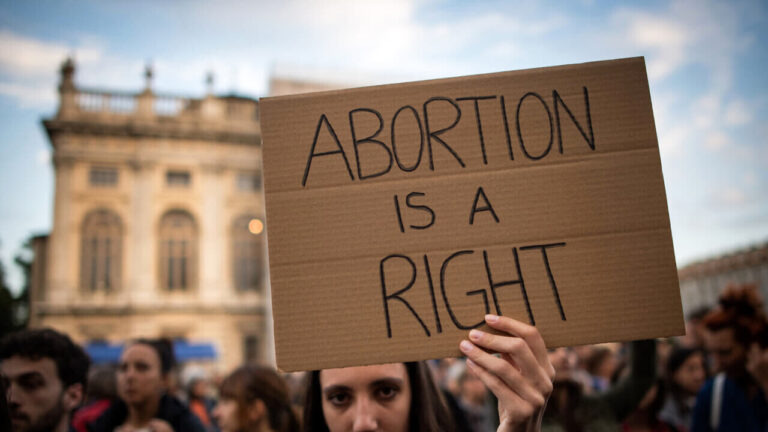
“Abortion is not a right.” Vannacci’s words, intended to spark discussion, have brought the topic back to the center of the political debate. The former general, presenting the programmatic lines of Futuro Nazionale, expressed a clear position to say the least: abortion does not represent an absolute right, but a painful medical exception. The idea currently clashes with the current Italian regulatory system, but winks at other legal systems of some countries, around twenty, which have implemented a hard line against the termination of pregnancy. What are they? From European “anomalies” we arrive at the very strict rules in force in Central America, up to the stringent regulations present in Asia and Africa. Places where abortion is a real crime, punished with imprisonment for both the woman and the medical staff.
The law in Italy
Before taking a trip around the globe to places where abortion is prohibited, it is important to understand how the law works in Italy. In our country, voluntary termination of pregnancy is regulated by law number 194 of 22 May 1978. The legislation allows voluntary termination within the first 90 days for various reasons, whether related to health, economic, social or family conditions. Once this time limit has been exceeded, the intervention is practicable exclusively in cases of therapeutic abortion, i.e. when the pregnancy or birth involves a serious danger to the life of the woman, or when significant anomalies or malformations of the fetus are ascertained which cause a serious danger to the physical or mental health of the mother. Despite being guaranteed by law, the procedure has long clashed with the phenomenon of conscientious objection among medical personnel. The same law 194 in fact allows gynecologists, anesthetists and nursing staff to exempt themselves from carrying out the operation for moral or religious reasons. A dynamic that almost periodically returns to cause public and political opinion to be discussed, between those who would like the law to be applied and those who instead hope that it will be radically revised.
The “anomalies” in Europe
But how does it work abroad? In most European countries, access to pregnancy termination is generally guaranteed, but there are exceptions, not too far from us. Malta maintained an absolute ban for decades. Only after a partial modification, Maltese legislation introduced a very narrow exception: medical intervention is permitted only when the life of the pregnant woman is in imminent and very serious danger. In all other circumstances, including pregnancies resulting from rape or in the presence of serious fetal malformations, the act remains illegal. The second “anomaly” in Europe concerns the Principality of Andorra, nestled between France and Spain, where the penal code categorically prohibits the procedure without any therapeutic exemption. The European picture ends with the Vatican City State, where an absolute ban exists.
The El Salvador model
The most stringent measures are found in Central America. The most emblematic case is that of El Salvador, where the absolute ban on abortion came into force in 1998. The penal code provides for formal sentences of up to eight years in prison, but there are cases in which abortions have been treated as aggravated murders, for which sentences range between 30 and 50 years in prison. The hard line is also in force in Honduras, with the ban even finding space in the constitutional text to prevent any future parliamentary changes. In Jamaica, abortion is regulated by the Offenses Against the Person Act of 1864, a colonial-era law that punishes the termination of a pregnancy with up to life imprisonment, both for the woman and for the doctor, without any legal exception for cases of rape, incest or fetal malformations. Identical, exception-free restrictions also apply in the Dominican Republic, Nicaragua, Haiti and Suriname.
Fragmentation in the USA
In the United States, where until a few years ago access to medical intervention was guaranteed everywhere, the situation changed radically after the 2022 Supreme Court decision, which annulled the Roe v. Wade ruling, effectively passing legislative competence to individual states. About 14 have activated so-called immediate blocking laws, enforcing a near-total ban. In territories such as Texas, Idaho, Alabama, Mississippi and Missouri, termination of pregnancy is considered a crime. The only exemptions granted concern extreme medical emergencies that place the woman in imminent danger of death, while protections for cases of incest or sexual violence have been excluded. Doctors who violate these provisions risk having their professional license revoked, millions in fines and criminal convictions.
Restrictions in Africa and Asia
Even in African and Asian territories there are examples of very stringent laws, which often have their roots in religious precepts or regulations dating back to the colonial era. In the Philippines, for example, abortion has been penalized since the period of Spanish domination. The law does not provide for any written exception, not even to safeguard the mother’s health, and punishes both the woman and anyone who practices or facilitates the operation with imprisonment. On the Asian continent, formulas of total prohibitionism are also present in Laos and Iraq.
In Africa there is the case of Egypt, where the penal code systematically prohibits the practice. Orders completely devoid of exceptions and highly punitive are also in force in Madagascar, Mauritania, Senegal and the Republic of Congo, contexts in which clandestine operations are among the main causes of female mortality. The international overview offers us several practical examples in which abortion is not treated as a right, rules that often look to the past rather than the future. It remains to be seen whether Italy wants to look forward or take cues from those countries in which a right becomes a crime and women end up on trial.