

The hug that saved Ukraine (and infuriated Trump)
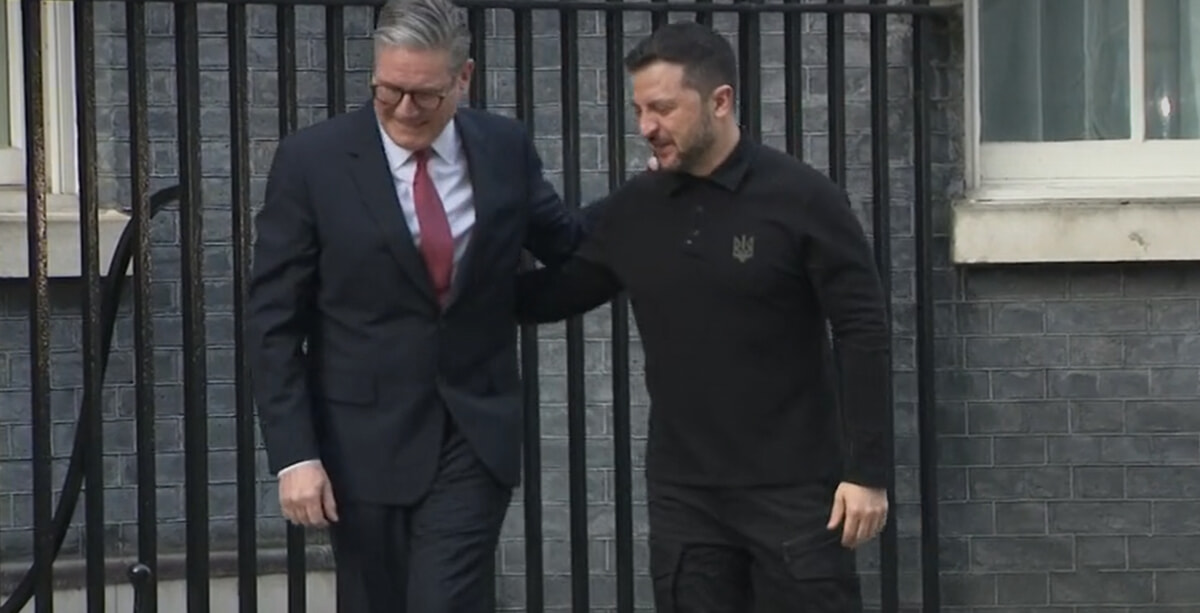
There are images that end up condensing an entire political season. For the outgoing British Prime Minister, Keir Starmer, that is the embrace of Volodymyr Zelensky on 1 March 2025: a gesture which, at the most critical moment in relations between Kiev and Washington, marked a turning point in the European response to the war in Ukraine.
Even the conservative leader Kemi Badenoch, during her latest Prime Minister’s Questions, chose to pay tribute to Starmer for what she defined as one of the most significant moments of his premiership, that is, what happened in the hours following the humiliation inflicted on Zelensky in the Oval Office, on 28 February 2025, when Donald Trump and JD Vance transformed an institutional meeting into an act of bullying, insulting and throwing out the Ukrainian president in front of millions of people.
While the world watched that scene in disbelief, Starmer was already on the phone, reaching Zelensky as he was escorted out of the White House, inviting him to 10 Downing Street. Twenty-four hours after Washington’s humiliation, images of their embrace went around the world.
It was a human gesture, but above all a political act, with which the United Kingdom communicated that the isolation sought by Washington would not become the isolation of Ukraine: the UK would remain at Zelensky’s side, with or without the United States. That embrace marked, in fact, the beginning of a new phase: the construction of European support capable of appearing united even at the moment of greatest distance from the White House.
Keir Starmer, the European leader who had filled the American void
For this reason, Badenoch’s recognition takes on a meaning that goes beyond the usual institutional courtesy reserved for an outgoing prime minister. It is the recognition that, in one of the most delicate passages of the war, Starmer exercised a form of leadership of great stature, which was not measured only in military aid, but in the ability to give political and moral direction.
His exit therefore leaves a void that affects much more than British politics. If London has been one of the pillars of support for Kiev in recent years, it is also because Starmer has been able to transform the United Kingdom into a point of reference for the European coalition. And that embrace with Zelensky remains, probably, the most effective synthesis of what his leadership represented. Because Starmer didn’t just reiterate British support for Ukraine. He contributed to building a new European support architecture, promoting together with Emmanuel Macron the Coalition of the Willing: a group of over thirty countries willing to take on concrete responsibilities for Kiev’s security, even in the case of a progressive American disengagement, transforming uncertainty into leadership.
While in the United Kingdom he was forced to resign after months of an internal war within Labour, with various factions of the party now busy preparing his succession, outside British borders Starmer received one of the highest European awards. A few days before leaving Downing Street, Emmanuel Macron awarded him the Legion of Honour, the highest honor of the French Republic, rewarding not only the revival of Franco-British relations, but above all the role played in strengthening European security and supporting Ukraine.
His commitment had even begun a year and a half before his electoral victory, when on 16 February 2023, as opposition leader, he went to Kiev to meet Zelensky, also visiting Bucha and Irpin and ensuring that a future Labor government would keep British support for Ukraine unchanged.
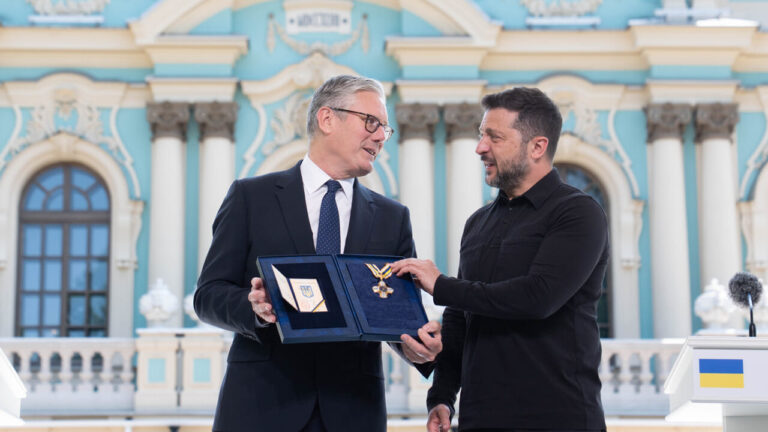
As prime minister he continued to travel regularly to Kiev, until he chose the Ukrainian capital as the last foreign mission of his mandate. Here, in the days of farewell to Downing Street, he wanted to personally reiterate to Zelensky that British support would remain “unwavering” even after the end of his premiership, also announcing a new aid package of 300 million euros to contribute to the financing of sixteen Gripen fighter jets destined for Ukraine.
Starmer’s departure leaves Europe without the leader who more than any other had taken the initiative on the Ukrainian front, building coalitions, mending the balance between the allies and keeping the Western front united.
Ukraine, Koretskyi new prime minister but anger explodes over Fedorov’s farewell: why the expulsion of the drone minister could weaken the army