

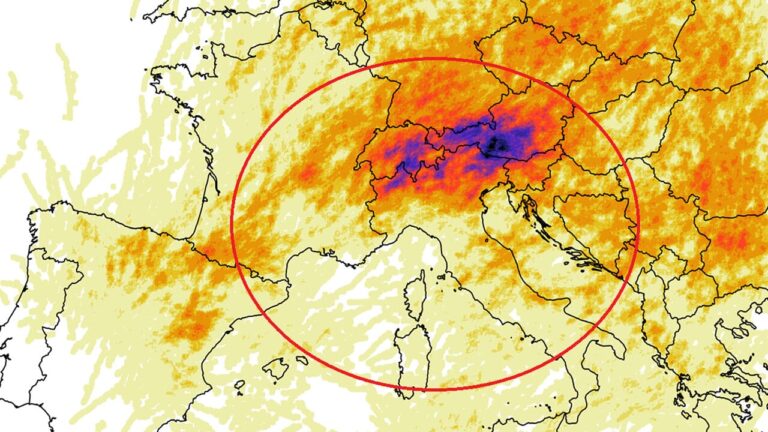
Thunderstorms risk becoming more and more common, and devastating, due to climate change. The supercelle, the most dangerous thunderstorms in terms of power and damage they can cause, are intended to increase if the average temperatures of the planet in the coming decades will come to exceed three degrees of the pre-industrial era in the coming decades. This is calculated by a study by the University of Bern and the Federal Polytechnic of Zurich, recently published on Science Advances.
Supercelle are the most destructive weather phenomenon that affects Europe. They usually occur during the summer, and are characterized by the presence of a mass of hot and humid air in rotation that dates back to the center of the storm, causing strong winds, torrential rains and important hailstorms. They have an important impact in economic terms, because they damage harvests and can destroy buildings and infrastructures, in some cases reaching people’s lives at risk.
Where the super storms will hit the stronger
There are no homogeneous databases that allow to study the frequency and characteristics of the super storms throughout the European territory and this, to date, has compromised attempts to study its evolution in the next decades of climate change. To overcome the problem, Swiss researchers have created an ad hoc climatic model, designed to simulate the evolution of supercelle in detail with a spatial resolution of up to 2.2 kilometers.
The researchers then put the model to the test, simulating the number, power and movements of European supercelle for a period of 11 years, and comparing the results with the royal weather data of the 2016-2021 period. “Our simulation was extremely similar to real data, even if it has provided a slightly lower number of storms,” explains Monika Feldmann, climatologist of the University of Bern who participated in the research. “It was a expected discrepancy, because the model only captures supercelle larger than two kilometers and that last more than an hour, leaving the smaller or short -lived events out”.
The simulation has shown that the Alpine arch is an authentic hot spot of climate change, in which the effects of global warming are destined to be felt more than in many other parts of the world. Currently, the model includes 38 supercelle per year on the northern side of the Alps, and 61 on the southern slopes. With an increase of three degrees of temperatures, however, the simulations have shown a significant increase in the frequency of storms: plus 52 percent on the northern slopes, and plus 36 percent on the southern ones.
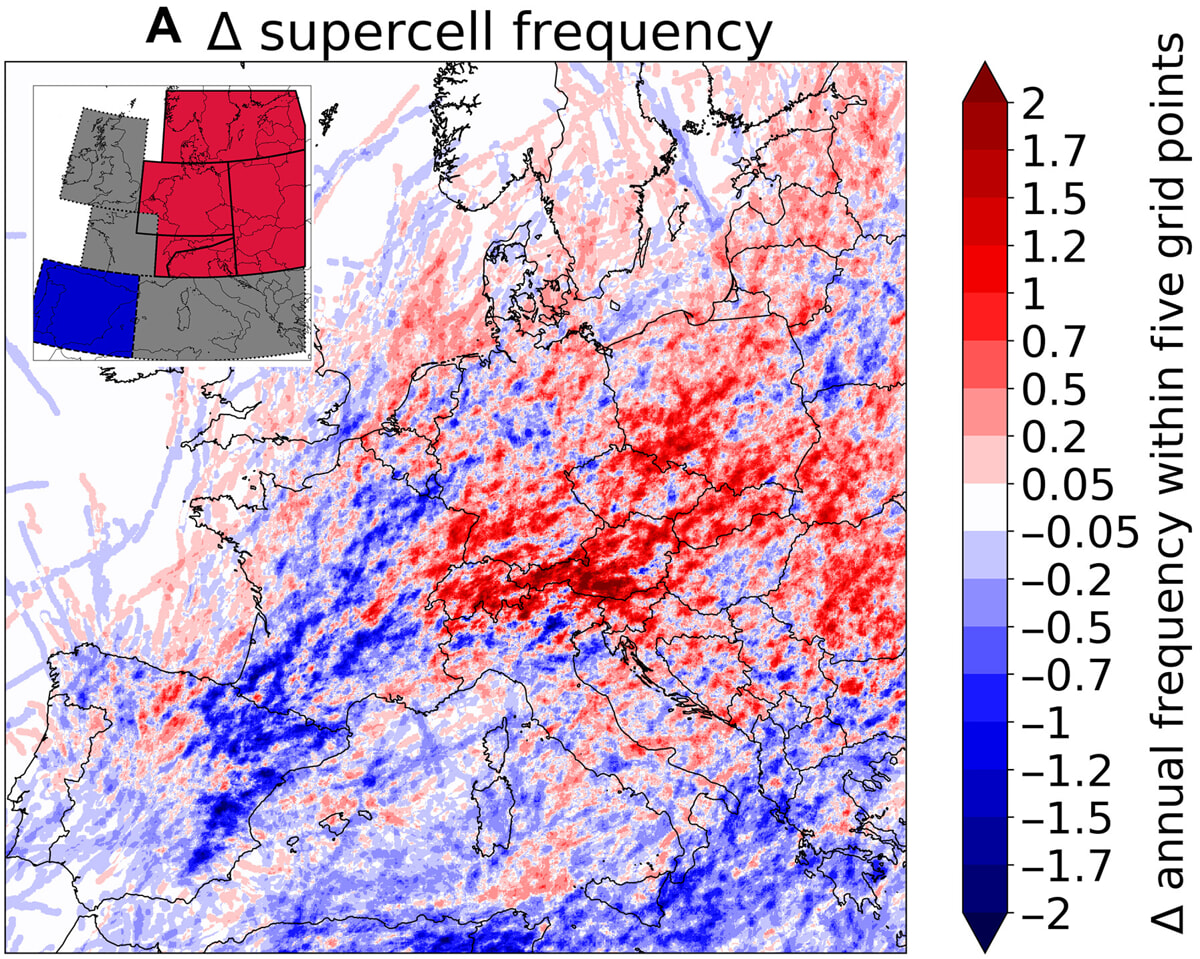
Other areas of the continent, such as the Iberian peninsula or France, could experience a reduction in supercelle in the coming decades. But all considered, the model involves an increase of 11 percent of the number of supercelle that will affect the continent. An important theme also by virtue of the new compulsory policy against catastrophes.
The obligation to insurance against natural disasters is triggered: who must do it and how much it costs