

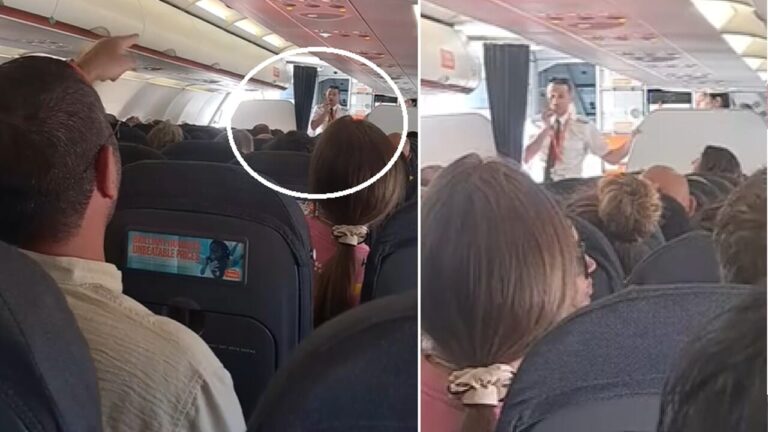
Shortly before departure, the announcement arrives which shocks the passengers: some of the luggage will not be able to be taken on board and will reach the destination later. The reason is not a failure, but a choice linked to flight safety. The plane, departing from the Greek island of Skiathos and headed to Naples, must in fact become lighter in order to take off within the expected margins.
The commander explains the situation directly to the travelers. The video of his speech, which went viral on social media, shows some passengers protesting the decision to leave their luggage on the ground. The pilot replies clearly: “I am the commander, I decide”, reiterating that the priority is to guarantee the safety of all people on board. At the end of the explanation, applause starts.
The choice, however unusual it may seem to passengers, is technically plausible. Skiathos airport has a runway approximately 1,628 meters long, significantly shorter than that of many large European airports served by Airbus A320s operating on the route.
Before each take-off the crew must calculate the aircraft’s performance taking into account various factors: overall weight, temperature, runway length, asphalt conditions and above all wind direction and intensity.
If margins are insufficient, one of the ways to make safe takeoff possible is to reduce weight. In these cases it is possible to intervene on the fuel, when operating conditions allow it, or on the transported load. Hence the decision to leave some luggage on the ground and have it leave on a later flight.
Because the commander decides
Even the phrase that went viral has a precise basis in aviation rules. The commander is ultimately responsible for the safety of the aircraft, the people on board and the cargo. If the calculations carried out before take-off indicate that the aircraft cannot depart in the expected conditions, it is then up to him to take the necessary measures.