

He who wants too much, squeezes nothing. Or as in this case, it tightens much less. The request to increase the monthly rent proved counterproductive for the owner of an apartment in Manchester, England. After the tenant’s complaint, the court ordered him to significantly reduce it: from 50 pounds more, equal to around 60 euros, it went to 200 pounds less (around 238 euros).
Because the agreed rent has become a business for the owners
The case of Ana Nau
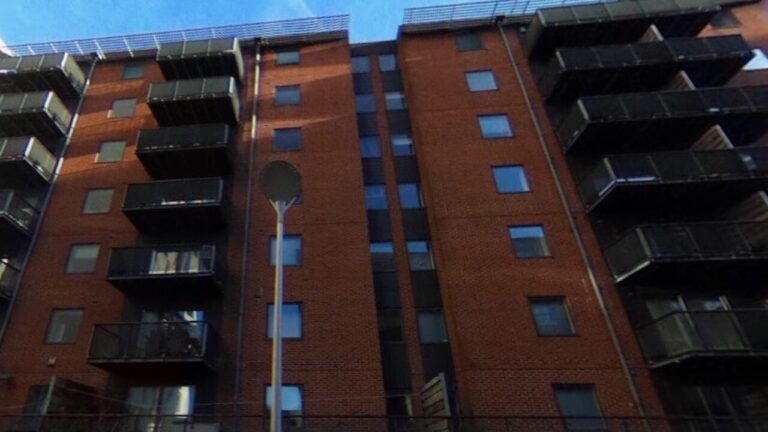
The protagonist of this story is Ana Nau, who sued her landlord Qi Cao, after the latter had proposed to increase the monthly rent of the house where she lives, an apartment in the center of Manchester, which would have gone from 1,650 to 1,700 pounds per month. As reported in court documents, the case concerned a two-room apartment located on the sixth floor of “The Foundry” complex on Lower Chatham Street, consisting of two double bedrooms, an open-plan living room and kitchen, two bathrooms, one of which is private, and a balcony.
The contract for the property, supplied fully furnished, began on 18 August 2025 with a rental of £1,650 per month. “At that moment I desperately needed accommodation,” the woman told the British newspaper The Telegraph, but a year later the nasty surprise arrived.
The unexpected increase
With a notice dated 17 June 2026, the owner proposed an increase in the rent from 1,650 to 1,700 pounds per month, with effect from 18 August 2026. An “unjustified” increase according to Mrs Nau, who thus requested a recalculation of the market rent, submitting an appeal to the First-tier Tribunal, the specialized court that deals with resolving disputes related to real estate.
In addition to the excessively high rent, the tenant also reported the existence of various problems related to the maintenance of the systems, especially regarding the dishwasher and an extraction fan, and the presence of mice in the building.
The judges’ verdict
In recent weeks, the verdict of the First-tier Tribunal arrived, with the judge ruling in favor of Mrs. Nau: the apartments in that area (and some even in the same building) were rented at lower prices. Since May, with the introduction of the Labor government’s proposed Tenants’ Rights Bill, tenants have been able to challenge rent increases, while paperwork and other costs have increased for landlords and property investors.
As reported in the court documents, there were apartments of similar size in the same building, but with rents of between £1,400 and £1,500. According to Mr Cao, owner of the property, the higher price was linked to the location of the house, located on the sixth floor of the building, exposed to natural light and with a splendid view of Manchester city centre.
The judge and the expert defined the accommodation as “attractive”, especially due to the presence of two bathrooms and a balcony, and with furniture in “good condition”. Despite the excellent presentation, the court ruled that the rent had to be reduced from 1,650 to 1,450 pounds, equal to approximately 1,720 euros, or 200 pounds (approximately 238 euros) less than the rent initially agreed.
Owners “on the run”
According to Nathan Emerson, CEO of Propertymark, cases like this would be the cause of many property owners “flighting”. Chris Sykes, a property finance specialist at MSP Financial, told the Telegraph: “I have seen advice online for tenants to go to court against any rent increases. News like this is scary for property owners and represents another deathblow for some, so it’s no surprise that many of them are looking to exit the market in the long term.”
A great victory for Mrs Nau, who started paying the new amount in September, while the debate on rental properties remains heated, not only in the United Kingdom, between those who defend the rights of tenants and those who instead side with the owners.