

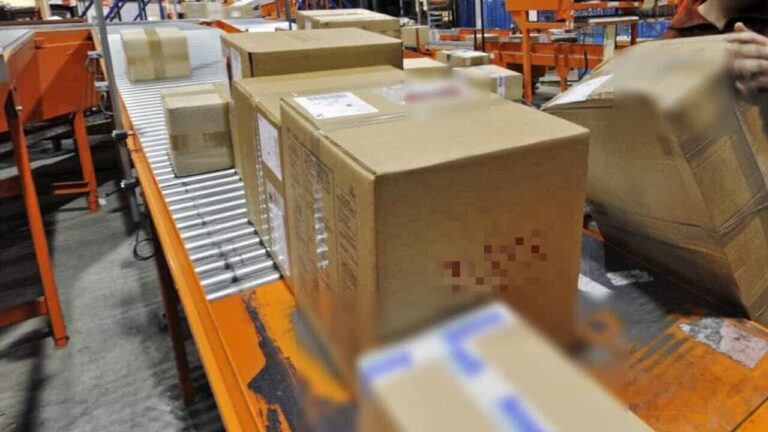
Italy is backing down on the 2 euro tax for small parcels from non-EU countries, but for those who purchase online on platforms such as Temu, Shein and AliExpress this is not the end of the price increases. On the contrary. From today, Sunday 1 November, the new European tax of 2 euros comes into force, in addition to the duty already applied since July.
Article 30 of the budget bill eliminates the national contribution, which should have started on 1 January 2027. The provision, still subject to parliamentary approval, cancels a tax introduced just a year ago and never actually applied: the choice entails 91.3 million euros less in expected annual revenue, according to the updated estimates reported in the technical report of the maneuver.
Goodbye to the Italian tax of 2 euros on parcels: what the 2027 budget provides for
The Italian contribution was introduced by the 2026 budget law to cover customs administrative costs on shipments with a value not exceeding 150 euros coming from countries outside the European Union.
The tax should have come into force on 1 January 2026, but the government postponed its application four times: first in July, then in October, then in December 2026 and finally to 1 January 2027. With the new maneuver comes the proposal for definitive cancellation.
How much you pay on Temu and Shein parcels from November 1, 2026
The reason is coordination with the new European provisions. In the meantime, in fact, Brussels has adopted a customs reform which provides for both a duty on imports of modest value and a contribution intended to finance controls on goods. For online purchases from non-EU countries, two distinct measures are envisaged:
- EU duty of 3 euros, in force from 1 July 2026 on shipments with a value not exceeding 150 euros. It is a temporary measure, scheduled until July 2028.
- EU management fee of 2 euros, applied from 1 November 2026 to distance sales of goods imported from non-EU countries, to help cover the costs of customs controls.
The calculation depends on the customs classification of the goods. For example, a package containing three t-shirts belonging to the same tariff category may be subject to 3 euros in duty and 2 euros in commission. However, if it contains a t-shirt and a watch, belonging to two different categories, the charges can rise to a total of 10 euros, in addition to the applicable VAT.
The subjects responsible for customs obligations and payments are the operators identified by the legislation, including platforms and importers. This does not mean that the consumer necessarily has to pay the 5 euros directly, but operators can always reflect the higher costs on the sales prices.
Because the government gives up 91 million euros a year
The cancellation of the Italian contribution involves the renunciation of a revenue which, in the updated forecasts indicated in the documentation of the maneuver, amounts to 91.3 million euros per year.
This is a significantly lower figure than the original estimates. When the tax was introduced, the government had forecast revenues of 245 million euros per year when fully operational. The new assessments take into account the data collected by the Customs Agency in the months of July and August, after the introduction of the European duty. In the reconstruction of the technical report, approximately 61.7 million potentially affected annual shipments are considered and a further contraction of 7.6% attributed to the increase in prices.
The European market is also showing signs of change. According to data reported by European sources, in the months following the introduction of the July duty, customs declarations relating to small parcels decreased by more than 60% in the Union.
The Codacons: “A mess”, avoided a cost of up to 7 euros
The cancellation of the Italian tax is welcomed by Codacons, according to which the national contribution would have further aggravated the cost of purchases on international platforms.
“The Italian tax on parcels was in all respects a mess”, claims the association, which disputes the overlap of the national levy with the European ones. Without government intervention, in fact, the 3 euros of EU duty, the 2 euros of European commission and the further 2 euros of the Italian contribution could have been added to a shipment containing a single product category, for a total of 7 euros before VAT.
For Codacons it would have been a penalizing measure for consumers, especially in the case of purchases of particularly cheap goods, on which customs costs can have a significant impact compared to the initial price.
What changes for those who buy online in 2027
If the repeal envisaged by the maneuver is confirmed by Parliament, the national contribution of 2 euros on non-EU shipments up to 150 euros will not come into force from 1 January 2027. However, the new European rules will remain applicable, with the flat-rate duty of 3 euros for the affected purchases and the management fee of 2 euros, in addition to the VAT due.
For those who purchase low-cost products on Temu, Shein or other international platforms, the main change will therefore be the absence of a third Italian levy, not the return to purchases without customs duties.
Why the price can multiply: what happens with the return
While the temporary 3 euro duty imposed by the European Union applies only to shipments from non-EU countries for an amount of less than 150 euros, the 2 euro customs tariff introduced today has no value or duration limits and applies to all sales of goods imported from countries located outside the European Union. Adusbef reminds us of this, underlining how the two taxes are subject to VAT and must always be paid, even in the event of a return of the purchased goods.
The 2 euro management fee is in fact due from the moment the customs accepts the declaration, because it is from that moment that the administration carries out the checks – explains Adusbef – This means that the customs fee is not refundable in the event that the consumer proceeds to return the purchased goods, and is always due even if the goods are not released or the declaration is invalidated, because the customs have processed the request anyway.
VAT is then paid on both the duty and the handling fee, and this is the only part that can be refunded in the event of a return. “It is important to explain to consumers that both taxes, both the three-euro tax and the two-euro customs tariff, are paid not on the package but on its contents and are valid for every single merchandise item in the shipment: for example, if the package contains five trousers made with five different materials, the duty and customs tariff will have to be paid 5 times” – warns president Antonio Tanza.