

Carlo Maria Cipolla gave a perfect definition of the idiot: he is the one who brings “damage to another person or group of people without at the same time realizing any advantage for himself or even undergoing a loss”. From an economic point of view, the duties are idiots. Our exporting companies will have damage, without American consumers being able to enjoy a benefit.
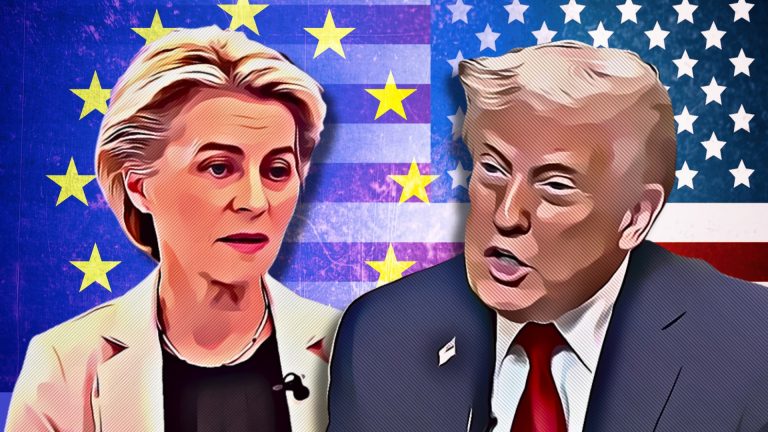
It is difficult to contest the madness of the imposition of the duties, but you can certainly try to understand how we should negotiate to minimize the idiot. There are, as is obvious, very discordant opinions on how the negotiation on the duties imposed by the United States has ended. In a ridiculous overturning of the judgments, the President of the Commission was called “an incapacitated” and “incompetent” for having sold to Trump, precisely by those who had appreciated him so much until yesterday. On the other hand, it is understood, albeit in a low prosecution, precisely by those who have always criticized community management. To this is added a more global critical perspective. Many American economists, of conservative formation but also liberal, consider the economic duties policy with an economic view of the economic view and, therefore, criticize the agreement. In Europe it is criticized by economists for mirror reasons: it will damage European companies.
To extricate yourself in this jungle of opinions and technical evaluations, all very authoritative and often discordant, is complicated. Moreover, every judgment seems, as is normal, the son of a political prejudice: “W Trump”, “Download Trump” and so on. In the 1950s, when the problem were missiles and nuclear deterrence, some economists tried to insert some rationality in geopolitical issues, inventing the theory of games and making it easier with the so -called prisoner’s dilemma: we tried to analyze the interactions between different subjects in a conflict scenario. We summarize the dilemma for non -experts. Two prisoners are questioned, not knowing what one says of the other, after a crime. In front of them they have three alternatives: both silent, only one speaks (betrays) and the other is silent, both speak and betray each other. If they both keep silent, and therefore collaborate, they catch a year in prison each, there is no proven proof of their guilt. In the second option, those who speak and betray do not go to jail and the second prisoner, who is betrayed and shut up, takes 5 years. If they both speak, they accuse themselves and betray each other, they take three years each.
The moral of this fairy tale is that the best collective choice, we underline not individual, is to cooperate and not betray: the total of the prison is two years. If both are betrayed, they catch 6: worse collective choice. If one of the two betrays the other, the total prison goes to five years.
So how do you apply the prisoner’s dilemma (imagining it as a cooperative game that not aimed at individual maximization) to our history of duties? Well, the crime that has been committed are the duties. Done, made. At this point there are two prisoners. The first, who raised the duties; The second, which is undergoing them, but which in turn according to the Americans (and Mario Draghi) imposes on it. But the responsibilities are not very important. This is precisely the meaning of games theory. According to the scheme of the theory of games and the prisoner’s dilemma, America and Europe have cooperated in the agreement (I repeat, forget the reasons, the issues of justice, the ethical implications and your political prejudices) and collectively catch the lowest penalty. If Europe had betrayed America (using counterdat, as many hoped) the worst scenario would have occurred for the dilemma (six years in prison). If Europe had not treated but accepted the first imposition of duties of the liberation day, it would have been definitely worse.
There is a further element, decidedly more complicated from the point of view of the game theory technique, which concerns the so -called repetition of the game. And, seeing the behaviors of Donald Trump, and above all its natural deadline at the end of the mandate, there is the possibility that the game can be repeated with conditions other than existing ones. In this sense, the cost of the agreement, which we have seen to be more reasonable than the non -cooperation, could go further in the event of change of strength relationships.
From a strictly economic point of view (we repeat, not political or moral) European behavior, for the theory of games, considers itself rational and, moreover, aimed at maximizing its own cumulated usefulness in the long run.
TheVermilion.com is also on WhatsApp. Simply click here to register for the channel and always be updated (free).