

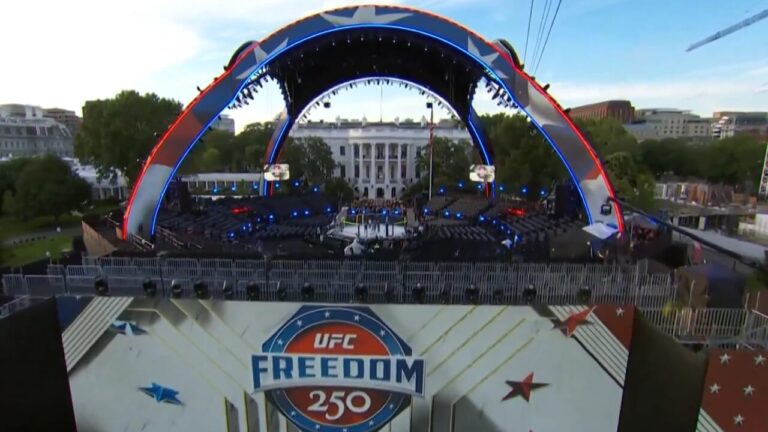
Donald Trump turns 80 and, to celebrate, transforms the White House lawn into a mixed martial arts arena. It will be staged on the South Lawn, the southern garden of the presidential residence UFC Freedom 250an Ultimate Fighting Championship event with seven fights, fourteen athletes and a temporary structure for approximately 4 thousand spectators. A few hundred meters away, on the Ellipse and in the National Mall area, thousands of people will follow the show on giant screens.
Formally the event is part of the celebrations for the 250th anniversary of American independence. Politically, however, it is difficult to separate it from the president’s birthday. The date is the same, the direction bears the imprint of the tycoon and the idea, according to Dana White, the head of the UFC and personal friend of Trump, was born by the president himself after an evening of fighting at Madison Square Garden. That night Trump was greeted by applause and chants of “Usa, USA”. From there, the step to an octagon in front of the White House was shorter than many imagined.
The bill, according to court documents filed in a lawsuit filed to try to block the event, exceeds $60 million. The sum would have been supported by the UFC and related groups, but the organizational machine also involved various federal agencies, from the Secret Service to the Department of Homeland Security. It is one of the points most disputed by critics, who see the party as an overlap between private spectacle, patriotic celebration and personal cult of the president.
The White House rejects the accusations and presents UFC Freedom 250 as a national event, part of the America 250 calendar. But the image remains very powerful: an eighty-year-old president celebrating himself with fighters locked in a cage, lights, giant screens, selected guests, soldiers in the audience and a live TV and streaming event designed to speak above all to the young, male America that contributed to his return to power.
View this post on Instagram
The birthday comes at a particularly complex stage for Washington. The White House is engaged in negotiations with Iran to find a way out of the conflict, while on the domestic front economic concerns, tensions over energy prices and declining approval ratings weigh heavily. For opponents, the contrast is evident: on the one hand inflation, uncertainty and international crisis; on the other, a birthday show worth tens of millions of dollars, built in the symbolic place of the American presidency.
The issue of age also remains open. At 80, Trump is the oldest president ever elected and the oldest to have sworn in on the US Constitution, surpassing Joe Biden. But the comparison with his predecessor remains delicate: Biden left the White House at 82, after months of controversy over his physical and mental health. Now a part of public opinion is asking the same questions of Trump. Some polls show growing doubts about his lucidity and ability to bear the weight of the office. The White House rejects all suspicions and cites the most recent medical checks, in which presidential doctor Sean Barbabella defined Trump as being in “excellent health” and fully fit to carry out the duties of commander in chief.
The signing of peace between the USA and Iran on Trump’s birthday is skipped, demonstrations in Tehran: here’s what’s in the memorandum
The contrast with Biden could not be starker. In 2022, when he turned 80, the then Democratic president celebrated with a private family brunch, away from the spotlight and without turning the anniversary into a political event. Trump chooses the opposite: an arena, an audience, live coverage, patriotic symbols and the muscular grammar of the UFC. It is the difference between two ways of inhabiting power: one more institutional and defensive, the other openly spectacular.
Trump, in reality, has always been described as a man not inclined to birthdays. In 2021 his ex-wife Ivana told the magazine People that Donald “hates birthdays.” But his public history also tells something else: the taste for grandiose celebrations, for power choreographies, for events designed to become images even before news.
It already happened last year, when Washington was occupied by a large military parade for the 250th anniversary of the American army. Even then the date coincided with Trump’s 79th birthday. Thousands of soldiers, military vehicles and tanks paraded in the streets, with an estimated cost of between 25 and 45 million dollars. On the same day, throughout the country, the “No Kings” movement organized demonstrations against what it defined as a monarchical drift of the presidency. The scene is repeated now, with new protest initiatives at the same time as the party at the White House.
In 2024, in the midst of the election campaign, Trump celebrated his birthday in West Palm Beach, Florida, during an event organized by the Club 47 coalition. More than 5 thousand tickets sold, supporters celebrating and a five-tier cake decorated with American flags, Republican symbols, photographs of the tycoon and a “Make America Great Again” hat on top. Trump called it “by far the greatest birthday party” he ever had.
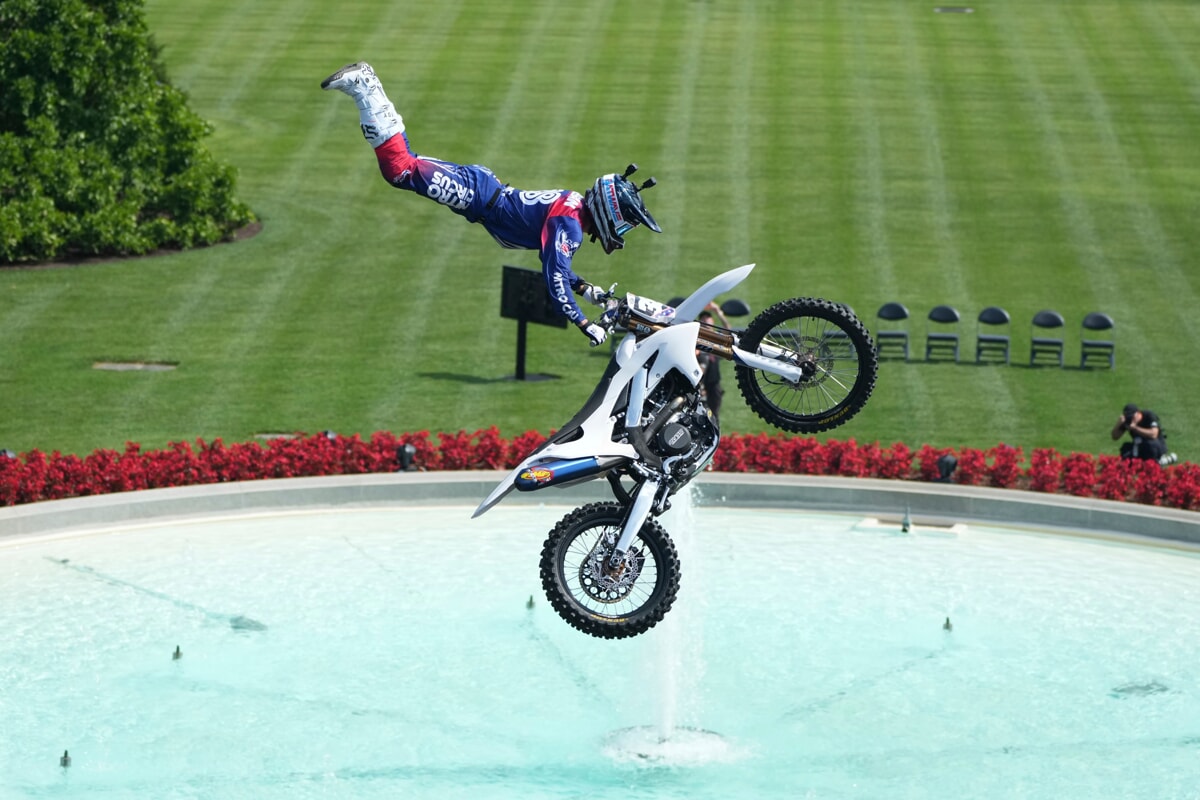
Today’s try to overcome it. Not only in size, but in political significance. The octagon in front of the White House is a perfect visual message for Trumpism: strength, spectacle, defiance, muscular patriotism. For supporters, it is an original way to celebrate a symbolic passage in American history and the president’s unconventional personality. For critics, however, it is yet another example of “panem et circenses”: a great show to shift attention away from the country’s problems.