

We flush the toilet to send the contents of the toilet down the drain, but not everyone knows that a small part of this is also destined to spread into the surrounding environment. The turbulence generated by the water flow that bursts into the bowl creates a cloud of microdrops that are nebulized outside the sanitary fixtures. And which would be good to take into account: a systematic review in the journal Science of The Total Environment has in fact quantified the extent of this phenomenon, revealing that the particles released from the exhaust can rise up to 163 centimeters and spread horizontally up to one and a half meters away, reaching the height of the upper airways of many adults, with all the hygiene risks that this entails.
Watch out for the toilet
The authors of the study, a team of researchers from the Australian Flinders University, analyzed data from 22 studies dedicated to the production of aerosols and bioaerosols (the organic particles contained in these clouds of droplets) in toilets. The results indicate that most of the particles generated are small enough to remain suspended in the air for at least twenty seconds before settling or dispersing. More than enough time to reach the nose or mouth, and thus penetrate our body. Bringing with them whatever microorganism is contained within them.
“Microbes can arrive both from contamination of the cup during use and from the water used for flushing,” explains Lira Adiyani, a researcher at Flinders University who participated in the research. “The more microbes present in the toilet, the more bioaerosols can be released. Consequently, larger flush volumes generally produce more aerosols.”
Exhaust physics
Looking at the concentration of bacteria present in the bioaerosols produced by toilet flushes, the analyzed research offers very variable results. In general, the new study identifies two variables that determine the presence of high microbial loads: the quantity of microorganisms present in the bowl and the power of the flush. Larger volumes of water, more powerful flows produce a significantly higher quantity of microparticles, and at the same time, a particularly rich content of bacteria is destined to spread them more in the environment.
| Bacterium | Does it disperse with the toilet flush? | How it appears in studies | Because it’s relevant |
| Escherichia coli (E. coli) | Yes | Also detected under non-inoculated conditions | Intestinal bacterium; some strains cause gastroenteritis and infections |
| Clostridioides difficile (C. difficile) | Yes | Detected in aerosol after discharge | It can cause severe diarrhea and colitis, especially in hospital |
| Staphylococcus aureus | Yes | Detected/analyzed in bioaerosol | It can cause skin, respiratory and systemic infections |
| Staphylococcus epidermidis | Yes | Detected/analyzed in bioaerosol | Normally present on the skin, but can cause opportunistic infections |
| Pseudomonas putida | Yes | Detected/analyzed in aerosols | Environmental bacterium, generally not very pathogenic |
| Pseudomonas alcaligenes | Yes | Also used as an experimental microorganism | Environmental and opportunistic bacterium |
| Salmonella enterica | Yes | Experimentally inoculated in the toilet | Includes strains responsible for salmonellosis |
| Serratia marcescens | Yes | Experimentally inoculated | Opportunistic pathogen, especially important in the healthcare sector |
And there’s not much we can do to avoid it. In fact, even by lowering the tablet before flushing, it is possible to reduce the height reached by the bioaerosols, but not prevent them from spreading horizontally to the sides of the sanitary fixture. In fact, research indicates that the finest particles tend to escape laterally through the cracks between the edge of the cup and the lid, being projected at high speed into the surrounding environment. Closing the toilet lid before flushing may therefore be advisable, especially if you use a public toilet, but it does not prevent contamination of the toilet.
How to prevent contamination?
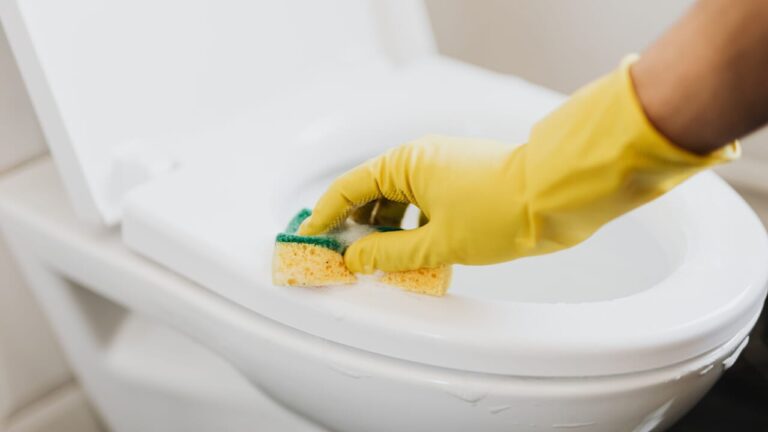
In your own home, you can take some precautions to ensure you maintain a hygienic environment in your bathroom. Regular cleaning of the inside of sanitary fixtures is in fact useful for reducing the microbial load present on the surfaces from which aerosols originate. Just as daily cleaning of the toilet seat and the entire environment surrounding the toilet is certainly an important hygiene habit to reduce the risk of contamination of those who frequent the bathroom.
Likewise, the use of dual-button flush systems, set to smaller water volumes when possible, decreases turbulence and resulting droplet atomization. Another determining factor is the ventilation of the rooms. Suitable air changes allow the concentration of toilet aerosols remaining in suspension to be rapidly reduced, reducing the inhalation time window for those who enter the bathroom immediately after use.
According to the researchers, in the future it will be important that the evolution of sanitary design begins to think about the best strategies to minimize the production and diffusion of aerosols. An important requirement not so much at home, where the risks of catching some illness in the bathroom – in conditions of normal domestic hygiene – are almost zero, but in hospitals and other high-risk environments, where the concentration of pathogens and fragile people can make even the use of an incorrectly designed bathroom dangerous.