

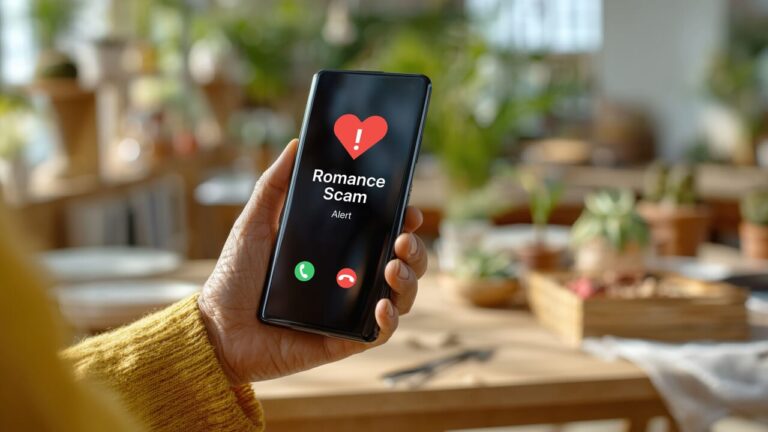
Like every year, Valentine’s Day is celebrated on February 14th, the feast of incurable romantics. All over the world, millions of singles are looking for a mysterious soul mate… and they are increasingly looking for one online, relying on social networks and dating apps. A now consolidated habit which, however, exposes one to one of the most widespread and ruthless forms of social engineering: the romance scam.
The romance scam strikes mainly through social networks and dating apps. Cybercriminals exploit the information available online (relationship status, habits, passions, interests) to build credible profiles, establish a relationship of trust and foster an emotional bond that can quickly turn into emotional dependence. At that point, a request for money, confidential information or favors “out of love” becomes just a matter of time.
Artificial Intelligence makes these scams more sophisticated, scalable to a large scale and dangerous. The future is closer than it seems: in fact, numerous AI applications are available that can superimpose the face of a real person on the facial movements of a digital avatar, making video calls truly convincing. Then there are Scam Centers, i.e. criminal organizations, often connected to human trafficking, in which victims are forced into slavery and forced to perpetrate Romance Scam. A key role in this ecosystem is played by SIM boxes, hardware devices capable of hosting dozens or hundreds of SIM cards and routing large volumes of calls and messages, making them appear as local communications. Used in the criminal field, SIM boxes allow fraudsters to bypass the controls of telephone operators, quickly change numbers and make the identification of the real perpetrators of the fraud extremely complex.
“Romance scams are evolving rapidly thanks to the use of artificial intelligence and increasingly convincing deepfake techniques. Today they are no longer just scams against individuals, but a real attack vector that can also be exploited to target companies through people.” Explains Maurizio Zacchi, VP Academy of Cyber Guru.
How to protect yourself from online romance scams? Here are Cyber Guru’s advice
- Does this person really exist? Always be wary of profiles that are “too perfect”, often on the other side you believe there may be a soul mate, but it could have been created by an AI.
- Check the images with a simple Google search, and pay attention to inconsistencies, less than credible stories or recurring grammatical errors.
- Be wary of relationships that are too quick. Love bombing is a typical technique of these scams: excessive attention, premature declarations of love, promises of marriage or imminent meetings (then suddenly cancelled). Authentic relationships take time, while scammers aim to create an intense emotional bond in just a few days.
- Meet physically. If the person, in addition to writing to you, sends you voice messages and participates in video calls, it doesn’t mean they are real. Once upon a time, refusal to participate in a video call was a warning sign, but now thanks to DeepFake it is difficult to distinguish reality from lies. So it’s important to meet in person, in a public place.
- Protect information and devices. It’s important to avoid telling a stranger important details about yourself, such as: who your family is made up of, your home address, where you work and more.
- Protect your personal information, but above all, never send money or digital gifts.
- Confronting someone you trust, a friend or family member, may notice inconsistencies that you, emotionally involved, might ignore. Scammers aim for isolation, but you are not alone. If necessary, you can ask the Postal Police for help, reporting the suspicious profile and blocking it.