

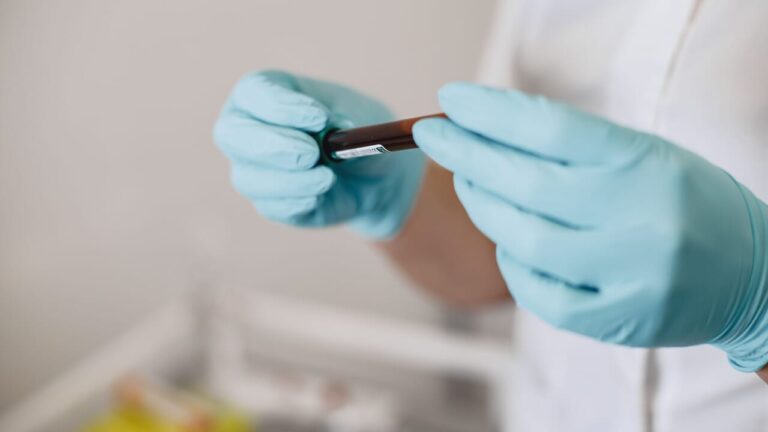
mRna vaccines became known to the general public just five years ago, making a crucial contribution to ferrying us out of the Covid pandemic. And now they already seem ready to make their triumphal entry into the world of oncology. The name of the therapy in this case is autogenous Intismeran, a therapeutic vaccine that aims to mobilize the immune system against tumor cells, to reduce the risk of recurrence after the tumor has been surgically eliminated. Same basic technology, that of mRNA, but with a much higher level of complexity, because the therapeutic vaccine does not use antigens that are the same for everyone, such as those that aim to prevent viral infections, but is formulated by studying each individual patient’s tumor and identifying the set of unique mutations that characterize it.
An extreme form of personalization of treatment, therefore, which seems to have given the desired results: the phase 3 clinical study that tested it against melanoma has just ended, and according to Merck and Moderna, companies that developed the new therapy, it was successful across the board, demonstrating that the therapy, administered in tandem with the immunotherapy Keytruda, is able to significantly reduce the risk of recurrence and the appearance of distant metastases. What this means in numbers is not clear, because the complete data from the trial will only be presented in the coming months. In the meantime, we asked Michele Del Vecchio, director of the Melanoma Medical Oncology unit of the National Cancer Institute of Milan – one of the centers that recruited the largest number of patients in the world for the study – to tell us something more about the potential revolution to come.
Professor, let’s start from the beginning: what is your perception after working with the new drug on your patients?
“The definitive data from the analysis conducted on 1,137 patients will be officially presented at the end of October in Madrid during the congress of the European Society of Oncology. What we know from the Merck and Moderna press release is that the most important objectives of the study have been achieved, namely the increase in recurrence free survival (the interval of time free from recurrence) and distant metastasis free survival (the time free from the development of distant metastases)”.
“To understand the significance of these results – adds Michele Del Vecchio – we can look at the data from a Phase 2 study conducted in Australia and the United States on 157 patients with a 5-year follow-up. That trial showed that the addition of the mRNA vaccine to an immunotherapy, pembrolizumab, determines a 49 percent reduction in the risk of disease recurrence and a 59 percent reduction in the risk of developing distant metastases compared to the use of pembrolizumab alone pembrolizumab. In short, if standard immunotherapy was already able to halve the risk of relapse, the combination with the personalized vaccine further significantly reduces this possibility. The data regarding overall survival will instead require a longer observation period.”
For which patients is the new personalized therapeutic vaccine currently indicated? Does it also depend on the type of mutations present in the tumor?
“Candidates are patients who have undergone radical resection surgery for a melanoma with a high risk of disease recurrence. This category includes patients with primary melanoma with unfavorable histological characteristics, patients with metastases to regional lymph nodes and subjects who have had a single distant metastasis completely removed. These are patients who are temporarily free of the disease, but who have a relatively high probability of it recurring. And this is the aim of the therapy: to minimize the risk of it happening.”
“There is no a priori selection based on a single known genetic mutation – continues Professor Del Vecchio -. Unlike so-called targeted therapies, directed against a specific molecular target expressed in the tumor, this vaccine is synthesized by analyzing tissue and blood samples obtained from the surgery of the individual. Through Ngs (Next-Generation Sequencing) sequencing, up to 34 neoantigens specific to that specific tumor are identified. In the Phase 2 study it emerged that in 99 percent of cases these antigens were unique to the individual patient. Although the quantity of proteins obtained from one sample to another could vary – for example 20 instead of 34 – the average found was 34 neoantigens, a number largely sufficient to generate an effective immune response”.
A minimum of 6 weeks pass between the operation in which the tumor tissue is removed and the moment the vaccine is ready to be injected into the patient’s shoulder, during which sequencing, selection of tumor antigens and synthesis of the mRNA are carried out. This has already been going on for quite some time, in case of further delays, wouldn’t we risk compromising the effectiveness of the therapy?
“The fundamental parameter is the start of systemic immunological therapy within 12-13 weeks after the resection surgery. From a clinical point of view, the 6 weeks necessary for the production of the personalized vaccine do not constitute an obstacle: the patient can start the administration of conventional immunotherapy with pembrolizumab and integrate the intramuscular administration of the mRna vaccine in subsequent cycles, as soon as the preparation is available”.
For companies that need to produce these customized vaccines, each patient requires important work. In the context of a clinical trial with a thousand patients this is a manageable undertaking, but what will happen when the drug arrives in clinical practice around the world?
“The management of logistics and the production chain is a central theme in the ongoing discussions with manufacturing companies. If these results were to establish a new standard of care, it is obvious that it will be essential to optimize every phase of the process, both in the vaccine production phase and with regard to its clinical use. The flow requires close integration between the surgeon, anatomopathologist, oncologist and research nursing staff. The anatomopathologist must carry out the histopathological diagnosis on the removed tissue and prepare the sections necessary for quality check before sending to the laboratories in the United States. Rare cases of screening failure may occur, in which the vaccine cannot be synthesized due to the excessive presence of melanin pigment or a large component of necrosis in the tissue sample, but these are limited eventualities. The joint work of the multidisciplinary teams will be essential to accurately manage every single temporal and organizational step”.
In terms of side effects, what did you see during the clinical study? Should we expect the classic ones of a vaccine, or is there a risk of more serious complications?
“The safety profile emerging from the trials appears very favorable and does not show significant additional toxicities compared to the known profile of pembrolizumab alone. The adverse events directly attributable to the administration of the vaccine are represented by transient reactions at the site of the intramuscular injection and by short-term febrile episodes, attributable to the normal stimulation of the immune system, completely similar to what was observed with vaccination against Covid-19”.
Since this is a highly customizable drug, it is clear that it will have an extremely high cost per patient. Do you think that sustainability for the national health system will prove to be a problem to be solved?
“The technological innovation represented by this therapy is undeniable, and lies in the fact that it is the first vaccine that could have a significant clinical impact in oncology. In the past, various vaccines aimed at single tumor antigens have been tested, without however obtaining results even remotely comparable to those promised by this mRNA vaccine. Economic sustainability will therefore have to be assessed considering both the innovativeness and the overall benefit of the therapy: preventing or delaying the onset of a recurrence or distant metastasis not only preserves the patient’s quality of life, but avoids the significantly higher healthcare costs associated with the management and treatment of advanced disease. However, negotiation work on cost and reimbursement models will certainly be necessary to ensure the integration of the technology within the National Health Service”.
Melanoma has historically been the ideal stage for immunotherapies thanks to the high mutational load that facilitates the recognition of these tumors by the immune system. Can we hope to see the new vaccine used in the future also for other tumors, perhaps even tumors with a low mutational burden?
“Melanoma represented the trailblazer for immunotherapies with monoclonal antibodies precisely because of its marked immunogenicity. Subsequently, however, these approaches have demonstrated their effectiveness in a transversal manner also in other solid tumors, such as lung cancer pathologies and some tumors of the gastrointestinal tract. Even mRNA vaccines are already being studied in various solid tumors. Although these tumors generally present lower immunogenicity than melanomas, the possibility of acting on specific escape mechanisms of the immune system allows us to hypothesize that this technology could in the future replicate the transversality already seen with monoclonal antibodies”.
Dossier is the exclusive subscription investigative section of The Vermilion. If you would like to support our journalistic work and subscribe, Click here.