

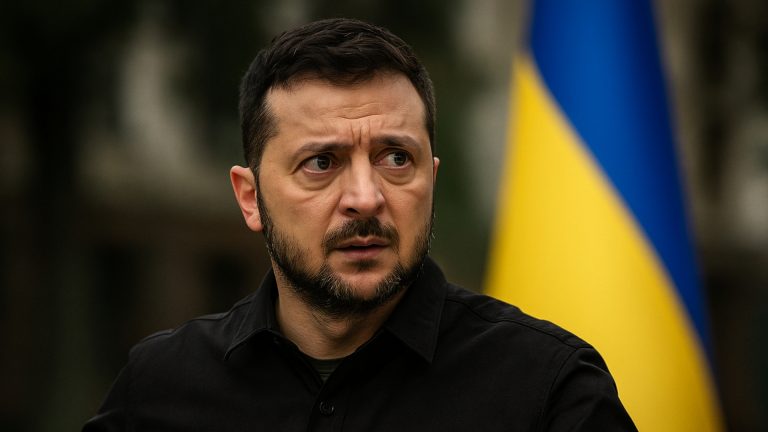
“The concessions will not convince Russia to put an end to the war.” This is the opinion of Volodymyr Zelensky a few days after the Summit in Alaska between Donald Trump and Vladimir Putin. The Ukrainian president has returned to pressing on partners to increase pressure on Moscow, stating that he is “prolonging the war” and shows no interest in ending.
“Another week ended without any attempt by Russia to welcome the numerous requests of the world and to stop the killings” the accusation of the leader of Kiev, who underlined how in the face of the continuous Russian attacks Ukrainian maintains “his positions” and does “everything possible to destroy or hunt the occupant”. “We are defending the life of our people and strengthening our aerial defenses” he continued: “Russia refuses to stop the killings and therefore must not receive any reward or benefit. This is not just a moral position, it is rational. Concessions do not convince a killer”.
In short, Zelensky reiterated that his country wants “authentic peace, peace through strength” which in his opinion is “the only type of peace that can be achieved with Russia”. Words that flaunt trust, but who are actually a symptom of a rather delicate situation. Between geopolitical pressures and growing internal instability, Zelensky risks big. “Zelensky is not only anguished by the scenario of a decisive peace behind closed doors without Ukrainian. But it is also under pressure for Russian attempts to exploit the question of anti -corruption” this is the current picture outlined by a Ukrainian government source reported by the courier.
One of the main fears concerns Trump. The possible territorial concessions to Russia worry Kiev. In particular, there is a possible recognition of the annexation of Crimea and Russian employment in the regions of Donetsk, Lugansk, Kherson and Zaporizhzia. Although popular support for territorial integrity remains high, the polls indicate a change in the climate of public opinion. According to a Gallup survey, 69% of Ukrainians would be willing to sell territories in exchange for peace, compared to 52% of the previous year. However, another survey by the Kyiv International Institute of Sociology shows that only 17% would accept this compromise without precise guarantees, a position publicly reiterated also by Zelensky.
According to the same government source, “this is perhaps one of the most difficult moments since the beginning of the war”. The president is aware of the fact that, after ten years of conflict in Donbass, many of civil and military would consider any form of surrender or compromise that make the sacrifice made unacceptable. At the same time, the weight of collective tiredness is evident, in a population under mobilization and war stress for over three years. Signals of internal discontent are not lacking. An officer from the Sumy front, who preferred to remain anonymous, said three weeks ago: “The recent protests in the square caused by the attempt to further centralize the power and to limit that of the anti -corruption agencies could only become a taste of a new Maidan”.
In the context of the conflict, the Azov battalion has also strengthened its recruitment campaign, adopting a rhetoric focused on victory at any cost. One of the spots spread online portrays a mechanic who, complaining about the son engaged to the front, feels answered: “Blessed are you who have a female”. The answer comes dry: “Yes, but she enlisted in Azov”. Meanwhile, the Ukrainian cities are covered with posters that celebrate the “heroes” of Mariupol’s siege, testifying to a war fiction still very present in public speech.
A possible peace agreement, especially if perceived as unfair, would represent a remarkable challenge for a leader around which national unity has so far ceased. At the same time, the difficulties related to forced recruitment, in particular among young people, are generating growing tension. Russian propaganda has intensified its attention on the topic, using raids in the lever centers as a starting point to feed the narrative of discontent. Episodes such as an aggression that occurred recently in Mykolaiv Oblast and the protests in Vynnytsia have been carefully observed by the internal security services of the SBU.
According to several reports of western intelligence, the strategic objectives of Russia remain unchanged: Moscow aims to replace the current Ukraine leadership with a philorussian government, reduce the military apparatus of the country, prevent future adhesion for NATO and modify the Ukrainian Constitution in a neutralist sense.
The Ukrainian government, for its part, continues to exclude new elections, referring to martial law, which prevents the performance of votes during the state of war. However, the erosion of consent towards the Zelensky presidency is a significant fact: according to the most recent polls, its popularity fell from 65% to 58% within a month. The criticisms regarding the growing concentration of power, both by the president and his head of cabinet Andriy Yermak, become more and more frequent.
TheVermilion.com is also on WhatsApp. Simply click here to register for the channel and always be updated (free).