

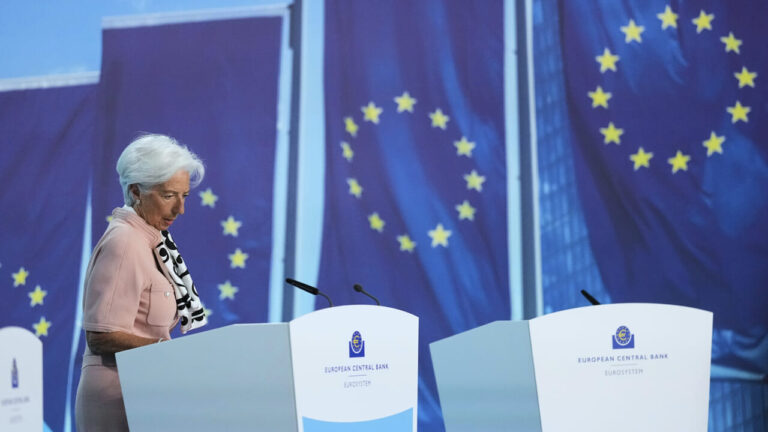
The ECB still keeps its key interest rates unchanged, but underlines that “the upside risks for inflation and the downside risks for growth have intensified”. “The conflict in the Middle East – we read in the note – has caused a sharp increase in energy prices, pushing inflation upwards and weighing on the climate of confidence”.
“The implications of the war for medium-term inflation and economic activity will depend on the intensity and duration of the energy price shock – continues the central bank – as well as the extent of its indirect and second-round effects. The longer the war continues and the longer energy prices remain high, the greater the likely impact on broader measures of inflation and on the economy”.
Lagarde: “We discussed the possibility of an increase”
The rates on deposits with the central bank, on main refinancing operations and on marginal refinancing operations therefore remained unchanged at 2.00%, 2.15% and 2.40%. So far the ECB has decided to respond to the shock caused by the war in the Middle East without raising the cost of money, but reserving the right to intervene decisively if inflation were to spike.
ECB President Christine Lagarde explained at a press conference that “in the Governing Council there was an in-depth discussion on the monetary policy stance” to be adopted. “The decision was unanimous but we discussed the possibility of an increase.”
The one caused by the war in the Middle East, he added, “is a remarkably uncertain economic scenario: the conflict weighs on economic activity and surveys show slowing growth and a decline in confidence” while there are signs that “indicate that supply chains are under pressure”.
The ECB: “Inflation close to the 2% target”. The Fed is also leaving rates unchanged
The central bank’s Governing Council explains that it is “still well positioned to address the current uncertainty. The euro area has entered this period of sharp increases in energy prices with inflation around the 2% target and an economy that has shown good resilience in recent quarters. Longer-term inflation expectations remain firmly anchored, although those at shorter horizons have increased significantly.”
Meanwhile, yesterday a similar decision was taken by the US Federal Reserve which confirmed the markets’ expectations by leaving interest rates unchanged. “Inflation is high, in part due to the recent rise in global energy prices,” the US central bank said, keeping rates in a range of 3.50% to 3.75%.