

It really seems that international diplomacy is one step away from an agreement between the USA and Iran. Pursued for months, with negotiations progressing amidst intertwined threats, this time the turning point seems real. The conditional is a must: the announcement made on Truth by American President Donald Trump was followed by words along the same lines from his deputy Rubio, but the Pasdaran, a powerful branch of the Iranian armed forces, chilled the spirits by talking about “propaganda”. Let’s see what the points of the agreement are, the waivers of the parties and what remains unresolved.
Close agreement between USA and Iran
Let’s make a clarification straight away: what could be announced shortly, perhaps today, Sunday 24 May, is a memorandum of intent with a 60-day truce while the more complex aspects are defined. The potential preliminary agreement will be called the “Islamabad Declaration,” according to Al Arabiya, and the next round of talks could take place on June 5.
According to the American press – Axios first and foremost – these are the key points of the agreement. During the 60-day ceasefire, the Strait of Hormuz would be reopened and a new round of nuclear negotiations would begin. The halt to military actions could be extended by mutual agreement. Hormuz would be reopened without tolls. Iran would undertake to clear the strait of the mines it has deployed, thus allowing ships to transit freely. In exchange, the United States would lift the blockade of Iranian ports and grant some sanctions waivers, allowing Iran to freely sell oil.
Nuclear issues would not be resolved in this 60-day agreement. Iran should pledge not to develop nuclear weapons. Iran’s uranium enrichment program would also be stopped. It is unclear what will happen to the stockpile of enriched uranium. The United States would negotiate the lifting of sanctions and the release of Iranian funds during the 60-day period.
The draft memorandum of understanding would also provide for an end to the war between Israel and Hezbollah in Lebanon.
Bibi’s doubts
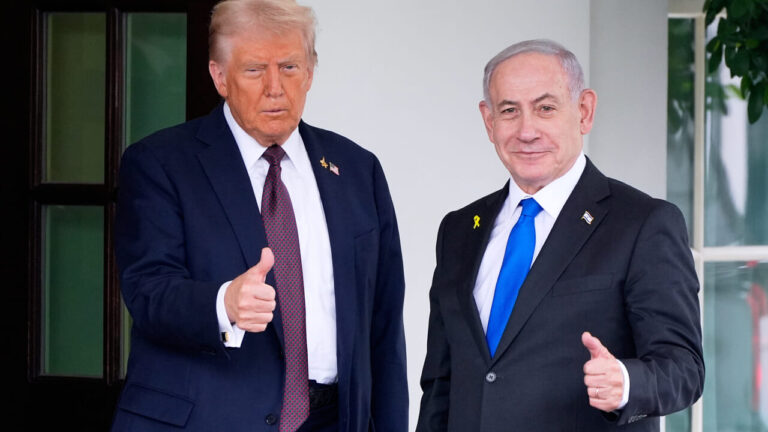
However, Israeli Prime Minister Benjamin Netanyahu would have expressed “concerns” about some parts of the draft agreement between the United States and Iran. He would have done so during a phone call with American President Donald Trump. The Axios website reports this, specifying that, in particular, Netanyahu is worried about the part that concerns the end of the war between Israel and Hezbollah in Lebanon.
A US official told Axios that as far as Lebanon is concerned it would not be a “unilateral ceasefire” and that if Hezbollah attempted to rearm or instigate attacks, Israel would be authorized to act to prevent it. “If Hezbollah behaves well, Israel will behave well,” the official said. “Bibi has his own domestic considerations, but Trump needs to think about the interests of the United States and the global economy,” the US official added.
We will see how much the doubts of the president of Israel weigh. Only a few days ago Trump said, in his usual tones, that Netanyahu does what the tycoon tells him.
EU Commission: “Good progress, reopen Hormuz”
“I welcome the progress made towards an agreement between the United States and Iran. We need an agreement that truly eases the tension of the conflict, reopens the Strait of Hormuz and guarantees full freedom of navigation without obstacles. Europe will continue to work with international partners to seize this opportunity and reach a lasting diplomatic solution. And to contain the repercussions of this conflict, in particular on supply chains and energy prices”, comments the President of the European Commission, Ursula von der Leyen, on X.
I welcome the progress towards an agreement between the US and Iran.
We need a deal that truly de-escalates the conflict, reopens the Strait of Hormuz and guarantees toll free full freedom of navigation.
Iran must not be allowed to develop a nuclear weapon.
It must also end…
— Ursula von der Leyen (@vonderleyen) May 24, 2026
In Iran “there is a need for an agreement that will put an end to the conflict and lead to the reopening of the Strait of Hormuz, with unconditional and unrestricted freedom of navigation”, British Prime Minister Keir Starmer also writes on X. “Progress towards an agreement between the United States and Iran is welcome. It is essential to prevent Iran from ever developing a nuclear weapon”, he adds, guaranteeing that the British government “will continue to do everything possible to protect British citizens from the consequences of this conflict and will work with international partners to seize this opportunity and reach a long-term diplomatic solution”.
I welcome the progress towards an agreement between the US and Iran.
We need to see an agreement that brings the conflict to an end and reopens the Strait of Hormuz, with unconditional and unrestricted freedom of navigation. It’s vital that Iran must never be allowed to develop…
— Keir Starmer (@Keir_Starmer) May 24, 2026