

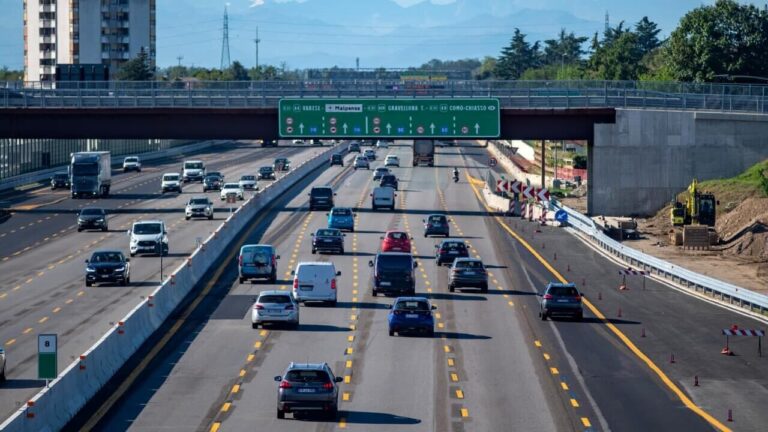
In January 2027, the tax ban will begin for millions of motorists. In the press note released after the council of ministers, the government specified that the measure will benefit “natural persons who own a car, and taxable subjects such as those who use the vehicle on lease or rental, petrol or diesel, including hybrid fuel, with a power not exceeding 80 kW”. When the person owns multiple eligible vehicles, it is highlighted, “the exemption applies to the one with the least power. Anyone who does not own cars falling within the limits indicated can benefit from the exemption for a motorcycle or moped”.
What happens with 2 cars in the family
The text is clear, but must be read carefully especially by those who own multiple cars or live in a family with several vehicles. For example, what happens if two spouses both own a car? The executive statement specifically mentions exemption for “natural persons” and not for families.
It can be deduced that if a husband and wife each own a subsidized car registered in their own names, they can both benefit from the exemption. The case is different in which both cars are registered to the same person: in that case the exemption is recognized only for one car, the less powerful one.
This at least is what can be deduced from the statement issued by the Council of Ministers which however does not have the force of law. Absolute certainty on the requirements will only come with the official text of the decree.
What if a taxpayer has both a car and a motorbike? The concrete cases
Another point. What if a taxpayer owns both a car and a motorcycle? In this case the law seems to indicate that the discount applies to the car and cannot be cumulated with that provided for the motorbike. However, if the car is not eligible for relief, because it is too powerful, and the taxpayer also owns a motorbike, he will be entitled to relief for the two-wheeled vehicle. Also in this case, if you own multiple eligible motorcycles, the benefit concerns only one vehicle: the less powerful one is given priority.
Let’s take some examples:
| Situation | How the discount is applied |
| A person owns two cars of 45 and 72 kW | The exemption is recognized only for the 45 kW car. |
| A person has a 76 kW car and a motorcycle | The discount applies to the car; it cannot be cumulated with that provided for the motorbike. |
| A person owns a 110 kW car and a motorcycle | The car exceeds the limit, while the motorcycle can fall within the exemption. |
| Two spouses each have a car registered exclusively in their name, 64 and 79 kW | Both can benefit from the exemption on their respective vehicle, if they meet the other requirements. |
| One person owns only two motorcycles, 18 and 32 kW | The exemption applies to the least powerful motorcycle, the 18 kW one. |
For jointly owned cars, however, some application aspects remain to be clarified: the presence of multiple owners on the registration document does not automatically lead to the recognition of multiple exemptions. But further clarifications could arrive on this point with the text of the decree.
What if the car changes ownership?
What if a taxpayer, in possession of multiple vehicles, decided to register one of them in the name of his wife or son? In a similar case, if the transfer of ownership was real and duly registered there seems to be no reason to find any wrongdoing. The administration could contest the operation only if concrete elements of simulation or abuse emerged.
The free car tax (but not only) comes from the Pnrr: so the government has “moved” 1.7 billion into the catch-all decree
However, leaving aside the ethical discussion, it is necessary to evaluate the convenience of an operation of this type. Let’s take an example. The cost of the tax for an 80 kW vehicle is just over 200 euros, but a change of ownership for the same vehicle, including IPT, fixed expenses and agency compensation, can cost even more than double. If it goes well.
The stratagem would therefore only make sense if you are sure of obtaining the benefit for at least 3 years. But at the moment, as we well know, the suspension of the tax is only valid for 2027 even if the government has promised to make it structural. The real risk therefore is that of immediately spending double what you hope to save.