

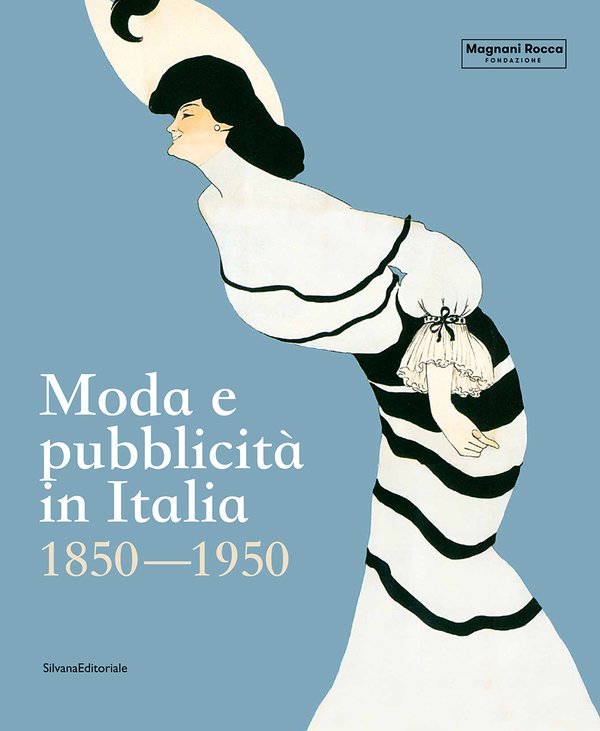
“You will have no other style of me.” It could be a phrase symbol of a supermodel of the 90s, those launched by the visionary genius of Gianni Versace. A concept that identifies the fifty years that have changed the Italian society and refers to the scandalous slogan ‘you will have no other jeans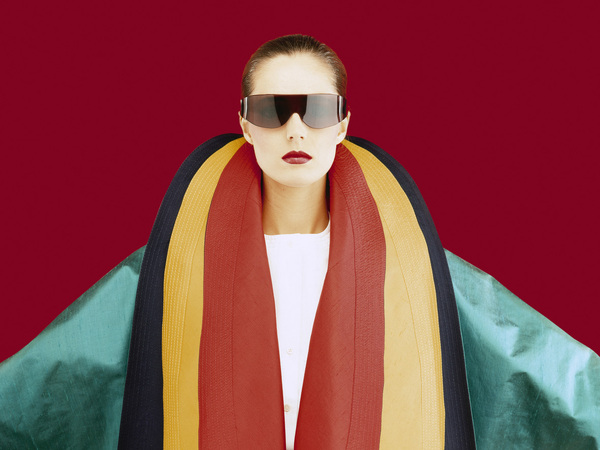 Ultimate of me ‘who accompanied the photo of Oliviero Toscani for Jesus Jeans.
Precisely to the evolution of advertising promotion in Italy in the fashion sector during the second half of the twentieth century, from 13 September to 14 December 2025, the New exhibition of the Magnani-Rocca Rocca Foundation-the famous villa of masterpieces in Mamiano di Traversetolo, near Parma- Set up in the salons adjacent to those who permanently host capital works by Tiziano, Dürer, Van Dyck, Goya, Canova, Renoir, Monet, Cézanne, Morandi and many others.
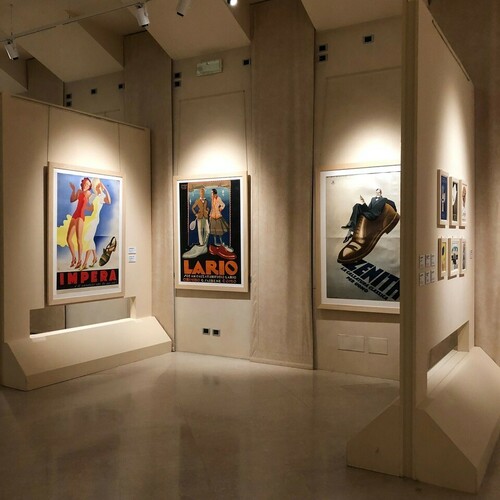
More than three hundred works – including posters, magazines, commercials, photographs, cinema, videos, advertising gadgets and even the legendary Fiorucci figurines – on an unpublished path that crosses half a century of transformations of the collective imagination, with a philological and poetic look at the history of fashion and its communication. Cinema and television become its mirror, with commercials that entered the collective myth.
From 1950 to 2000 the Italian style launches into the world. Armani, Benetton, Dolce & Gabbana, Emilio Pucci, Fendi, Fiorucci, Gianfranco Ferré, Guarnera, Gucci, Marina Rinaldi, Max Mara, Moschino, Salvatore Ferragamo, Valentino, Versace, Coveri, Zegna, Walter Albini are the protagonists of the Made in Italy of those years.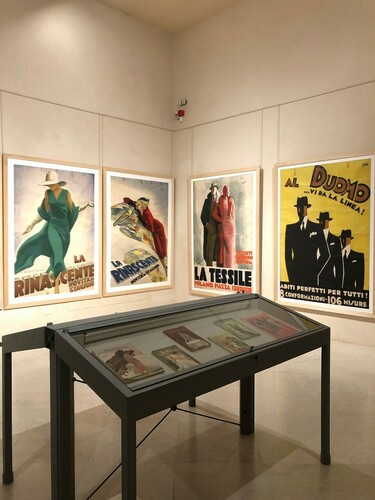
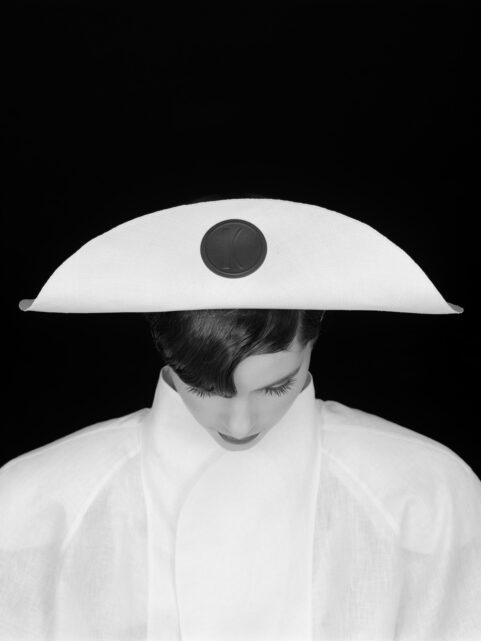
The shots of the great masters of fashion photography – Giampaolo Barbieri, Giovanni Gastel, Alfa Castaldi, Maria Vittoria Backhaus – and the illustrations of René Gruau, Sepo, Erberto Carboni, Franco Grignani, Guido Crepax, Antonio Lopez, Lora Lamm, in addition to the very particular and destabilizing work of Oliviero Toscani, return an aesthetic that is together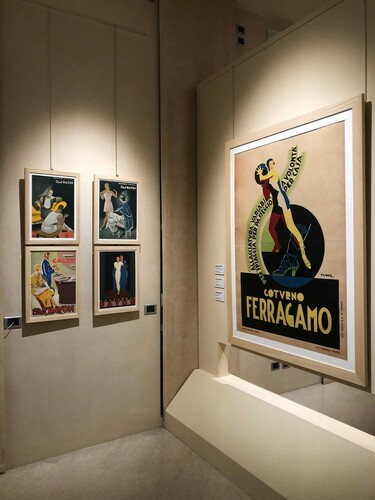 advertising story and portrait of an era.
Fashion is confirmed as a powerful communication machine and is increasingly defined as body language and performance. The exhibition tells how fashion and advertising, together, have been able to cross the economic, social and cultural changes of our country to generate the myths, stereotypes, creativity, desires.
Italy enters the second post -war period shyly, observing American advertising dynamism but remaining anchored to an artisan system: graphic designers, illustrators, posters. The development is slowed down by a rigid and pedagogical media system: Carouselwith its rules and censorship, delays comparison with international avant -garde. But precisely this slowness strengthens a form of “advertising Italianness”, a visual and narrative taste that combines memory, irony and affabulation.
The real turning point comes with private televisions, the color on TV, the disintegration of the unique models: advertising becomes a pop, powerful, invasive language. It is a new form of visual art, and fashion its most vibrant laboratory. An important section of the exhibition is dedicated precisely to the vision of some of the most iconic television commercials of those years, joined the collective imagination.
The eighties and nineties mark the peak and see the undisputed worldwide success of the “Made in Italy” brand. Italian fashion stops being only industry and communicates stories, characters, experiences by creating new imaginary.
Collaborations – National Museum Salce di Treviso Collection, Study Center and Communication Archive (CSAC) of the University of Parma, Civic Collection of the ‘Achille Bertarelli’ prints – Castello Sforzesco of the Municipality of Milan, Alessandro Bellenda Collection – Galleria L’Inge di Alassio (SV), Mirko Morini – Tortona4arte of Milan, Andrea Re – Milan Manifesti, Giuseppe Moraglia – Affichere in L’Aquila, Marco Cicolini – Piedmontese antiques of Turin, as well as corporate archives and important private collections. Throughout the film part the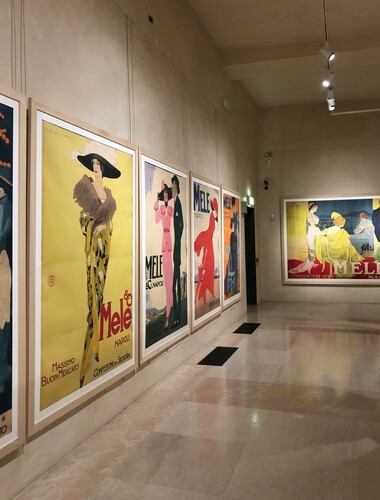 Exhibition makes use of the contribution of the general audiovisual archive of Italian advertising and the personal contribution of its founder and director, the historian of advertising Emmanuel Grossi.
 The Barilla historical archive provides some spectacular Caroselli with Mina (1965-1970) with the clothes designed by Piero Gherardi, costume designer of Fellini, and by other famous couaturier.
The exhibition and the catalog -The exhibition-edited, as the previous chapter dedicated to the period 1850-1950, by Dario Cimorelli, publisher and communication expert, Eugenia Paulicelli, ordinary professor and founder of the School of Specialization of “Fashion Studies” at the Graduate Center and the Queens College of City University in New York, Stefano Roffi, scientific director of the Magnani-Rocca Foundation-is accompanied by a rich catalog. Published by Dario Cimorelli Editore, where, in addition to the reproduction of all the works on display, essays by Eugenia Paulicelli, Silvia Casagrande, Vanessa Gavioli, Emmanuel Grossi, Chiara Pompos, Emanuela Scarpellini are published.
The Magnani-Rocca Foundation houses one of the most important art collections of private origin in the world. The villa of masterpieces, home of the Foundation in Mamiano di Traversetolo, exhibits the works that belonged to Luigi Magnani, with authors such as Monet, Renoir, Cézanne, Goya, Tiziano, Dürer, De Chirico, Rubens, Van Dyck, Filippo Lippi, Carpaccio, Burri, De Pisis, Tiepolo, Canova and the most significant collection of work by Morandi. Immersed in the Parma countryside, the villa retains the timeless charm of the illustrious guests who attended it, with its neoclassical and empire furnishings, surrounded by the romantic park, a large English garden with plants 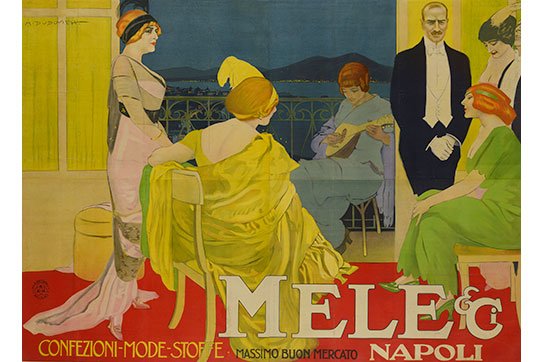 Exotic, monumental trees and splendid white and colorful peacocks. The historical park has recently been restored thanks to the funds of the PNRR. It is a unicum for its exceptional stratification: few places in Italy can
  boast an equally complete testimony of the evolution of the art of the garden. Three visions of the landscape are harmoniously coexist in the park: the nineteenth -century formal garden wanted in 1819 by General Filippo Paulucci delle Roncole, the romantic English park created by Marianna Panciatichi between 1850 and 1860, and the Italian garden designed by Luigi Magnani in the 1960s. To complete this living synthesis of three centuries of landscape, a contemporary garden inspired by the “New Perenial Movement”, which reinterprets the relationship between nature, aesthetics and culture in an ecological and sensitive key.
Carlo Franza
Tag: Alfa Castaldi, Antonio Lopez, Barilla historical archive, Armani, Benetton, Coveri, Dolce & Gabbana, Emilio Pucci, Erberto Carboni, Fendi, Fiorucci, Magnani-Rocca Rocca Foundation, Franco Grignani, Giampaolo Barbieri, Gianfranco Ferrè, Giovanni Gastel, Guarnera, Gucci, Guido Crepax, the illustrations of René Gruou, Lamm, Maria Vittoria Backhau, Marina Rinaldi, Max Mara, Moschino, Piero Gherardi’s costume designer of Fellini, Prof. Carlo Franza, Salvatore Ferragamo, Sepo, Valentino, Versace, Villa of Masterpieces in Mamiano di Traversetolo, Walter Albini., Zegna