

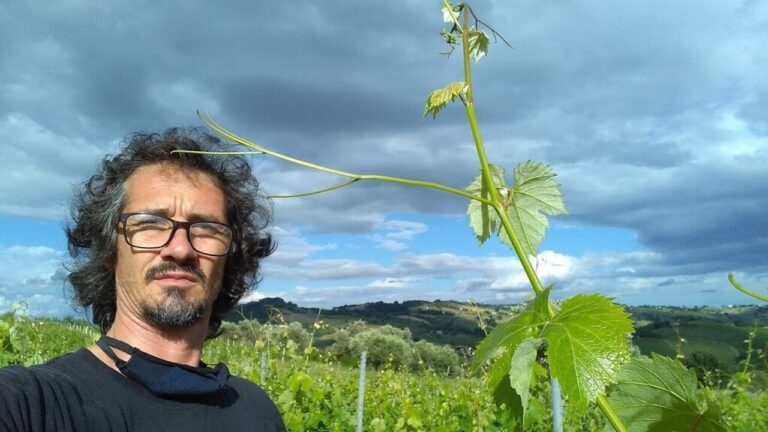
The climate does not discuss, does not negotiate, does not grant extensions. Send signals. The rise in sea levels, the fires that devour entire regions, the ever-longer heat waves, the melting of glaciers. And then the quietest signals, those that can be read up close, walking every day between rows, fields and agricultural soil.
On the occasion of World Environment Day we have chosen to observe the climate crisis through the eyes of those who live in close contact with the earth. Corrado Dottori, 53 years old, born in Milan and adopted by the Marches, is a farmer, writer and author of the book Like winemakers at the end of summer.
From Milan to drink to the land: the romantic choice
For twenty-five years he has observed the transformation of the landscape and climate from the hills of Cupramontana. His is a gaze suspended between concern and hope. With the eyes of a man who sees nature changing day after day, immersed in a daily practice that often depends on uncontrollable variables. A privileged observation point to understand how the climate crisis is no longer an abstract phenomenon, but a concrete reality that changes territories, agricultural production and working conditions.
When he talks about moving to the Marche, Dottori goes back a quarter of a century. The definitive transfer came in March 2000. At the time, a defined wine project did not yet exist. Rather, there was a desire for a different life. The family lands represented a possibility, but not yet a precise direction. The idea was above all to leave the city and look for another way of inhabiting the world. A choice, the initial one, which today he himself defines as simply romantic. The passion for wine was already there, as was a family tradition linked to production. The foundations existed, even if the first years were dedicated above all to agritourism rather than actual agricultural activity. However, from that change in life a path was soon born destined to intertwine agriculture, wine, politics and the environment.
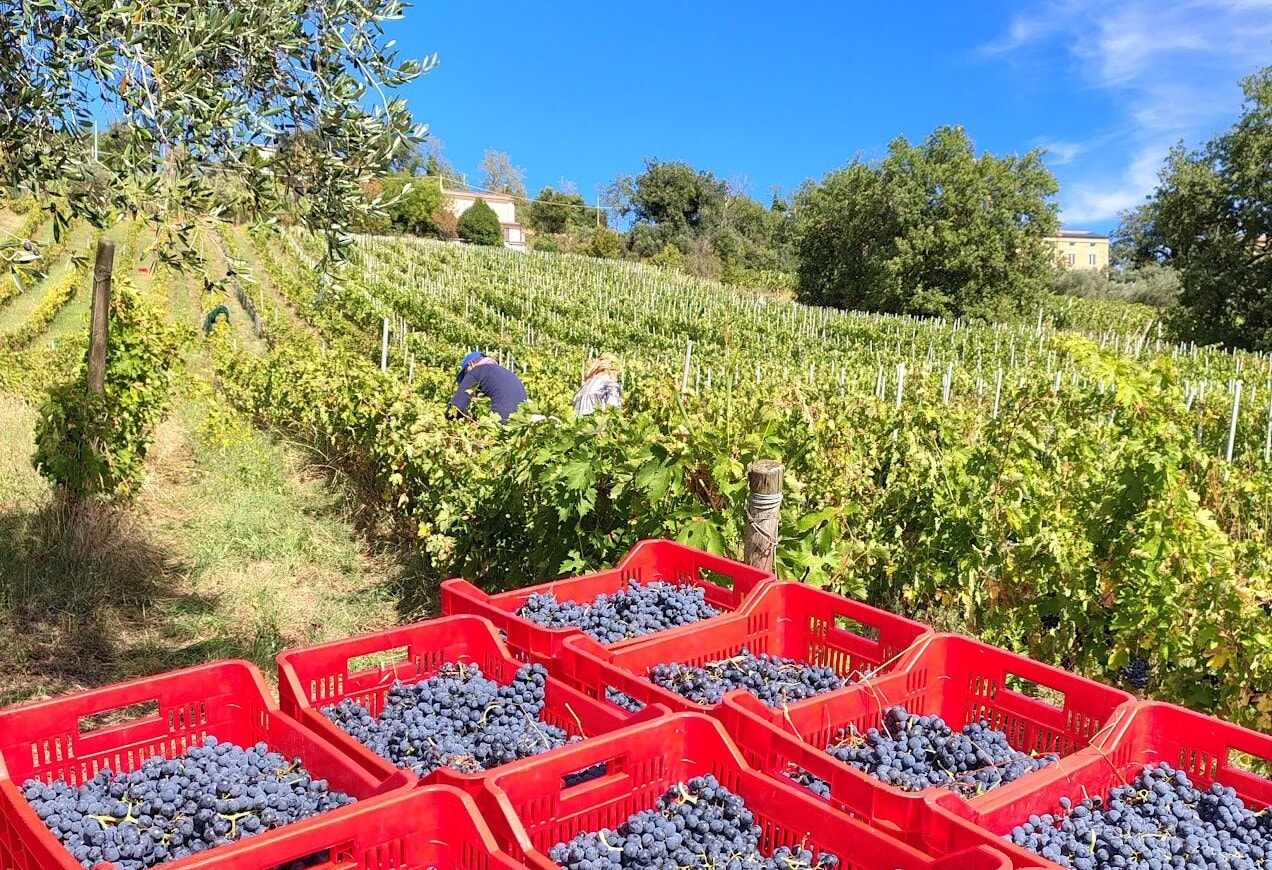
The organic approach to “La Distesa” was born almost simultaneously with the arrival in the Marche, but with very different characteristics from those it would take on in subsequent years. “We were consumer citizens. At the end of the nineties – says Doctori – the debate on critical consumption was very lively. The first reflections on sustainability and attention to the environmental impact of one’s choices were making their way. Organic, however, was still above all a cultural and political choice. What was still missing was direct experience in the field. The real turning point came by working the land every day and above all through the meeting with Critical Wine in 2003, the experience promoted by Luigi Veronelli which brought together agriculture, territory and criticism of the dominant industrial model”.
“Don’t call it change: this is chaos”
It is at that moment that, according to Dottori, the political and agricultural dimensions definitively merge. From there the first meetings were born, the natural wine fairs, the comparison with other producers who were looking for alternative paths. Among the references of those years he cites figures such as Stefano Bellotti and, naturally, Josko Gravner, capable of igniting the imagination of many young winemakers who were looking for new ways of interpreting the relationship between wine and territory.
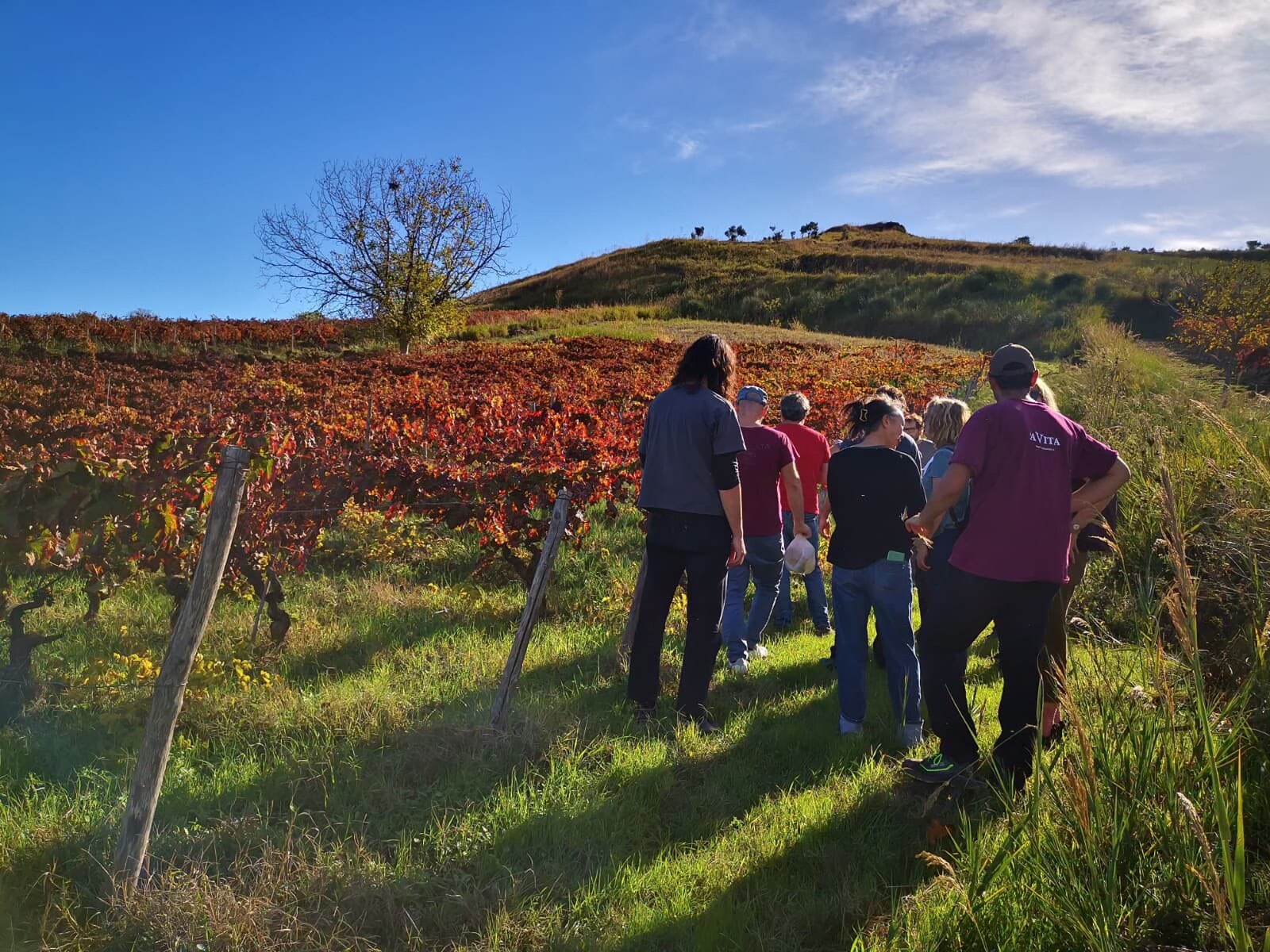
If there is one thing that Corrado Dottori is clear about, it is that the climate crisis did not arrive suddenly. From its hills in the Marche region, observed daily, the change became evident long before it became a central topic in public debate. “To say that we faced the problem right from the start is not an exaggeration. It is true that in recent years there has been an impressive acceleration, but in my opinion the first major change of direction can already be seen between the end of the 1990s and the beginning of the 2000s. We arrived here precisely in that period and I remember well years that today, looking at the climate data, already appear to be a turning point”.
Among the examples he cites 2003, the year of the great European heat wave. It was only the third or fourth harvest for the company, but that season remained etched in the memories of many farmers. “Even today 2003 is considered an emblematic vintage. The same goes for 2007. In reality we have been living with this new climate regime for a long time. The difference is that in the meantime everything has become extreme”.
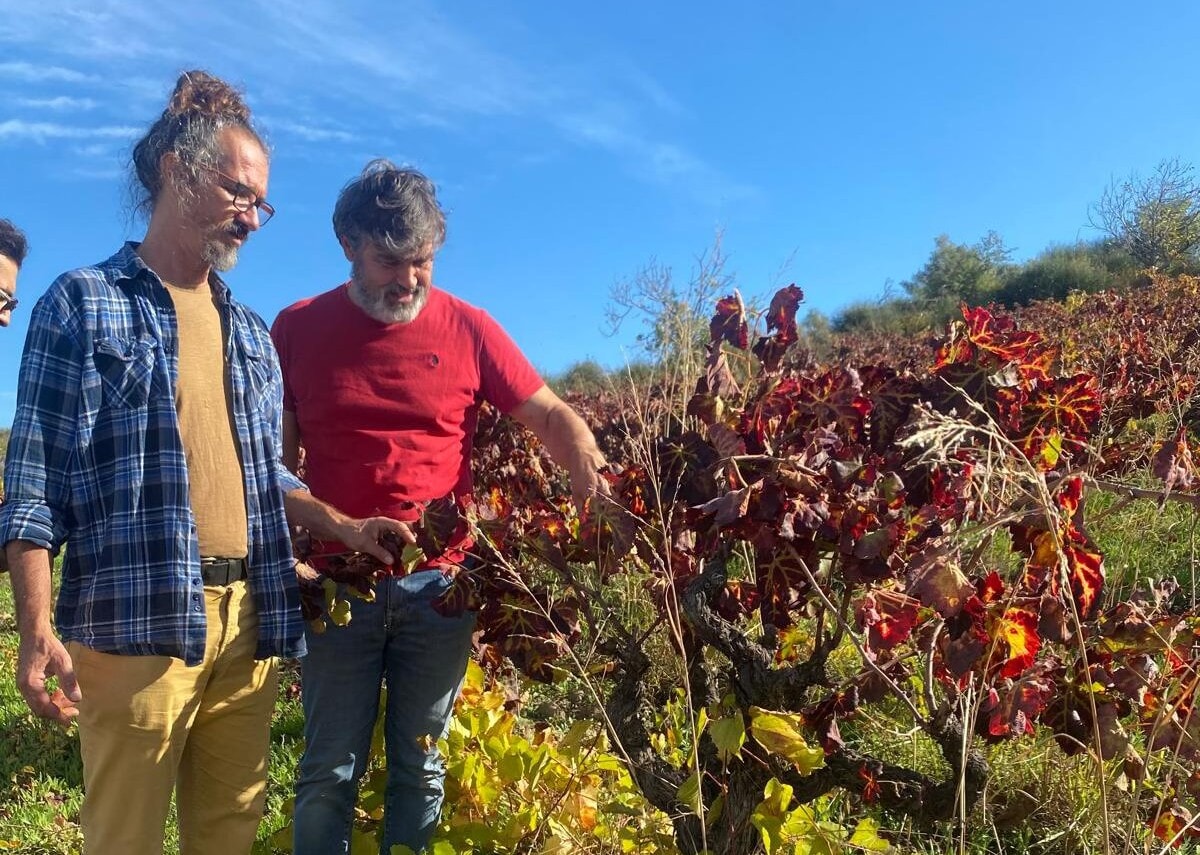
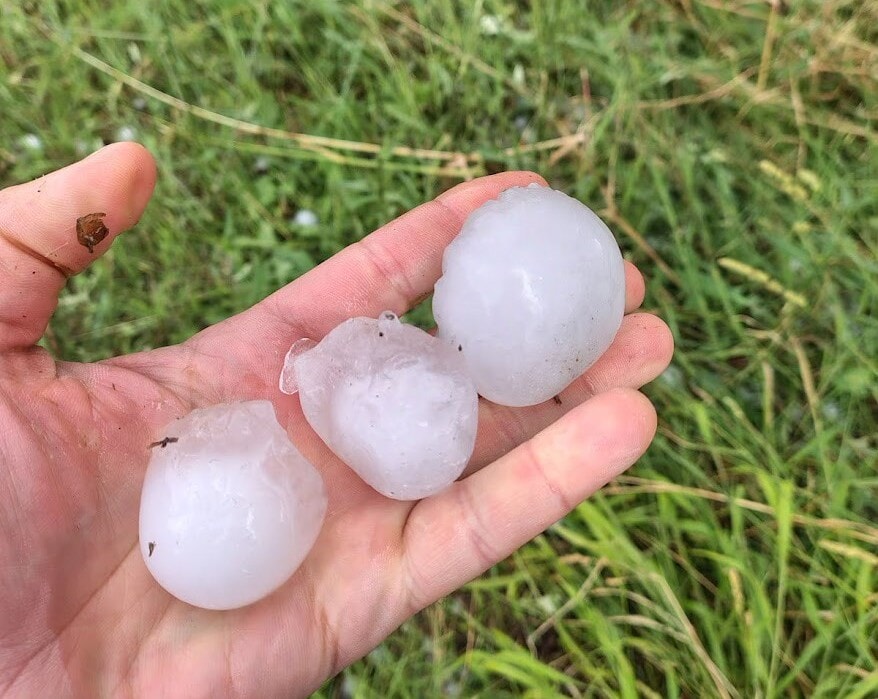
And it is precisely the term “extremization” that occurs most often in his story. According to Dottori, it is no longer enough to speak generically about climate change. “Today I prefer to talk about climate chaos. Climate change almost risks seeming like a linear, orderly transformation. Instead what we see is growing instability. We can have temperatures close to 48 degrees and a few days after a devastating hailstorm. We can witness exceptional snow events in seasons where no one would expect them.”
A chaos that often fuels climate denialism
A dynamic that often generates denialist statements: “Two days of unseasonal cold are enough and someone immediately says that global warming doesn’t exist. But the problem is that we look at the single episode instead of the overall trend. We don’t understand that these extreme events are part of the phenomenon. Until a few years ago we mainly talked about heat waves. Today, even here in the Marche, we see an incredible polarization of rainfall. We can go through three or four months of almost total drought and then find ourselves with fifteen consecutive days of torrential rain. They are the same mechanisms that we have seen behind the floods of recent years.”
The numbers, observed superficially, can even be deceiving: “If you look at the total amount of rain that fell over a year, perhaps you discover that it is similar to that of the past. But that rain is no longer distributed over the months and seasons as it once was.”
In the world of wine, many strategies for adapting to global warming seem deceptively simple: seek cooler, north-oriented exposures, or move vineyards to higher altitudes. Solutions that some large companies are already adopting. In other words, the wine mainstream indicates this as the most immediate way to counteract the increase in temperatures. For Doctori, however, the issue is much more complex. First of all because these are strategies accessible especially to those with large economic resources. A large company can purchase new land and invest in other production areas; a small winemaker, on the other hand, remains tied to the land he owns and cannot simply transfer his business elsewhere.
Move the vineyards to high altitudes? “A solution for the rich”
But there is also another aspect. Changing exposure or increasing altitude does not automatically mean better wines. Each territory is the result of a delicate balance between climate, soil, light, humidity and biodiversity. Rising altitude can reduce the heat, but it also changes the composition of the soil, the maturation conditions and, inevitably, the character of the wines produced. For this reason, Doctors looks with caution at solutions that are presented as universal. Also because adaptation cannot translate into a continuous chase towards new cultivable areas, perhaps sacrificing woods and natural environments which today represent one of the main defenses against the effects of the climate crisis.
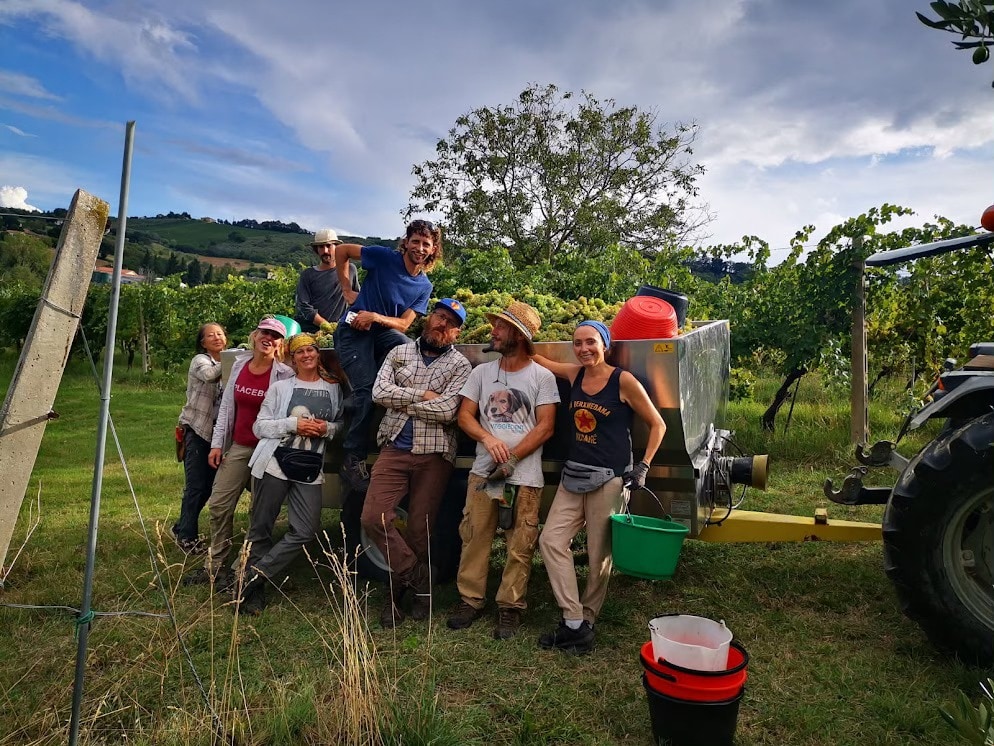
Despite the difficulties of the sector, Dottori observes with interest the growing number of young people who are approaching agriculture and viticulture. Compared to a few years ago, you notice an important change in the approach. If in the past many arrived driven above all by a renewed vision of life in the countryside, today they increasingly meet girls and boys with a solid technical preparation, coming from agricultural schools or university courses, interested in the themes of organic, regenerative and quality viticulture.
Hope in young people (and the limits of science)
This does not mean that there is a lack of fears and uncertainties. Those who choose to invest in agriculture today find themselves facing a particularly delicate phase. Added to the climate crisis is a structural crisis in the wine sector which, according to Dottori, is still underestimated. Yet, despite this complex scenario, the winemaker from the Marche continues to see in the new generations a great desire to learn, experiment and build different agricultural models.
On the scientific research front, Dottori recognizes that climate change is now at the center of academic attention. Much of the funding and research projects in agriculture focuses on the consequences of global warming and possible adaptation strategies. The limit, in his opinion, is not so much the quantity of studies but the way in which the problems are addressed. Research often proceeds in separate compartments, focusing on individual phenomena or specific technical solutions, without considering the complexity of the entire agricultural system.
We need a humanistic vision: because technology alone is not enough
Agriculture, he observes, cannot be reduced to a simple relationship between cause and effect. A vineyard is not only made up of vines, but of a set of soils, microorganisms, insects, animals, spontaneous plants and people who interact with each other continuously. A humanistic vision is missing from approaches to agriculture, that is, the idea that solutions must not be monodirectional, but multifactorial. The agricultural company moves within a complex ecosystem, therefore technical solutions can be useful and often necessary, but alone they are not enough: “If there is a heat wave – reasons Dottori – we can find a technology that temporarily protects the plant. It is an important response, but it risks being only a remedy. The real challenge is to understand the root causes and rethink the system as a whole”.
A reflection that, ultimately, runs through his entire story. There are no shortcuts in the face of the climate crisis. We need knowledge, the ability to adapt and a new relationship with the earth, capable of looking beyond the emergency by understanding what messages our planet Earth is sending us.