

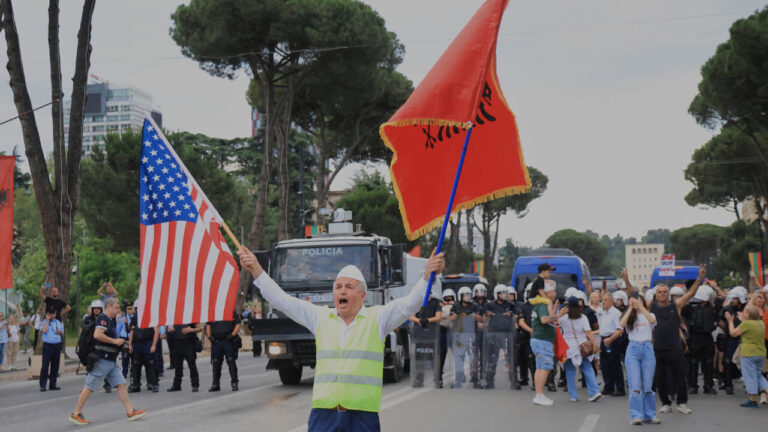
Thousands of people in the square, inflatable flamingos as a symbol of the protest and accusations of lack of transparency in the government. In Albania, mobilization is growing against the luxury maxi resort supported by Jared Kushner, husband of Ivanka Trump and son-in-law of US President Donald Trump. For the third consecutive day, thousands of protesters took to the streets of Tirana to demand a stop to a real estate project worth around 1.5 billion euros destined to be built in one of the most environmentally sensitive areas of the entire Mediterranean.
The protests will not stop in the capital. New events are also planned in the south of the country, where preliminary works on the tourist complex have already begun. At the center of the protests is the fear that building development could compromise natural habitats of extraordinary value, putting protected species at risk and irreversibly altering an ecosystem considered unique.
Who leads the demonstrations
The main Albanian environmental associations are leading the protest. Among these is the PPNEA (Protection and Preservation of Natural Environment in Albania), the oldest ecological organization in the country. Executive director Aleksandër Trajçe accuses the authorities of carrying out the project without adequate involvement of the population.
“From start to finish there was a total lack of transparency,” he said. “We haven’t seen any public consultation or permit documentation. If the bulldozers are removed, the fences are removed and the natural habitats are restored, then we can start having discussions.”
The resort project and Edi Rama’s “wall” against protests
The resort should be built by Affinity Partners, the investment company founded by Jared Kushner after his experience in the White House during Donald Trump’s first term. In recent months, Ivanka Trump also visited Albania together with a group of architects and designers to evaluate the area affected by the intervention.
The investment represents one of the most ambitious tourism projects ever announced in the Balkan country. The declared objective is to transform the area into an exclusive destination for high-end international tourism, contributing to Albania’s economic growth and strengthening its attractiveness on the global market.
A vision shared by Prime Minister Edi Rama, who considers the project a fundamental stage in the country’s development path. In recent years the Albanian government has firmly focused on tourism as an economic driver, taking advantage of the growing international interest in the Adriatic and Ionian coasts.
Faced with the protests, Rama proposed a meeting with the demonstrators to seek mediation, but at the same time ruled out the possibility of stopping the investment. “There is absolutely no chance that work will be stopped as long as I am in government,” he said.
A natural paradise at risk and the symbol of flamingos
Environmentalists’ concerns mainly concern the area chosen for the resort. The project in fact involves the island of Sazan, the only island in Albania, located at the entrance to the bay of Vlora. For decades a military zone closed to civilians, Sazan has remained relatively uncontaminated and today represents one of the most precious natural environments in the country.
The intervention also affects the wetlands and coastal habitats of the marine national park surrounding the island, as well as a part of the coast near the village of Zvernec, between the sea and the Narta lagoon.
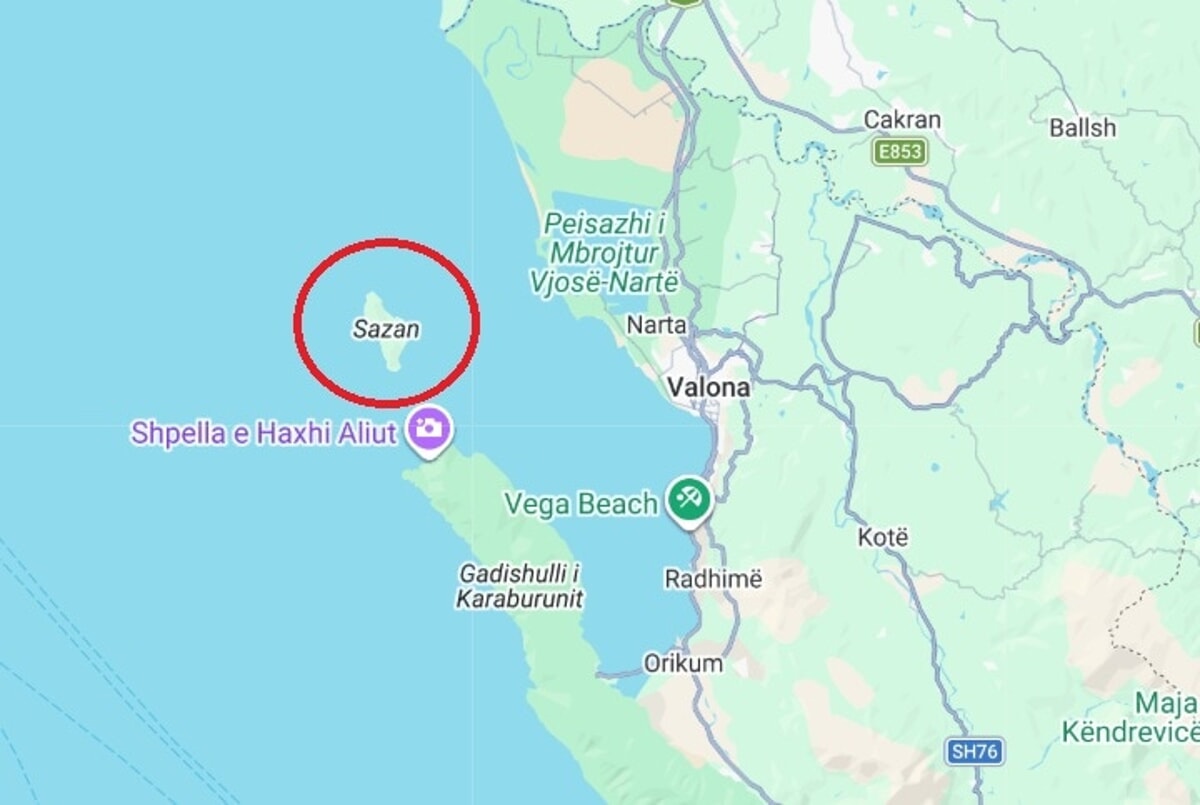
According to experts, this is a fundamental area for Mediterranean biodiversity. In fact, its waters are home to one of the last populations of the Mediterranean monk seal, one of the most threatened marine species in the world. Over 200 species of birds also find refuge in the lagoons and wetlands, including pink flamingos and Dalmatian pelicans, both considered species of particular conservation interest.
Flamingos have become the symbol of the protests of recent days. Many protesters marched through the streets of Tirana with inflatable flamingos, to draw public attention to the risks that the project could pose for local fauna.