

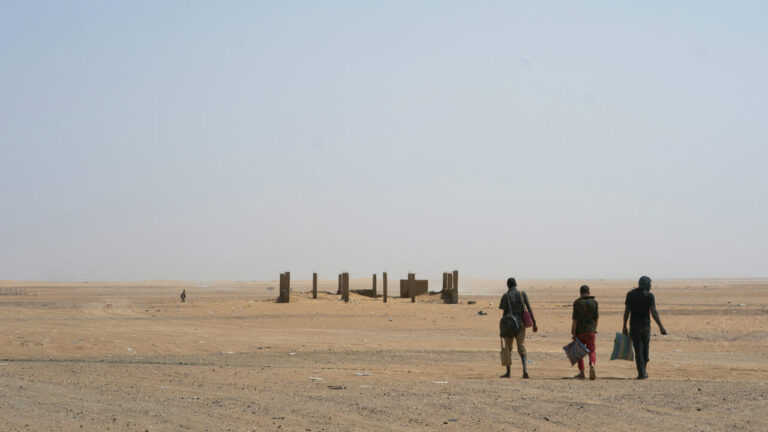
Forty-nine people died of thirst in the Sahara desert, in northern Niger, after the truck they were traveling in broke down in an area over 80 kilometers west of Assamaka, a border town near the Niger, Mali and Algeria triangle. The news was released by the governorate of the Agadez region, which spoke of a “human tragedy”.
The religious festival and the breakdown in the middle of the desert
According to the reconstruction of the local authorities, the truck had left from the Malian town of Telhandek, about 300 kilometers from the border with Niger. On board there would have been around one hundred travelers returning from Mali to celebrate a religious holiday with their families. After several days of travel in the desert, the vehicle was lost and then stopped due to a breakdown. The driver, his assistant and some passengers attempted to repair it, but failed.
The location where the vehicle broke down offered no shelter or supply points. The authorities explained that the travelers were without water and trapped “in the heart of a hostile environment”: the extreme temperatures and the absence of rescue services made their survival impossible. Except for two survivors.
They were the ones who raised the alarm, after walking for over 50 kilometers until they reached a water point and then Assamaka, from where they alerted the authorities. When the rescue team sent by the governor of Agadez arrived on the scene they found dozens of bodies under and around the truck, with clothes and personal items scattered in the sand. The 49 victims were buried on site, in mass graves, in an operation defined by the authorities as particularly delicate and exhausting even for the survivors.
The site of the disaster is the same Saharan corridor that for years has connected Agadez, Assamaka, Algeria, Mali and Libya: an area crossed by seasonal workers, gold miners, regional travellers, people expelled from North African countries and migrants headed towards the Maghreb or, in some cases, towards the Mediterranean migratory routes.