

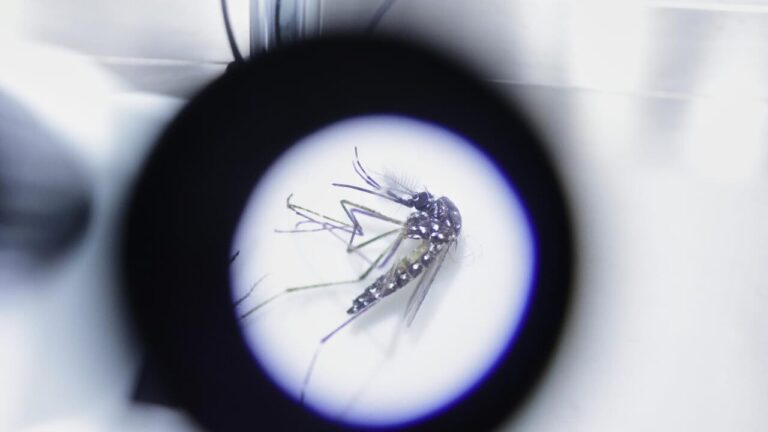
A confirmed case of dengue in Italy has triggered prophylactic health protocols. The case of contagion was reported by the Municipality of Bologna. Public and private areas have been subjected to disinfestation to prevent the disease from spreading through tiger mosquitoes. These insects, in fact, are the main vectors of many viral infections. Every year in Italy millions of euros are spent in the fight against mosquitoes: sprays, larvicides, mosquito nets, are all effective methods, but not definitive. However, there is a new technique that promises to solve the problem.
Tiger mosquitoes: a species dangerous to health
They arrived on a cargo ship and quickly colonized all the regions. Tiger mosquitoes (Aedes albopictus), so called because of their characteristic stripes that resemble large cats, arrived in Italy thanks to the used tire trade. In the 1990s, one or more boats transported this insect that was hiding in car tires and from that moment it began to proliferate not only in Italy, but in the main European countries.
Native to Asia (China, Indonesia, India), tiger mosquitoes are widespread in tropical forests. Warm environments in which it is easy to find stagnant water which is essential for the development of the larvae. But this species of mosquito, alien to our habitats, quickly adapted to the concrete jungles of our cities by reproducing in manholes, in plant saucers, in every harmless small condominium water collection. Where there is water and a temperate climate, tiger mosquitoes multiply there. Which are very aggressive towards humans and therefore called “anthropophilic”.
Their activity is almost diurnal, until sunset, but it has been noticed that artificial light can extend their “meals” until late in the evening. However, what is most worrying about this invasive species is that they are vectors of viral infections, including some very serious ones: dengue, chikungunya, zika and yellow fever.
Past epidemics: from Emilia to Calabria
Tiger mosquitoes are not just a simple nuisance, they represent a health risk. Dengue, chikungunya, zika and yellow fever are viral diseases transmitted to humans by the bite of mosquitoes of the Aedes genus. Dengue causes high fevers, severe headaches, muscle pain, nausea and vomiting. Symptoms similar to those caused by chikungunya, in symptomatic cases by zika virus and yellow fever. In Italy in the first five months of 2026 there were 155 arboviruses – diseases caused by bites of ticks, mosquitoes and the like. All associated with travel abroad.
The problem, however, arises when infected subjects are not intercepted by the health authorities and further bites from “Italian” mosquitoes can spread the virus. The tiger mosquito was responsible for a chikungunya epidemic in Emilia-Romagna in 2007, with 250 infections. In 2017 an outbreak then broke out between Anzio and Rome which generated a secondary outbreak in Calabria: a total of 298 cases. Although they are not endemic diseases, the attention of local health authorities is very high.
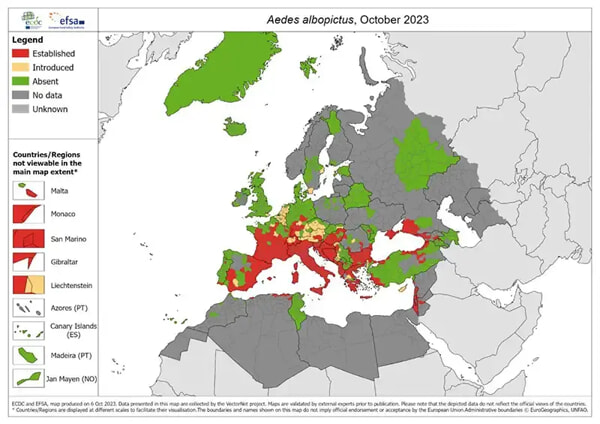
No one, however, is safe. Where the presence of tiger mosquitoes is reported, you may run the risk of being infected by infections that should not be underestimated. But seasonal cases should not cause alarm. Although the insect can be found more or less everywhere, the reported cases do not in fact cause too much concern among scholars. However, there is an entire branch of research that tries to exterminate tiger mosquitoes by intervening in their reproductive process: this is the sterile male technique.
The sterile male technique: how it works
In this field the Environment Agriculture Center (CAA) of Crevalcore in the province of Bologna is at the forefront. Since 2008, the institute has also been accredited for tests with pathogenic organisms, in laboratories at the BSL3 biosafety level, the penultimate before the maximum level of containment. Romeo Bellini, director of the Medical Entomology department of the CAA since 1988 and until a few years ago, has published some of the most important studies on the sterile male technique.
“The idea of fighting harmful insects through sterilization with the use of radiation is very old, we’re talking about the 1960s”, he explains to Dossier The Vermilion. At the beginning, the research was concentrated mainly in the agricultural and livestock sector: “Against the blowfly in the United States, fruit flies, the tsetse fly”.
The application of this technique to mosquitoes has only arrived more recently due to the difficulties in breeding these insects. The first phase in fact involves the growth of mosquito larvae up to the pupal stage. At this stage the selection of males, usually smaller than females, takes place through precision machines. “With the same X-ray machines used in hospitals we bombard males with predetermined doses of radiation before they become adults: their spermatozoa undergo genetic mutations which, once they unite with the eggs of wild females, will produce embryos destined to die”, summarizes Bellini.
undefined
Sterile males are released into the wild to compete with other, non-sterile males in the reproductive cycle. The final goal is to prevent new females from being born, the only ones that bite us. The CAA has been collaborating with various European institutes for years and currently has some projects under its belt in the Canton of Ticino (Switzerland), in Germany and in Austria. From 2022, the Municipality of Bologna will finance a pilot project to combat the spread of the tiger mosquito and the outbreak of potential outbreaks. On 19 June a case of dengue was confirmed in the municipal area, in the Borgo Panigale area. The institution has activated prophylactic measures, which include disinfestation treatments, both in public areas and in private courtyards.
The project in Bologna after the contagion of June 2026
In recent years, from April to September, thousands and thousands of sterile males have been released in the Casteldebole area. The effectiveness of the treatment, in addition to door-to-door larvicidal interventions in the area, was monitored every 14 days with 15 egg traps. “We have achieved a reduction in the population of approximately 70 percent compared to the areas treated with conventional means”, underlines Bellini, thus keeping the number of specimens below the threshold of nuisance and spread of diseases.
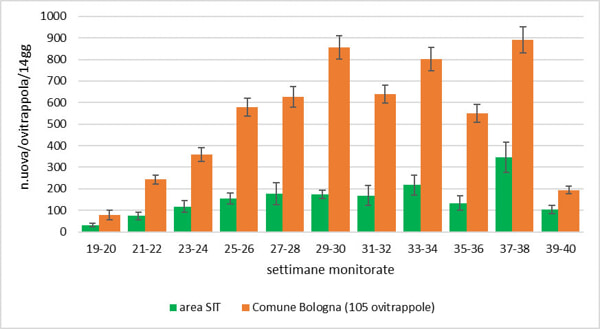
In 2026 the experimentation expanded to the San Donato – San Vitale district, which extends from the fair area and touches the city center. The affected area covers approximately 170 hectares: “We release between 2,000 and 3,000 males per hectare per week as a dosage, we are talking about approximately 400-500 thousand specimens on average every 7 days”, adds the entomologist. To arrive at these numbers, the economic investment is not insignificant: “The cost depends on the situations, in Bologna, roughly speaking, it is around 1,000 euros per hectare per season”.
The medium-term objective is to reduce the financial commitment required of public bodies: “We want the technology to become accessible to all municipalities, because in Italy the local administrations are responsible for fighting mosquitoes”. Therefore the aim is to build a biofactory within 2-3 years “so as to go from a production of 1 million sterile males per week to 10 million”.
How much we spend to kill mosquitoes
The tiger mosquito is not the only alien species to have arrived in Italy in recent years. Our borders have also been violated by the Asian bug (Halyomorpha halys), harmful to fruit growing, the fire or warrior ant (Solenopsis invicta), reported for the first time in 2022 in eastern Sicily, and the Asian hornet (Vespa velutina nigrithorax), very widespread in some regions of Central and Northern Italy and potentially dangerous for beekeeping as it is a voracious predator of bees.
To protect their crops and defend themselves from these and other insects, Italian entrepreneurs are willing to spend millions of euros. For mosquitoes alone, a study in which Romeo Bellini also collaborated estimated that the average annual expenditure per family unit in Emilia-Romagna is equal to 84.63 euros. A value approximately 30 times higher than the expenditure incurred by regional and local administrations for interventions against mosquitoes in public areas.
Dossier is the investigations section of The Vermilion. If you want to support our journalistic work and subscribe, visit our showcase by clicking here.