


It’s easy to say artisanal ice cream. In village ice cream shops, as in those of large Italian cities, they compete to show the naturalness of a product and the refinement of the master ice cream makers. Everyone says they produce “artisanal ice cream”, but no one explains what it is. Behind the neon signs and advertising claims there is a much more complex and varied world that struggles to find a univocal definition. What is the artisanal ice cream we eat?
What the law says
Let’s start with a fact. In theory, everything can be called artisanal ice cream. Or at least, everything that falls within the definition provided by law 34/2026. In the annual provision for small and medium-sized enterprises, article 16 regulates the “reference to craftsmanship in advertising”.
In practice, anyone who wants to use the denomination of “craftsmanship” and “craftsmanship” must be registered in the register of artisan businesses and produce or create “directly the products and services advertised or offered for sale”. A definition that means everything and nothing. In our legislation there is no special law that protects ice cream, as well as craft beer.
What’s in the ice cream we eat
They are commonly called “powders”: industry experts divide them into thickeners, neutrals, pastes and bases. They are all semi-finished products made by industries such as Fabbri and Pregel, with turnovers exceeding 100 million euros, and which are now essential for a category that has around 35 thousand ice cream shops throughout Italy. And what’s inside these “powders”?
It depends on the product. They range from thickeners such as carob seeds, which thicken in the presence of water giving a structure to the ice cream, to bases, to which just add the right doses of milk and sugar to create a very high quality cream. With the right products, and respecting the instructions provided by the semi-finished product industries themselves, an ice cream maker can simply mix the “powders” with the indicated liquids, put everything in the batch freezer and wait for the finished ice cream to come out.
The Italian Ice Cream Makers Association
“The practice of choosing ice cream bases should not be demonised, because if an ice cream maker uses a base with good raw materials he will have an excellent ice cream. Most masters then add something of their own to take care of their brand”, clarifies Vincenzo Pennestrì, president of the Italian Ice Cream Makers Association and owner of Sottozero, an internationally renowned ice cream-pastry shop in Reggio Calabria.
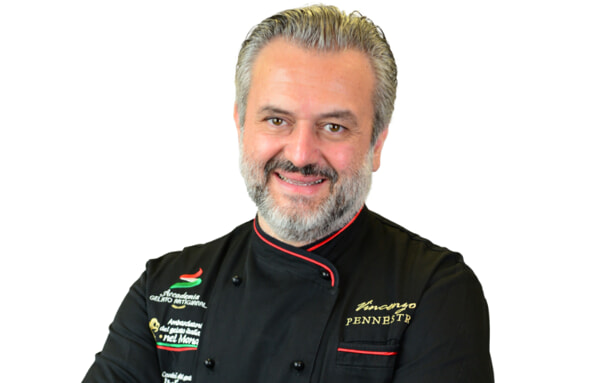
For Pennestrì, who represents more than 2 thousand members, a special law on artisanal ice cream is not necessary: ”If I use a PGI hazelnut paste I will have a product of a certain level, it is up to the ice cream maker to choose what to offer, whether to use a paste with generic hazelnuts, with oils or aromas or of a higher quality. I choose which car to go with, whether with a Fiat or a Mercedes”. However, with one premise: “The list of ingredients must always be displayed”. Only in this way can customers be made responsible.
And speaking of transparency, the president of Aig also insists on another point: the cost of ice cream. According to Pennestrì, consumers are not aware of the real costs of the sector: “Energy accounts for 10 percent of turnover”. An ice cream shop with four employees on average has a turnover of between 500 thousand and 600 thousand euros per year, from which personnel costs, any rent, bills and all ancillary expenses must be subtracted. If the category were to adapt to the costs it is forced to face, “a cone would easily cost 5 euros”. A price that the market is not ready to face for now: “We are trying to keep ice cream popular to accommodate families.”
What should change
Not all ice cream makers, however, think the same way as Aig president Vincenzo Pennestrì. This is the case of Gianfrancesco Cutelli and Roberto Lobrano. The first is the founder of the De’ Coltelli ice cream shop in Pisa, in homage to Francesco Procopio De’ Coltelli, recognized as the inventor of modern ice cream. The second left the commercial activity in 2024 to dedicate body and soul to his ice cream making school, in Casalecchio di Reno (Bologna), and to the study of this world. Both believe that semi-finished products should not be demonised, also because they are now important for production and have reached an excellent level of quality. But at the same time they argue that more must be done to protect the category, ice cream and customers.
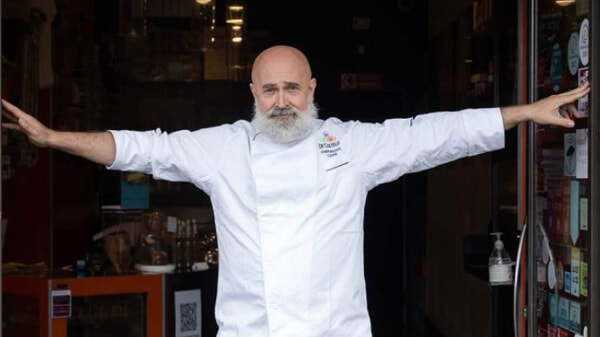
“On a legal level, both the artisan who makes his ice cream every day with fresh, local, organic ingredients, and the person who opens a bag, puts it in a batch freezer and pushes a button, have the possibility of boasting the same title”, recognizes Cutelli. For the founder of De’ Coltelli, awarded with the three Gambero rosso cones since 2017, training could be one of the ways to recognize the ice cream maker for “the craftsmanship of the product”. In our country there is no register for ice cream makers and anyone can sign up for a course of varying duration, from a few days to a few weeks, and then work in an ice cream shop laboratory.
Beyond the Alps there are the Mof (Meilleur ouvrier de France), state awards to the best artisans in various sectors. It is a selection competition and whoever reaches the final is judged by those who have already obtained the title. “In Italy, if someone takes a three-day course, he goes out and writes ‘maestro’ on his jacket and no one can say anything to him.” For Cutelli, the craftsmanship of ice cream must pass from both the knowledge of the professional and the product used: “It is legitimate to rely on the industry, but it is one thing if I take a bag and empty it into the machine, it is another if I use raw materials made to my recipe by a producer and which I assemble according to my taste”.
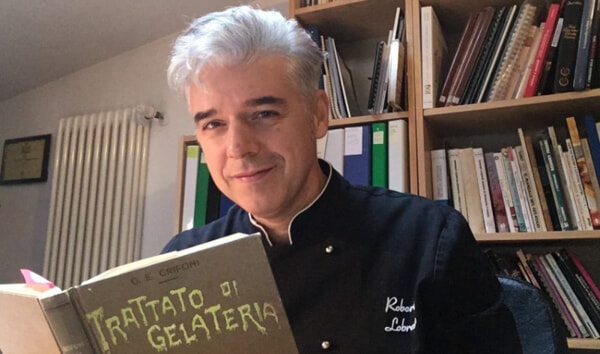
In short, we don’t want to make a discussion of “good and bad”, but to give due credit to those who offer something different to consumers. And it is from them that Lobrano must start if we want to protect the craftsmanship of ice cream. Lobrano, also author of some books on the history and business of ice cream, believes that laws are not necessary to achieve the goal: “I have worked on three or four bills in the last 20 years, but I realized that it would be useless because no one is interested in a law that protects a minority.”
How to defend those who use fresh ingredients
In short, it would be more useful to insist on the rules in force: “I would like there to be an obligation to include in the list of ingredients if I use a semi-finished product: its weight, brand and manufacturer – admits Lobrano -. This, in my opinion, is true transparency”. However, he is aware that the proposal cannot find favor with the entire category: “It would be an earthquake for the sector, because it would be discovered that those who claim to be a great ice cream maker, perhaps in the end use, in the majority of cases, products already pre-packaged by others. The leaders of the trade associations are aware of this situation and are not interested in changing it.”
According to Lobrano, the crux of the issue is not the quality of the product: “It’s very easy to say ‘Whoever uses the bag makes a poor quality product, while whoever goes looking for fruit, cocoa, vanilla makes a good ice cream’, but it’s not true because to be able to manage the ice cream material, it takes knowledge, it takes study and the semi-finished products are made by people who know about it.”
“The key – he adds – is to be able to create a training path for ice cream makers who intend to define themselves as artisans”. But there would be some resistance: “The problem is that the industry has replaced the artisan, they take care of the product and sell it to you so they make everything easier. However, this has also led to the average level of those who open an ice cream shop being rather low from the point of view of knowledge of the raw materials.”
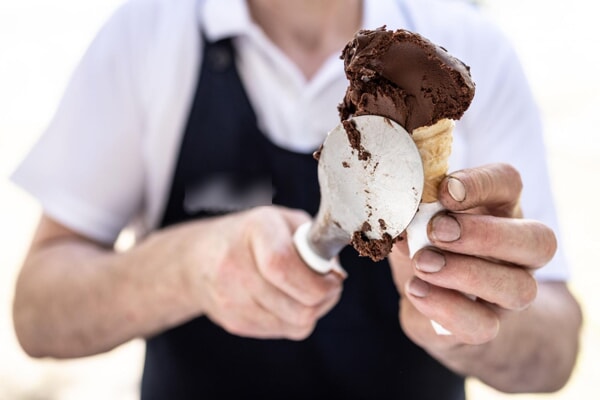
Lobrano closes with a provocation: “If you go to a restaurant you would be happy to know if the risotto you are paying for is made by the chef or if it is a reheated dish from the supermarket. But in an ice cream shop a customer does not have the possibility of knowing if that chocolate is made by the ice cream maker or if it is an industrial product to which a little water has been added”.
So, how can we distinguish an artisanal ice cream?
Having reached the end of this journey, the question remains: how can you recognize artisanal ice cream? Having said that there is no shared definition nor a magic list of ingredients to follow, you can train your eyes and taste to distinguish ice creams that are less artisanal than others.
In some cases it is enough to look at the shop windows: where you see mounds of ice cream it is advisable not to enter because the product contains ingredients that swell and are useful for prolonging shelf life. It can also be useful to look at the colors, if they are too bright, and the flavors offered, if they are too curious and strange. When chewing you must then pay attention to the structure of the ice cream. A true “artisan” is very fine, creamy, without ice crystals and with a defined taste.
Dossier is the exclusive subscription investigative section of The Vermilion. If you want to support our journalistic work and subscribe, visit our showcase by clicking here.