

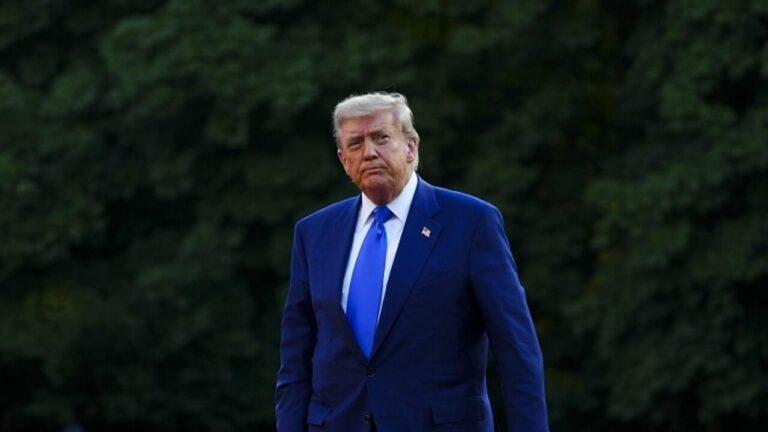
There is an agreement in principle, but there is still no agreement on some clauses. They are the last “corners to be smoothed” to put an end to the war in the Middle East. The USA and Iran would be close to a turning point, but we will have to wait a little longer for the definitive approval of the two leaders and the official signature. According to US media, citing a “senior US official”, the Iranians have accepted in principle an agreement that would include the disposal of the highly enriched uranium, but precisely how Tehran will do this is still the subject of negotiations. Steps forward also confirmed by US President Donald Trump on social media: “The negotiations are proceeding in an orderly and constructive manner, and I have informed my representatives not to rush the conclusion of the agreement, as time is on our side. The blockade will remain fully in force until an agreement is reached, certified and signed. Both sides must take the necessary time and do things well. There can be no mistakes.”
What’s in the deal
According to the latest rumours, the memorandum of understanding that the negotiators of Iran and the United States are about to sign provides for a 60-day truce. This could extend the ceasefire, reopen the Strait of Hormuz, ease pressure on global oil supplies and launch a new round of nuclear talks. According to what Axios reports, the duration of the agreement should initially be two months, with the possibility of extending it by mutual agreement. Again according to the US website, during this period the maritime canal would be reopened without tolls and Iran would undertake to clear it of deployed mines, thus allowing ships to transit freely.
In exchange, the United States would lift the blockade of Iranian ports and grant some sanctions waivers, allowing Tehran to freely sell crude oil. A U.S. official acknowledged that this would represent a major economic benefit for Iran, but also argued that it would bring significant relief to the global oil market. Nuclear issues would not be resolved in this 60-day agreement: the memorandum of understanding would instead create time space for a new diplomatic session. Furthermore, Iran would pledge never to pursue the development of atomic weapons, and the two sides would negotiate the suspension of Iran’s uranium enrichment program and the removal of its sensitive stockpiles. The United States would also discuss lifting sanctions and releasing Iranian funds during the 60-day period, but such measures would only be implemented as part of a final agreement. The draft memorandum of understanding would also reportedly provide for an end to the war between Israel and Hezbollah in Lebanon.
What’s missing
However, something is still missing. According to Iranian state news agency Tasnim, the US and Iran are “far apart” on one or two clauses. “Iran underlines the need to guarantee the rights of its people, a position already formally transmitted to the Pakistani mediator – an official explained to the agency -. If the United States continues to place obstacles, there will be no possibility of signing the agreement”. “There are still discussions about specific details,” another US official told Axios. “Some words are important for us, others for them. From what we understand, the Supreme Leader, Mojtaba Khamenei, has approved the general lines of the agreement. Whether this will materialize into an agreement remains to be seen.”
A prudent optimism, in short, also confirmed by US Secretary of State Marco Rubio: “We have what I believe is a fairly solid agreement on the table, an agreement that concerns the ability to reopen the Strait of Hormuz, but also the start of negotiations on the Iranian nuclear issue. We thought we had some good news last night, it may be that it will arrive today, but I wouldn’t go any further. If there isn’t an agreement, we will resolve the issue in another way. The United States will give diplomacy every chance of success before exploring alternatives.”
The preliminary agreement should be called the “Islamabad Declaration” and, as reported by Al Arabiya, there would already be a date for the decisive round of talks: “After the memorandum of understanding there will be new negotiations to cover the outstanding issues. On June 5, Washington and Tehran will send the heads of their respective delegations as soon as negotiations on the definitive agreement have started.”