

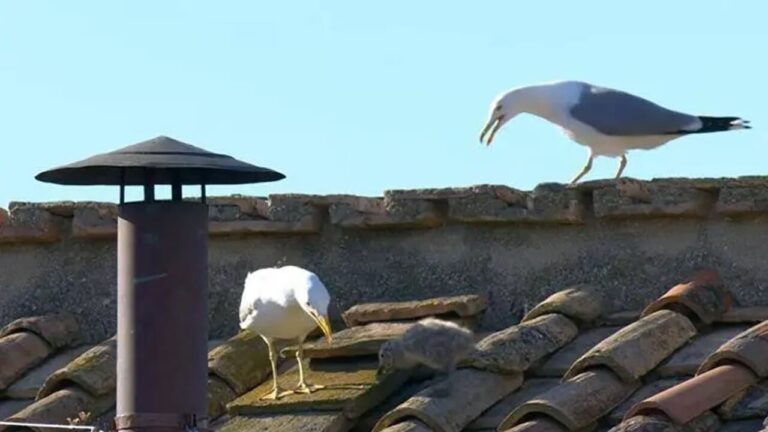
Anyone who has had close encounters with crows or seagulls in metropolises such as Rome or Milan knows this well: animals in the city can appear more aggressive and less fearful than they are in natural contexts. They don’t seem to fear humans and, in some cases, they go so far as to annoy us in order to obtain food or occupy space. Research carried out in many parts of the world confirms this: a study published in Journal of Animal Ecology analyzed data relating to over one hundred species in twenty-eight countries, showing that urbanization is changing the behavior of wildlife, making city animals on average more active, aggressive, bold and inclined to explore than their country “cousins”.
A global problem
The expansion of urban areas is one of the factors that are changing the environment of our planet most rapidly. This is why it is important to understand how city life influences the behavior and well-being of animals, but also their coexistence with our species. Until now, however, much research has examined the impact of cities on individual species or in limited geographic contexts. The new study, however, aimed to carry out a global meta-analysis of the effects of urbanization on animal behavior. Four parameters were assessed: boldness, aggressiveness, activity level and tendency to explore.
With these premises, researchers from Lewis & Clark College in Portland, Cefe-Cnrs in Montpellier and North Dakota State University conducted a systematic review of the scientific literature, collecting data from eighty field studies, for a total of 133 animal species present in 28 countries.
The most daring? The birds
For birds, which represent over 70 percent of the animals analyzed, the data confirmed a generalized and statistically significant increase in the four behavioral traits studied. For other animal species – mammals, amphibians, reptiles and insects – the most solid result concerns above all boldness, often also evaluated based on the distance at which an animal begins to flee when a human being approaches. For the other traits, however, the picture is less clear: it is not clear whether this depends on real differences between animal groups or, more simply, on the fact that the sample available for non-avian species is still too limited.
Overall, however, the data suggests that close encounters with urban wildlife could become increasingly frequent, also in light of the continuous expansion of anthropized areas. This poses several critical issues: for animals, which can be damaged by contact with humans and risk losing part of their natural behavioral repertoire and their ecological role; but also for our species, which may be more exposed to conflicts with wildlife and, in some contexts, to the transmission of zoonotic diseases, as the Covid-19 pandemic has highlighted.
The “escape distance” test
Tracy Burkhard, a biologist at Lewis & Clark College and first author of the study, explains that urbanization appears to change animal behavior consistently on a global scale. The most robust result concerns risk propensity: animals that live in cities tend to be bolder and less intimidated by human presence. This means that, in some areas, contact between people and wildlife may become more frequent, with possible negative consequences for both humans and animals.